I don’t look on LinkedIn much, but a recent article on how Babycham was advertised from the 1950s onwards interested me.
Babycham is still available, it’s a perry – like cider, but made with pears rather than apples. At 6% it’s on the lighter side of cider-perry drinks and the little bottles it used to be sold in wouldn’t get you very drunk. From its introduction in the 1950s it was marketed at women, a departure from how alcohol had previously been advertised.
It was also the favourite tipple of Vyvyan out and off of The Young Ones. He once declared that “one glass of that and I’m anyone’s”.
Vyvyan from The Young Ones was partial to the occasional Babycham, as well as Hawk lager (100% alcohol).
The advert that comes to mind first when I think of Babycham is one from 1986, set in a low bar playing loud, industrial music1. Two posh couples come in and one of the woman – to the consternation of the barman – says she’d love a Babycham. A deep-voice dude2 clicks his fingers3 and says “Hey! I’d love a Babycham!” And then everyone in the bar wants a Babycham.
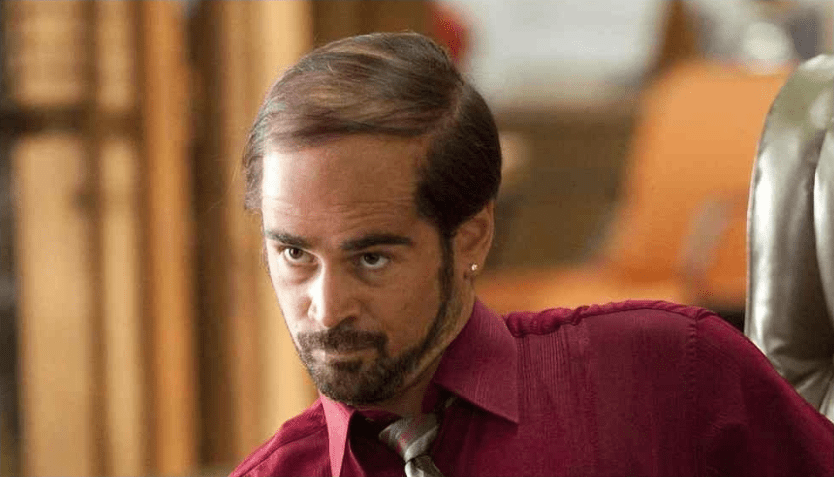
What’s memorable is the guy at the end of the bar. In this two-bit sleazy dive is a very polite young man who looks around at everyone else ordering Babycham, puts his finger up and says “Yeah, I’ll have one!”
So I did a remix of the advert
Literally, hammering on pipes. Not Killing Joke or Nine Inch Nails. ↩︎
Charles Augins, who was also Queeg 500 in the Red Dwarf episode ‘Queeg’. ↩︎
Which you should never, ever do to any bar staff – unless you’re being played by Charles Augins – if you still want to be able to count to ten. ↩︎
I’ve had the Heath Way Prints logo for about a year, and I’m happy with how it looks. In a recent advert I used a spinning version of the logo as the end scene for the carousel I made using CapCut.
How to expand on this? One thing I saw a few months ago was a cloth reveal. You start with cloth over an object then pull it away using ‘hooks’. In the display, the crosses are hooks, and pull at two parts of the cloth to reveal the monkey head.
This works well, it can be used for revealing cars and big bits of machinery as well as logos and monkey heads. But I wanted to have the HWP logo suspended in air and then have the cloth be whipped away. Using the ‘hooks’ method wouldn’t work. I couldn’t find a way to animate the influence the hooks have on the cloth, which would mean I could turn off the hooks, so I’d have to get the hooks in the right place on the draped cloth. This is possible but not elegant1.
Getting the cloth on top of the logo involved adding a plane to be the cloth, subdividing it and then giving it cloth physics. The logo had to have physics, too, otherwise the cloth would drop through the logo.
What I found was that the logo didn’t interact very well with the cloth. So I added a cylinder the same size as the logo and used that as the collision object. That worked. Then the cylinder is adjusted so that it doesn’t appear in the final render and I still have a logo that has three dimensions.
Another option I considered was adding a cylinder and ‘painting’ the logo on this. I could then alter the shading of the cylinder so that only the logo would appear. But this would be less satisfactory because I’d end up with a 2D logo rather than the 3D object that reacts to light and looks real. Having a 3D logo means I can animate it or move the lights and the surfaces react to changing light.
Cloth draping on the Heath Way Prints logo. But how to take it off again?
So we have a cloth draped on a thing. How to pull the cloth off without using hooks?
Gravity!
Unlike the real world, you can control gravity in Blender. It is a fun thing to do, you can make a pendulum simulation under various gravity fields to simulate Earth, the Moon, and Jupiter.
Pendulum simulation with different gravity values. The Moon (1.6 m/s²), Earth (9.8 m/s²) and Jupiter (25 m/s²). The pendulum swings once on the Moon for every 2 ½ swings on Earth and four times faster on Jupiter than on the Moon.
You can also change the direction of gravity. For this animation, I animated the gravity to change from -9.8 m/s² in the Z direction (down) to 20 m/s² in the Y direction (behind the logo) for two seconds so that the cloth fell from the logo. This is just like tipping the logo up, same way you might tip a table up to remove the tablecloth, if you were so inclined.
Logo reveal in Boho colour scheme.
Colours were taken from a ‘boho’ colour palette. I gave the logo a brown colour from the collection, the background green and an off-white for the cloth. The cloth also has a metallic sheen to it, to add a bit of class.
Sounds were from Pixabay, sliding cloth effect fitted the bill nicely.
Next: I’ll put the logo on some dice of various shapes and see what can be done with that.
I’ve since found a way of doing this, but I like the effect I used. ↩︎
I’m using the definition of ‘candy’ to mean anything in the confectionery aisle of the supermarket.
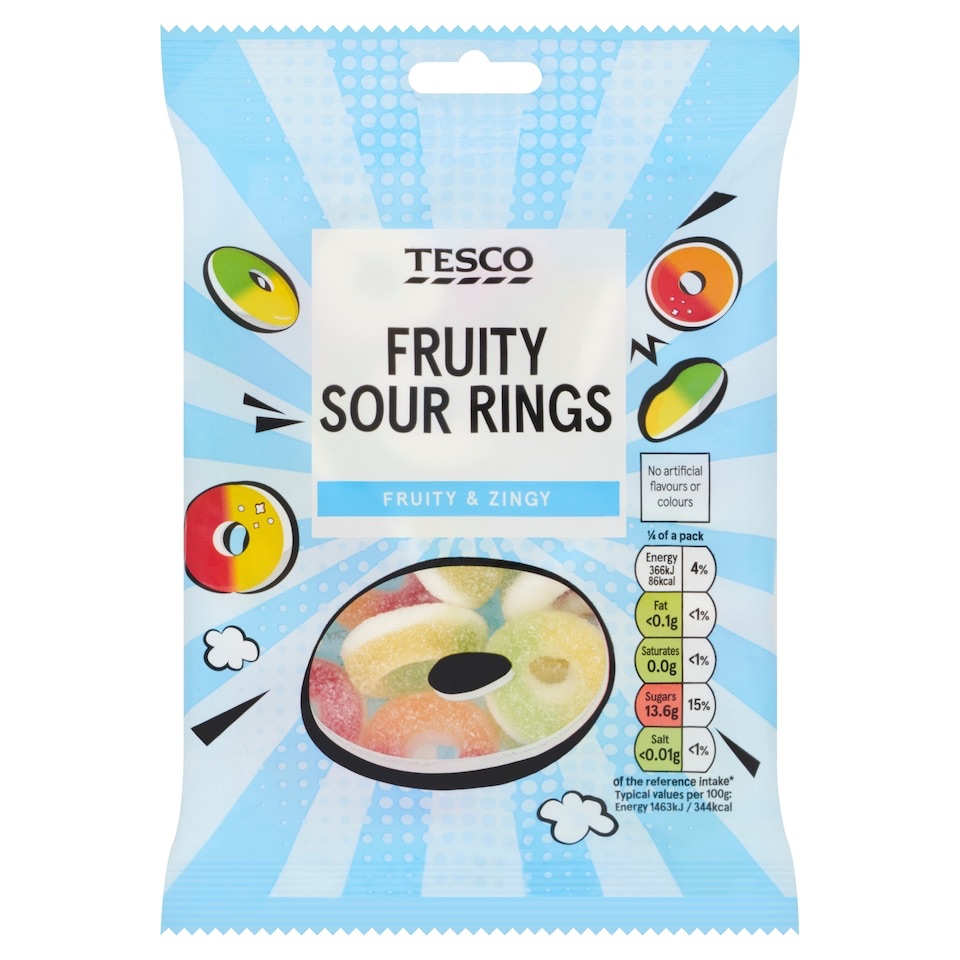
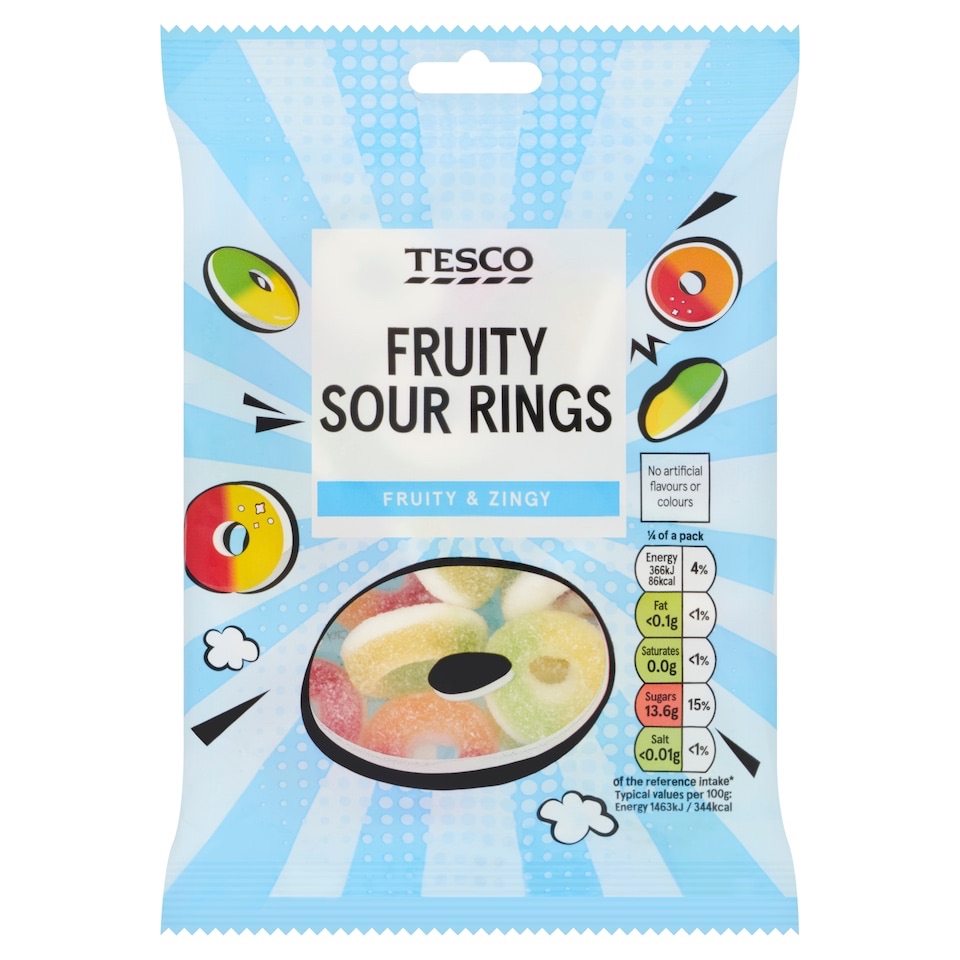
Current favourite sweet is probably Tesco’s sour rings. They’re sherbet coated fruit jellies, and even though they’re a supermarket own brand, they do hit the spot. I’ve tried various Haribo and Bassets sour sweets but they don’t pack the same punch. They also hide cherry flavoured sweets in there and that’s something I don’t want.
Current favourite sweet.
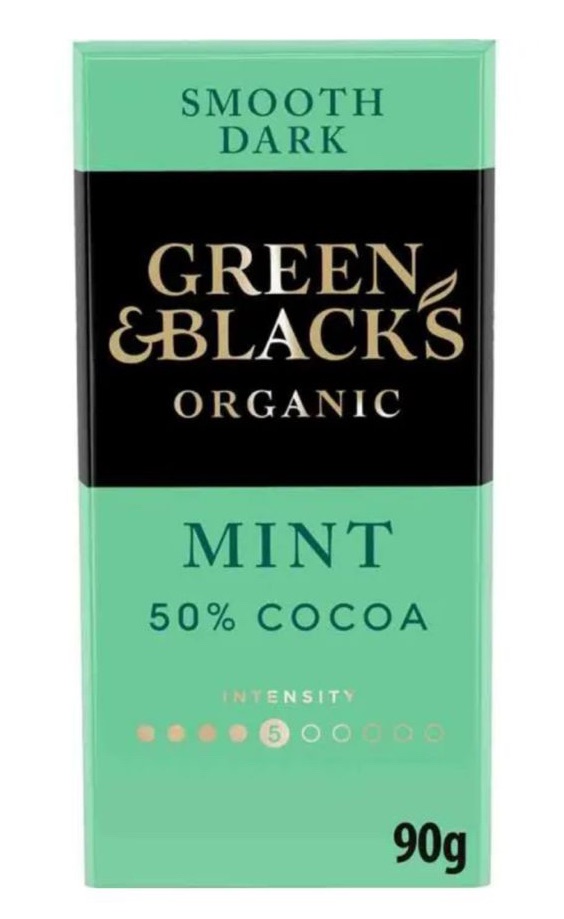
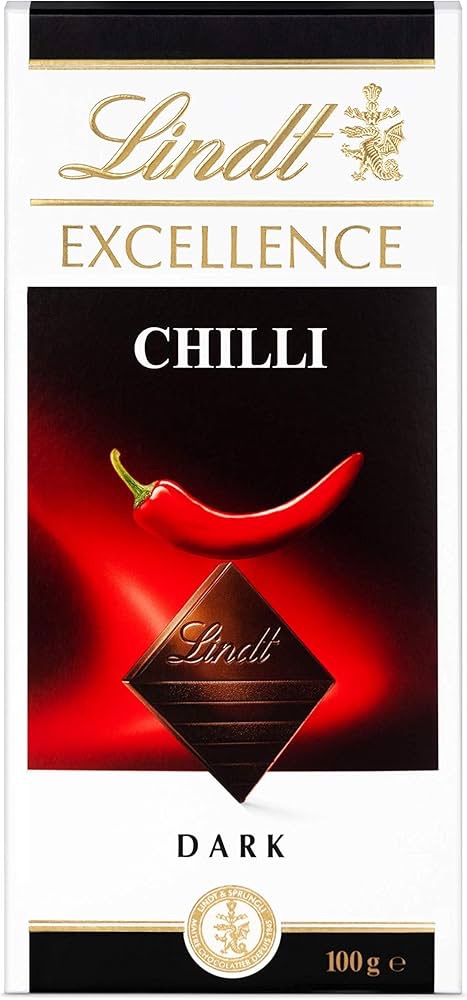
Dark chocolate is my favourite. Green and Black’s dark mint, Lindt dark mint or chilli, Hotel Chocolat’s various dark offerings… all good. Saying that, I’d not refuse a Double Decker or Mars Bar.
Green & Black’s minty dark chocolate. Spicy chocolate! It was a surprise the first time I had chilli and chocolate together how well it works.
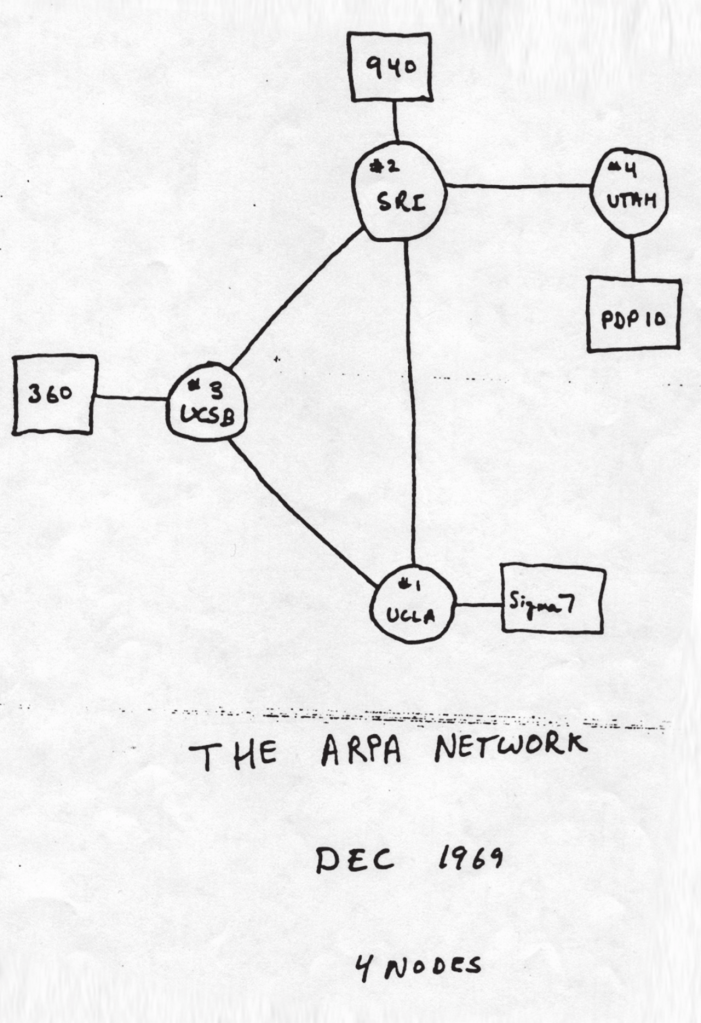
I am just older than the internet. The first linked computer system (ARPANET) went live in October to December 1969, when I was a few months old.
All the trouble started here.
As a tool for spreading information and knowledge the internet is up there with agriculture, written language and the printing press; I might be old but I post date both those things.
I first encountered the web (invented in 1989) in 1993 when I worked at Liverpool University. I think I knew of it, probably from Tomorrows World, but had never used a web browser. I used it mainly for research since the original users of the web and internet were academic and military.
There have been many other great inventions in the last few decades; some of the advances in medicine are frankly astonishing. The invention of MRI and DNA fingerprinting and the continued development of computer storage and quantum computing spring to mind.
But the fact of the internet and the ease with which ideas can be shared and communication can occur has enabled these advances in the same way that the printing press ushered in The Enlightenment.
Describe your most ideal day from beginning to end.
This day is a patchwork of highlights. I don’t know if there is any one place that this could really happen, but ‘ideal’ has to be able to include the impossible.
Mrs S is with me throughout, the kids join us for lunch then do their own thing after dinner.
Wake up about seven, in a big hotel room with a massive en suite.
Full English breakfast – local butcher’s sausages, back bacon, two fried eggs, black pudding, fried potatoes, toast, coffee. Or steak and potatoes if FEB isn’t available.
Walking tour including local architecture, industrial, religious and civic. A lot of pointing at ceilings and mulling over the fact that we’re lucky we don’t have to work in those conditions at the mill/ mine/ factory/ farm that is now a working museum.
Lunch is fish and chips by the sea, where the kids have joined us after a morning shopping. There is a magic seagull exclusion zone so we can eat them undisturbed and the chippy has saveloy for Mrs S.
Afternoon at a bookshop where you can get lost among the shelves, the type Terry Pratchett described as ‘a genteel black hole that can read’. Someone magically comes and takes our books and other purchases back to the hotel for us.
Coffee and cake (fruit cake or tiffin) to tide us over.
Evening session at an observatory or other science museum where we will again do a lot of pointing at stuff and talk about science and the like.
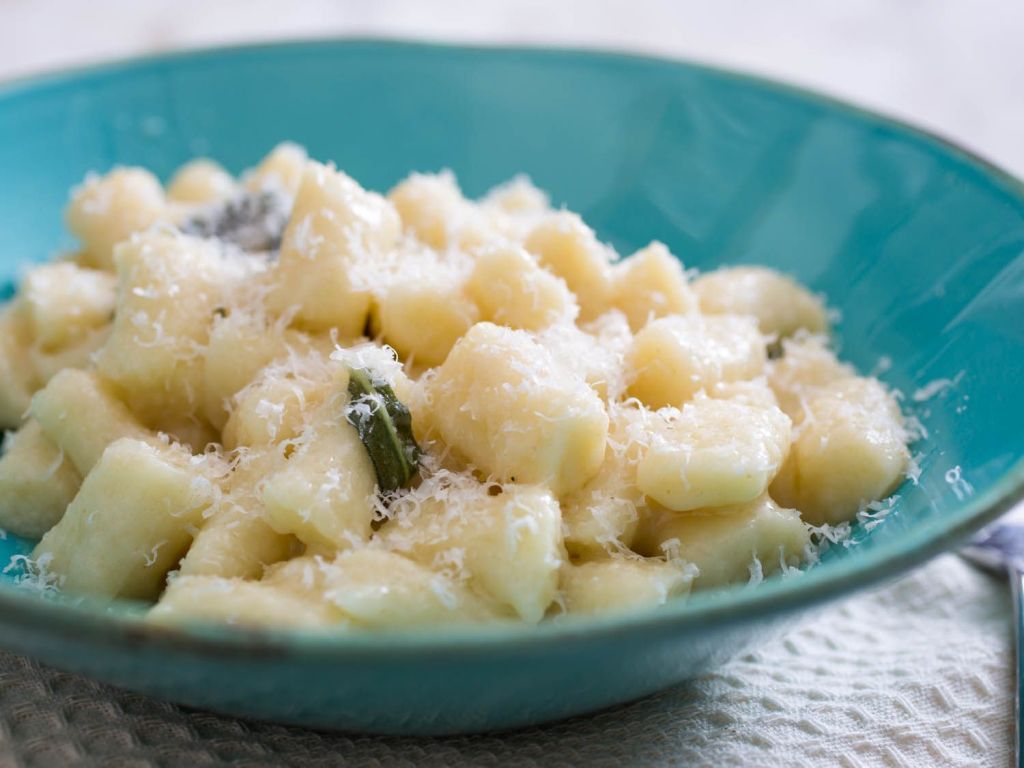
Late dinner. Italian restaurant overlooking a scorched valley in Tuscany, the evening has cooled enough that we can eat comfortably, but a cold Peroni or three is welcome. I’m not driving, so what the hell. A selection of charcuterie to start, then something involving gnocchi, a spicy pizza and gelato for dessert.
After dinner, stand up comedy at an upstairs cellar with acts I’ve never seen before but leaving me exhausted with laughter. The fortifying pint of Guinness at the interval will see me through.
A couple of whiskies as a nightcap. Something floral for preference, a Speyside single malt or a selection of whiskies from around the world.
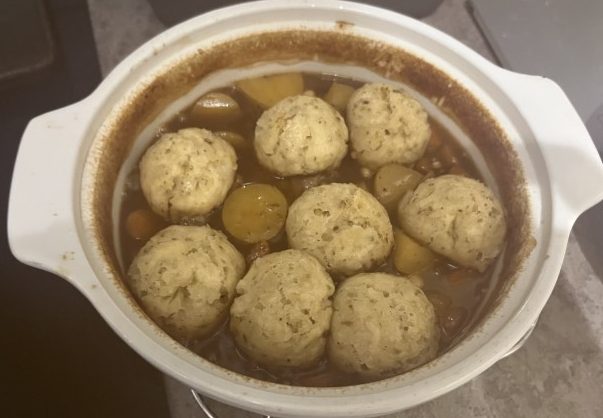
I love this dish, the smell fills the house when it’s in the oven. It’s also easy to prepare, although it does take a long time to cook.
We have two versions in this house, I do a slow-cooked version with cannellini beans (recipe here), Mrs S uses a pressure cooker and her recipe features oxtail soup (must be Heinz).
Both are delicious, with different textures and many common ingredients. Beef, onions, garlic, carrots for starters. I put potatoes in the stew, Mrs S does them separately. But the most important component of the stew is the dumplings.
Uncooked dumplings. You don’t need to be very rigorous getting spherical dumplings, rougher dumplings will fluff up just the same.
Dumplings are easy enough to make, as long as you use suet and self-raising flour you can’t really go wrong. A generous helping of dried herbs and chilli add some flavour. We give them 20 minutes steaming over the stew. This allows the dumplings time to swell and acquire the required soft texture and some of the flavour of the stew. It also means that some moisture from the stew is lost so the stew thickens a bit.
Dumplings done, stew ready to serve.
I’ve just noticed that there’s a very angry-looking dumpling in the middle of the picture. Just as well we ate it before anyone noticed.
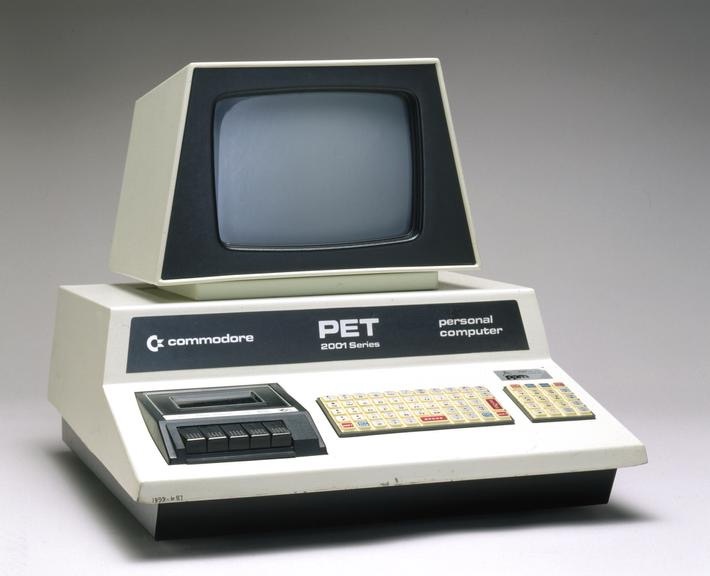
There are two ‘first computers’ for me. The first one I used was when I was at Thurso High School. This was the school’s 8K Commodore PET that was available to book for lunchtime use. I was at the school from ‘81 to ‘82 before we moved to England. I don’t know that I learned very much; some programming in BASIC but no guidance, played a text adventure game and perhaps gained an awareness that computers were a thing that would feature in my future.
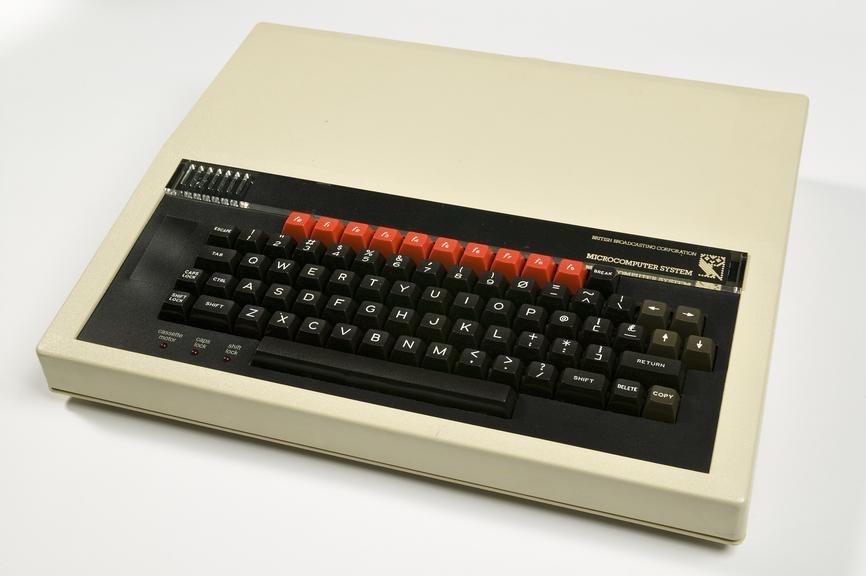
The second was a BBC B that was a Christmas present to the family in 1983. Transferring data and uploading was a challenge using cassette tape recorder. It could take half an hour to load games, along with the clanking racket of data transfer and you’d come back from your tea to find the load had failed. Jealous of a neighbour (an engineer) who had a floppy disc drive and he could load a game in under a minute! He’d also expanded the BBC B’s 32K RAM to an unbelievable 128K.
The power!
Having a BBC C at home was handy, because this was the machine I used for ‘O’ level computer studies. In theory I could have transferred work between school and home, but data transfer wasn’t really viable and we only did a small amount of programming during the course.
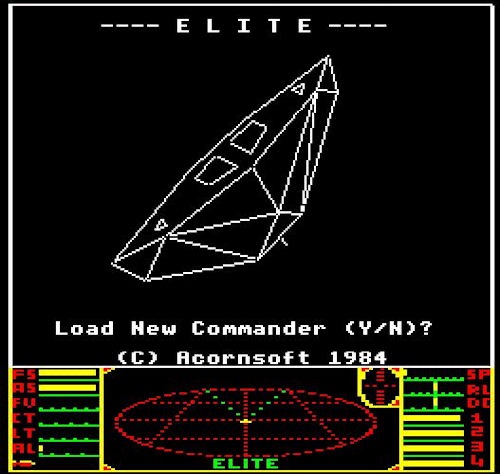
Inevitably games were played on the BBC at home, once we hooked it up to a spare telly. Elite was my favourite, a space adventure game with trading commodities and the occasional space battle. I also have fond memories of my dad playing ‘Estra’, a collect-the-pieces game that took ages to load. But while it loaded, it played ‘Entry of the Gladiators’1, which was fun.
You can play Estra here, and listen in awe to the theme music.
After O levels, I didn’t use computers much for a number of years. I first heard about email in 1990, when I was at uni in Loughborough. One of my tutors told us that he could send a message from his computer2 to a friend at Portsmouth and get a reply later that day. Much faster than letters and less intrusive than a phone call.
Mrs S and I didn’t own a computer at home until about 2000, after we had bought our first flat. The mainly so that I could work at home on my PhD. I had to run an extension line right across the flat to get dial-up internet and it was honestly easier and quicker (and possibly cheaper given the cost of phone calls back then) to take a bus up to the university (from central Bath) and get journal articles from the library than it was to try and download them at home. But I did write my thesis on it, so it served its primary objective.
I can’t remember the specs, but I do know it was quite an expensive bit of kit for us at the time. Given its cost, we shipped it over to Australia in 2003 and back again in 2005. We still have it in the loft, gathering dust and awaiting possible resurrection so I can play Quake III Arena again.
Write about a few of your favorite family traditions.
Most families have in jokes, like most friendship groups. This is why your brother is the funniest person you know, though your sister is a successful stand-up comedian. Well, maybe not your brother, but it’s a tale I’ve heard comedians tell.
Growing up, we had a few stock phrases in my family, it was usually my dad who used these. Every time someone went to the barbers:
What’s the difference between a good haircut and a bad haircut? Two weeks.
Every. Time.
I do miss him.
One he borrowed from a work colleague:
I want to see it on a concrete piece of paper.
As a family, we find it difficult to say goodbye on phone calls. Mrs S laughs when I talk to my mum, we will say goodbye and it will be another ten minutes before we hang up. When we visit, mum always stands at the door waving until we’re out of sight.
Now we have a family of our own, we have a few traditions and stock phrases. The most important one is letting people know when you’re finished in the bathroom. Lifted directly from “The Young Ones” episode Nasty.
Rik letting Neil know that he’d finished in the bathroom. Very socially responsible of him.
Bathroom’s free!
Unlike the country under the Thatcherite junta!
Over the years, the adjective for the junta has changed. It’s currently Starmerite, it has been Sunkakian, Trussite (very briefly), Johnsonian, Mayite, Carmeronion, Brownian and Blairite in its time. But the important thing is that we know the bathroom is free.
The first of March is St David’s day! Triple celebrations for us, since Mrs S is 3/4 Welsh, my first name is David and it is our oldest’s birthday.
This recipe follows the hand-written recipe Mrs S got from her gran (Mrs K) in 2007.
Mrs S did the camerawork, thanks to her for helping!
Ingredients
200 g self-raising flour
100 g margarine (“baking spread” or similar)
75 g caster sugar
75 g currants
1 or 2 tbsp milk
one egg, beaten
1/2 tsp mixed spice
Video link
Mixed spice
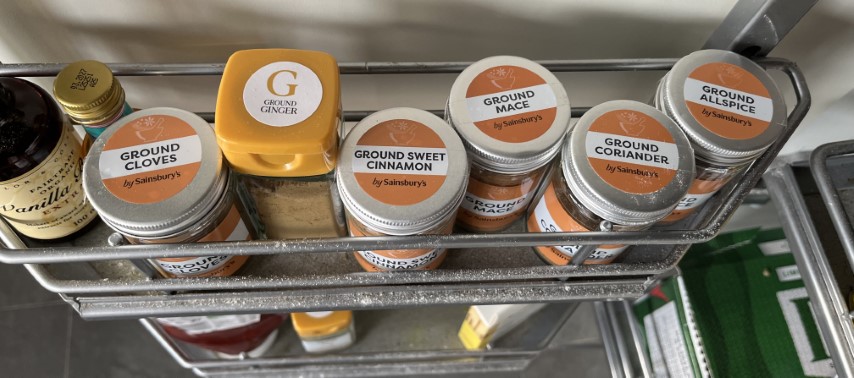
For the mixed spice I combined one teaspoon each of ground mace, cinnamon and allspice with half a teaspoon each of ground cloves, ginger and coriander (I couldn’t find ready-made spice mix in the shop). Nutmeg can also be added to the mix, but we only had whole nutmeg and I couldn’t be bothered to grind any. There are recipes Welsh cakes that say to use only mace, I may try that some time.
Spices used to make the spice mix for the Welsh cakes. This is not an endorsement of Sainsbury’s spices, by the way.
Method
Combine the flour and margarine in a bowl and rub together to make crumbs. This is the same procedure for making crumble for puddings, so it’s a proper life skill.
Then add the flour, caster sugar, currants and spice. Mrs K’s recipe calls for half a teaspoon, though she said it could be left out.
Mix well, then add the beaten egg and milk. Combine all these until you have a smooth dough. If the mix is too wet (as mine was), add flour until you get a good dough. Add milk if the mix is too dry.
We left the dough to settle for an hour, so the flour could absorb all the wet ingredients.
On a floured surface, roll out some of the dough mix to be about 5 mm (¼ inch) thick. Use a gauged rolling pin if you have one (I don’t). Cut out circles (a cutter is best for this), then the cakes are ready for frying.
A rolling pin with thickness gauges. If you need to roll out dough to a particular thickness, this is an excellent tool.
Frying the cakes
Traditionally a griddle would be used for frying. You can get flat griddles for induction hobs, but you may as well use a frying pan, as we did. Unless of course your oven has a built-in griddle, in which case I’m very jealous.
Like with any pan-fried cakes (eg pancakes) the pan needs some fat in it to help cook the food and also to provide extra non-stick. We used a 1:1 mix of vegetable oil and butter. If you want to be traditional about it, use lard. Don’t use a lot otherwise you could end up with a very fatty tasting cake.
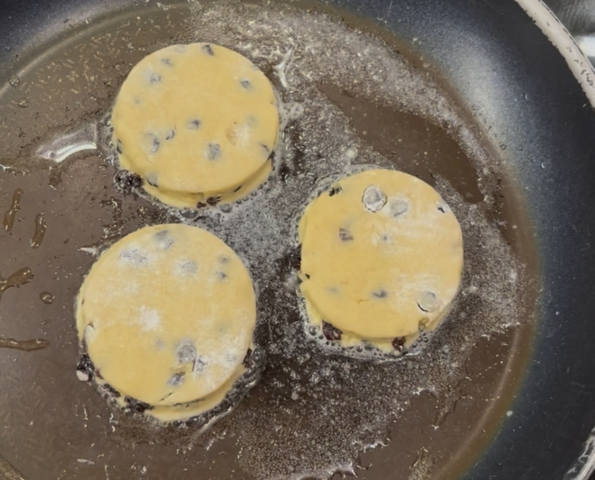
In a hot pan (or on a hot griddle) fry the cakes for about a minute on each side. You will need to use judgment here, you want the cakes to be a dark brown but not burned. The cakes will swell as they cook, so make sure they cook long enough on each side for this to happen.
Frying Welsh cakes. The cakes swell during cooking, this is the self-raising flour doing its thing. The swelling means that the outside of the cakes will be crisp but there is a soft centre.
This swelling – due to the self-raising flour – combined with frying a thick piece of dough gives the cakes their double texture. The outside will be crisp and there is a lovely soft and chewy interior. A bit like an armadillo.
When they are cooked put them on a plate with a piece of kitchen towel on to absorb excess fat. Cook the whole batch; we got 12 cakes from this mix, the size of your cutter will determine how many you get.
Serving
Sprinkle with granulated sugar as a finishing touch. They are good enough to eat warm or cold. Just eat them as they are, but if you like you can put jam, honey or Nutella on them, spread some butter or thick cream on them. As a savoury alternative, pop a chunk of cheese (Caerphilly might be appropriate) on it, if you’re one of those people who likes cheese with fruit cake.
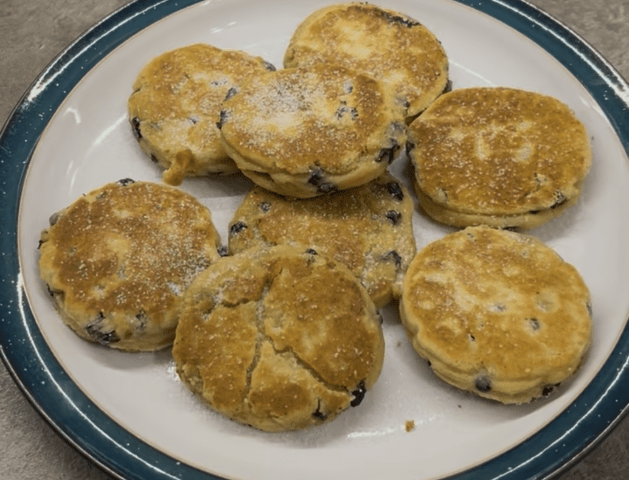
Finished Welsh cakes. We ate them with just the sprinkling of sugar. You eat them however you want, you made them after all.
Changes
Having eaten my share and discussed with Mrs S and the rest of the family, I think we will add a full teaspoon of spice to the next batch. Mrs K wasn’t one for spicy food, so her taste buds were likely more sensitive than ours.
It may well be possible to air-fry these. We don’t have an air-fryer, but if you do let me know if it’s doable.
I frequently struggle with cryptic crosswords. I don’t always (or often) finish them, but I don’t struggle enough to completely abandon all hope. The private Eye crossword is supposed to be one of the easier cryptics. The Times is the standard in difficult crosswords – they even have a Latin crossword sometimes.
The recent edition had this clue as 9 down, which was one of the rare ones I got almost immediately. The black-out is where I wrote the answer. I usually do this before I fill in a clue so that I can check that other solutions match letters.
How to solve this logically? As with all cryptics, there are two parts to the clue. One is a straight clue, the other is a riddle to get to that straight clue. Part of the fun (yes, fun) is working out which bit is the straight clue. This is usually either the first or last part of the clue, but you don’t know which and you also don’t know where the straight clue finishes and the cryptic starts.
In this case, the straight clue could be ‘Foreign’, ‘foreign minister’ or perhaps ‘is on right’. But ‘is on right’ politically, driving on the right or on the right hand?
Knowing how cryptics work after many years, the last part flags that there will be some word-building needed. The phrase ‘that is’ signals that the letters ‘ie’ will be used. ‘On the right’ means, for a down clue, that the other letters will be on top of ‘r’. So the word ends ‘ier’, and the ‘foreign minister’ is the straight clue.
The ‘scurrilous comic’ is the first part of the cryptic. Comic can mean a couple of things, it could be the name of a comedian or a paper comic. From the title of this post, you might have guessed that the word ‘viz’ is in the answer.
I first read Viz back in 1988 when I was at 6th form. Even then, it wasn’t as funny as it used to be. After a few years I stopped getting it very frequently, though my parents bought me a Viz annual in the 90’s. They had no idea what was inside until my dad and my uncle (who were both about 60 at the time) read the annual and were both shocked and very amused by Buster Gonad1.
From Viz 48 (July 1991). I did my first degree at Loughborough and I thought this was hilarious.
So the assembled cryptic is ‘viz..ie..r’, or ‘vizier’, the name for a dignitary from Persia and the surrounding region. I’m pretty sure the first time I heard of a vizier was in a pantomime – probably Aladdin – where the baddie was the vizier. Indeed, Jafar was the vizier in the 1992 Disney film of Aladdin.
After two weeks I haven’t finished this one, and will need to wait for the next edition to find the answer to 15 down: You might claim booze is from Iceland – I’m dubious (9). I think it’s an anagram of ‘Iceland Im’ (the word ‘dubious’ indicates an anagram), but other than that, I don’t know.







 Grim up North Heath