Which celebrity would you love to meet, and what would you talk about?
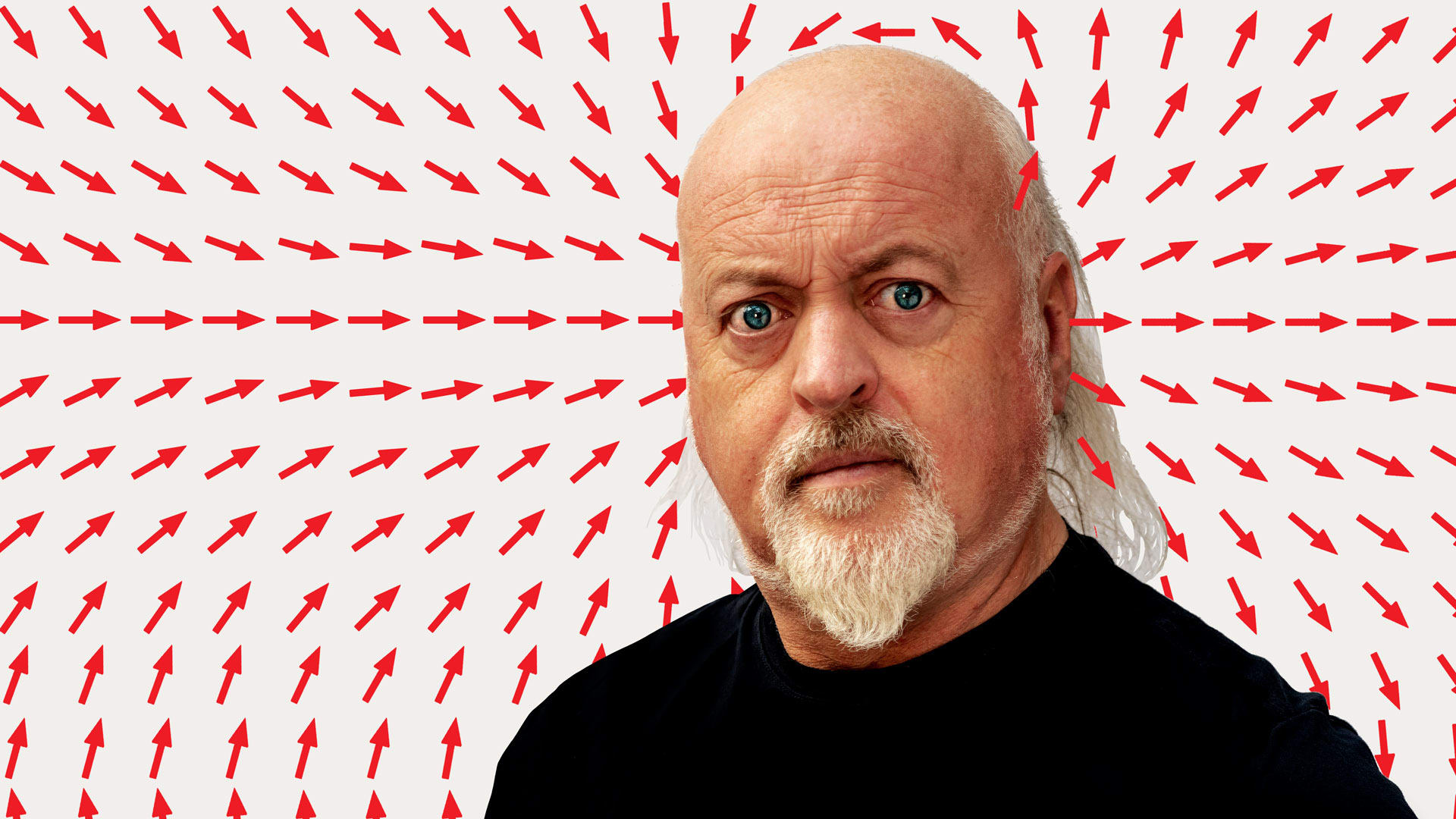
Bill Bailey is the comedian I’ve seen more often than any other. Five times over 35 years. I’d love to meet him in person and spend some time just chatting.
Other comedians that I like are dead (Victoria Wood, Eric Morecambe) or I don’t know I’d get on with (John Cleese). But Bill always seems modest, engaged, engaging and funny.
I don’t think I’d try to impress him, as I might try to do with Michael Palin or Stewart Lee. Just chat about music, comedy, cider and life.
No musicians on the list
Many musicians I like, but I don’t know what I’d have in common with them. It’s an odd thing, but when I see lists of music that artists I like listen to, I’m never very impressed with them. Maybe there’s a musician I can’t stand who has taste that exactly aligns with mine.
Naked Lunch is a weird film (by David Cronenburg) based on a weird book (by William Burroughs). The title has nothing to do with a salad without dressing; it’s a misreading by Alan Ginsburg (who helped the drug-addled Burroughs collate his writings) of ‘nakedlust’.
I didn’t finish the book when I tried to read it in 1990-ish; I gave up where they were breaking the spines of young boys they were having sex with. If that makes me sound like a squeamish prude, then so be it. I just thought “I’m not enjoying this, I’ll go and read some Terry Pratchett.”
Peter Weller, who I knew from Robocop, plays the main character. I don’t remember much about it, but there were a lot of giant insects and his giant ant typewriter talks to him. It just seemed weird for weird’s sake. If you want to see a film with Peter Weller in, then Robocop is a much better bet. It’s a funny satire on 1980s big business with a massive robot and lots of explosions.
I watched the film with a couple of friends when we were at University. Our reaction was very much like Krusty the Clown’s reaction to seeing the Czech animation ‘Worker and Parasite’.
Krusty’s reaction to the bizarre cartoon ‘Worker and Parasite’. I had much the same reaction to ‘Naked Lunch’, but I’d not seen The Simpsons then.
This being 1991 in the UK, I hadn’t yet seen The Simpsons; I had another six or seven years for that delight, when I saw the season 8 episode Simpsoncalifragilisticexpiala(Annoyed Grunt)cious.
Terry Gilliam’s weird world
Many of Terry Gilliam’s films are weird in places. Brazil was Mrs S’s suggestion. The setting for this dystopian satire is an odd retrofuturism. Ducts are a primary architectural feature, lots of dinge and mountains of bureaucracy. The main character Sam (played by Jonathan Pryce) is a fantasist. The story itself isn’t that outlandish, based on a case of mistaken identity, infatuation and plumbing. It has Michael Palin and Robert de Nero, both playing against type, and is worth a watch.
Some of Gilliam’s other films are more fantastical. The Adventures of Baron Munchausen is a series of tall tales, based on the collected tall tales attributed to an 18th century German nobleman, Hieronymus von Münchausen (1720 – 1797).
Time Bandits (1981) is one of my favourite films. It’s a fantasy romp, with time-travelling bandits who accidentally kidnap a young boy, Kevin, and travel trough time and space stealing (and losing) vast fortunes along the way.
He was also responsible for the art direction in Monty Python’s Life of Brian (another favourite), and for the ‘what the fuck?’ part of the film where Brian is kidnapped by space aliens. Apparently, they couldn’t think of another way for Brian to get down from the tower.
Back to The Simpsons
The Simpsons could also be a bit weird at times. The weirdest thing the ever did was probably the 30 second cartoon Worker and Parasite.
The style is based on the Zagreb Film Studios 1961 short Surogat, winner of the 1961 Oscar for Best Cartoon. The film is weird enough, funny in places and has some good use of cartoon physics. But not as deliberately alienating as some of their other work.
If you had to switch lives with a fictional character for a week, who would you choose?
In Excession by Iain M Banks, there is a minor character I’d swap lives with for a week. His name is Gestra Ishmethit and his job is to live in a hollowed-out asteroid in deep space, the caretaker of a fleet of decommissioned warships. His only contact is the Mind that monitors the asteroid and surrounding space. A week of pure solitude with access to all the knowledge of The Culture. Bliss.
How the hyper-reclusive Gestra would react to my life, with people in the house and at work, is less clear. It’s also not my problem.
Wealth swap
Another alternative would be to swap with a fabulously rich character, a wealth swap. There are any number of hugely wealthy characters in fiction, but who to swap with?
In 2010, Forbes published a fictional rich list. Topping the list was Carlisle Cullen from the Twilight series. He’s a 370 year old vampire whose wealth, about $34 billion in 2010 came mainly from compound interest and investments, aided by prophecy. He’d have been the fourth richest person in the world. This would be about $53 billion now (assuming 3% per annum interest), but he wouldn’t be in the top ten richest. He’d be in the 30s, above Giovanni Ferrero (of the chocolate fame), but beneath Bill Gates. But also, he’s a vampire. No, thanks.
Scrooge McDuck’s wealth was estimated at $33 billion. A week in a huge mansion and a room full of cash to swim in? Maybe, but could I keep his nephews away all week? And would I fit his clothes – and are there even any trousers in his house?
The dragon Smaug from The Hobbit is another possibility. But a whole week living on top of a pile of gold and jewels in a draughty mountain cave with nothing to spend the money on and only mouldy Dwarf classics to read? In some ways it’s similar to Gestra’s situation, as long as I can find a comfy bed, food and something to read. How Smaug would fit into our small terraced house or get up the stairs at work is another matter. But at least he’d be able to stand in for a bunsen if needed.
British comics rich list
When I was a boy, our Nan would send us comics. The monthly parcel – usually rolled up and bound with brown paper – was a highlight for us. Among the comics was Whoopee! which contained the comic Shiver and Shake as a pull-out. Within the comic were three very wealthy characters, all with different attitudes to their wealth.
Lolly Pop, a multi-millionaire industrialist, was mean with his money. Most of the strips involved his son Archie wanting something and eventually outwitting his dad.
There were the Bumpkin Billionaires, who won a vast fortune on the Pools and spent many years trying to get rid of their wealth to return to their blissful earlier life.
And there was Mustapha Mi££ion, the son of oil-rich Arabian parents who sent him to an ordinary school in England (as you do). Mustapha was generous with his money, using it to help his friends. No bus? Mustapha got a suitcase of cash and bought a limousine. Bored? Let’s build a steam railway to pass the time.
Of all the rich characters, it was Mustapha who seemed to have the best time. If I had to restrict my choice to wealthy characters, I’d have his life for a week.
Have you ever liked a villain more than the hero? Who and why?
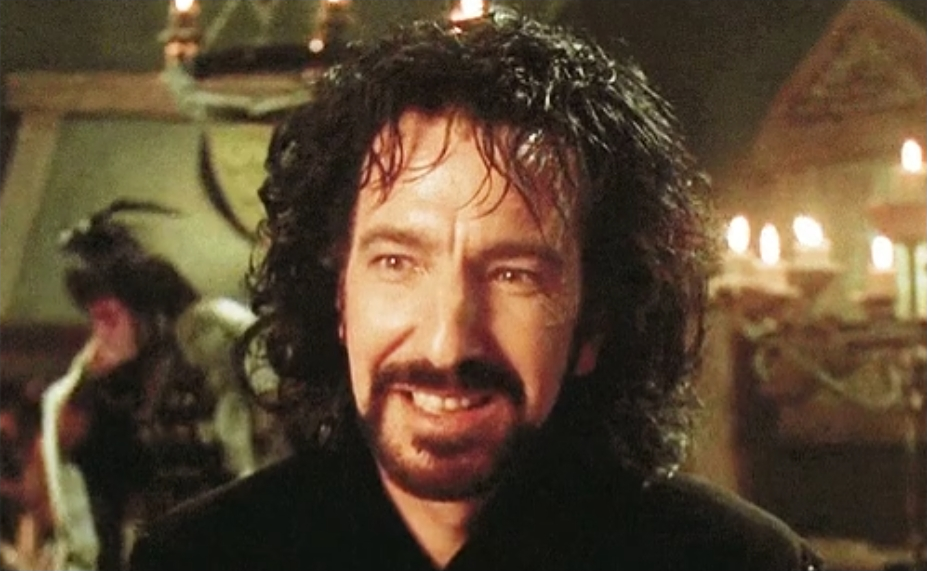
Rumour has it that Alan Rickman gave such a commanding performance as the Sheriff of Nottingham in Robin Hood, Prince of Thieves (1991), that Kevin Costner cut many of his scenes to avoid being completely upstaged. This role was early in Rickman’s film career. His screen debut was as the villain Hans Gruber in Die Hard (1988)1 a scene-chewing villain but up against Bruce Willis in one his first action roles as the reluctant hero John McClane. So here, villain and hero are equal. But in Robin Hood, the sheriff is such a colourful pantomime villain that Kostner’s anaemic goody is wise to limit shared screen time.
Alan Rickman as the Sheriff of Nottingham in Robin Hood, Prince of Thieves. A vivid performance that did his career no end of good.
Rickman gets all the best lines. He threatens to cancel Christmas; to cut Robin Hood’s heart out with a spoon (because it’ll hurt more); and tells a wench to ‘bring a friend’ when she comes to his room. Kostner is there, which is just as well, or the film title wouldn’t work.
Other villains and anti-heroes
A good anti-hero is one thing (Deadpool, for example) but a good villain is always worth watching. Ricardo Montalban is commanding as Khan in Star Trek II: The Wrath of Khan. The combination of David Prowse and James Earl Jones as Darth Vader in the first three Star Wars films gave the character iconic baddie status. Cruella de Ville (101 Dalmations) is probably as evil as any character in children’s literature, though in her case I blame the parents for calling her ‘Cruella’. And the baddie doesn’t even need to be a person: Skynet is the villain in the Terminator series; the various Terminator cyborgs are just machines, not an artificial intelligence.
Awful characters
The BBC sitcom Ghosts doesn’t really have a villain, but the once-a-season appearance of their awful neighbour Barclay Beg-Chetwynd (played with more relish than an entire Branstons factory by Geoffrey McGivern) was always a highlight. He gets introduced thus:
Barclay: Barclay Beg-Chetwynd. From next door.
Mike: We have a next door?
Barclay: It’s about a mile that way. I own the… you know the village?
Alison & Mike: Yeah.
Barclay. Yes, I own that.
He’s not really a villain, just rich, uncaring and pretty awful. The only true villain in Ghosts is ‘Lucy’, played by Jessica Knappett, who tries to con Alison and Mike out of thousands of pounds.
Barclay is a type of awful character that I love to see on screen, but would hate to deal with in real life. Father Jack in Father Ted is hilarious onscreen, but could you imagine living with him? I mean, the smell alone! And yet, they outdid Jack with the menacing, softly spoken sociopath Father Fintan Stack, who was malicious in his awfulness – getting Dougal drunk, drilling the walls at 2 am and driving Father Ted’s car ‘into a big wall’.
I’m not sure why the size of the wall is important.
Literature
Going Postal (2004) gives us Reacher Gilt. He is one of Terry Pratchett’s few proper villains (though not a patch on Carcer from Night Watch), a flamboyant character up against an antihero in Moist von Lipwig. Both men are confidence tricksters; Gilt dresses as a pirate, complete with eyepatch and parrot2. Moist relies on being unremarkable for his cons to work, his golden uniform as Postmaster is a distraction from the man in the suit. However, Moist is in awe when they meet. They immediately recognise each other for what they are, Moist realises that Gilt is a master fraud to whom he would give everything to be apprenticed to. Gilt, for his part, is shocked that Moist is also a fraud.
The last book I read – 2312 by Kim Stanley Robinson – was about 550 pages, 150,000 words. This likely ranks high in the longest books I’ve ever read, though not the top. The longest book I’ve read is Lord of the Rings. The book exceeds 1,000 pages, though publishers normally present it as three volumes. I’ve read it twice. Once in 1980, again in 2022.
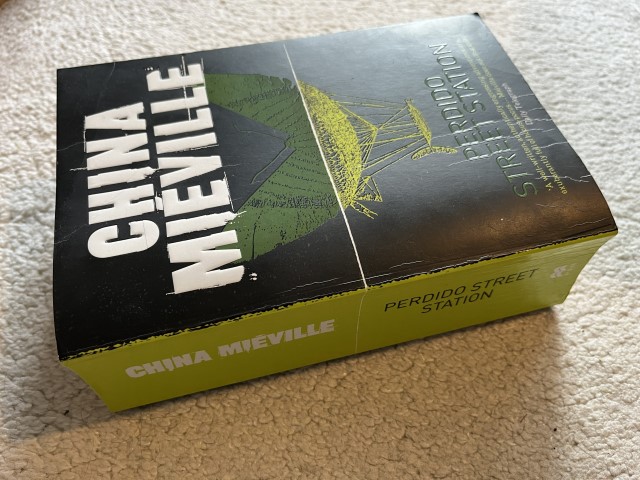
When I was a teenager I went through a phase of reading square fantasy novels. In my memory, at least, they were weighty tomes. Last Legends of Earth AA Attanasio spans eight thousand years. In my memory it’s a heavyweight book, but at 450 pages it’s more of a welterweight. Other works that seem huge – Magician by Raymond E Feist for example- are less than 500 pages. I’ve started Ulysses a couple of times, which is pretty big novel at 730 pages. Perdido Street Station by China Miéville weighs in at 870 pages, the other three Bas Lag novels are a bit shorter1. The book, weighing in at 660g, is the longest single-volume work I’ve read.
A good, thick book. It’s an industrial fantasy book, set on the world of Bas Lag where mechanics, chemistry and magic are all real.
The first volume of The History of the Decline and Fall of the Roman Empire by Edward Gibbon (1776) was described by the Duke of Gloucester2 as:
Mrs S is currently reading Sunne in Splendour (1982) by Sharon Penman. It’s over 1200 pages, she’s 400 pages in. Weighing 870g, it needs wrist strengthening exercises to read. Mrs S believes that Richard III3 was done dirty by Shakespeare, and if the dead could sue for defamation then he’d be within his rights to do so.
This is Mrs S’s current read. It’s the story about Richard III, from boyhood to his death at Bosworth Field in 1485.
A limerick to lighten the mood
To go with the limericks I’ve written about Macbeth and Romeo & Juliet, the third (of three) Shakespeare limericks is about the play Richard III. Its historical accuracy is debated.
On the Historical Verisimilitude of the Play Richard III by William Shakespeare
Now!
  Was Gloucester, mis-shapen 'none ruder'?
A tyrannical, prince-killing brooder?
He wouldn't, of course,
Swap his throne for a horse.
But the victor was definitely Tudor
His latest book, The Rouse, is 1264 pages. It’s due to be published on 17th September 2026 (tomorrow, as I write this), so I’ve not even seen it in the shops yet. ↩︎
Prince William Henry, Duke of Gloucester and Edinburgh (1743 – 1805) was a brother of King George III. He had wished for active service in the military. Alas, his health and intelligence were deemed to be insufficient. ↩︎
Who, coincidentally, was the Duke of Gloucester before he became king. ↩︎
What’s a conspiracy theory you actually find believable?
I have a collection of conspiracy theories that I’ve gathered over the years. Moon landing denial is a popular one, but Flat earth is a pivotal belief for many conspiracy theorists, acting as the starter theory.
Flat Earth as a starter
The mental gymnastics required to align reality with this idea are staggering. This is the appeal – you’ve found head room for all this information and have connected the dots to show how governments, astronomers, lens manufacturers and satellite tv companies have conspired to make the Earth seem round. And because you’ve done this, you’re cleverer than the sheep who believe everything the establishment say.
You get to be condescending to people who question you. You hold forth about how Antarctica is an ice wall that keeps the lizard people in / keeps us out of the infinite realm beyond filled with fallen angel tech/ hides vast mineral wealth / whatever else you want to think of.
From there you start to believe any of the following:
There is no such thing as ‘calories’ in food. When did you last put calories into a meal?
The moon is flat because spheres don’t reflect light.
The sun was replaced with an LED sun simulator
Dinosaurs aren’t real, the skeletons are made in China using chicken bones and glue
Barack Obama is Adolf Hilter’s grandson and Angela Merkel is his aunt
Lotteries were invented to catch time travellers
Jet fuel isn’t real, they spray chemicals to control us and the weather from planes (chemtrail hoax)
There are loads of them.
However, thinking that the government lies about everything is not a strong intellectual pose. It’s as weak and lazy as believing everything you’re told, but you get to call everyone ‘sheeple’.
Why it matters
Many of the conspiracy theories seems harmless and are laughable in themselves. But convince enough people about your ideas and people die.
This was posted on X a few weeks ago.
Screenshot
At the time Anthony Fauci – former Chief Medical Advisor to the US President – was being interrogated about his actions during the COVID pandemic. He was subjected to a vituperative inquisition, even at one point being asked ‘who the fuck do you think you were?’ There was a pile-on during the hearing and online, ripping his professional and personal status apart.
Fauci has received death threats for his supposed involvement in a conspiracy to keep people indoors and inject them with body-altering chemicals.
The first issue is the link with the supposed corruption surrounding various elections in the US, in particular the 2020 election. Donald Trump has been using this to denigrate Joe Biden, calling into question Biden’s legitimacy as president.
Secondly, we have a group of people who don’t think Covid was real. This feeds neatly into vaccine denial, and this is when it matters. Spread disinformation about vaccines and people die. Measles cases are high in the US now, after flatlining for decades. Misinformation about the MMR vaccine is rife – it doesn’t cause autism, there’s a Danish study that shows this. This hasn’t stopped wild conspiracy theories influencing health policy in the USA.
It’s when lives are at stake that this sort of disinformation matters. Believe that baristas are faeries who want your name to steal your soul if you like. But don’t deny people life-saving medicine.
I’m in my mid fifties, so the internet wasn’t really a thing for any of my childhood or a good chunk of my adulthood. I’m just older than the original ARPANET, the last twenty years is when it’s become a – I’m going to use the word ‘quotidian1’ – part of life. This means that our children, born in 2004 and 2009, grew up with the internet.
Knowledge from dead trees
Physical encyclopaedias were the source of knowledge. I collected a part work encyclopaedia in the late 70s, it’s in the loft. The only thing I remember was how important the author of the Billabong entry thought it was that we don’t confuse a billabong with an ox bow lake. It remains the only time I’ve seen capital letters being used for emphasis in a reference work.
You can hear the frustration in the writer’s prose. How many times a day must they have been confronted with this basic confusion? An ox-bow lake is NOT a billabong, and don’t you forget it, young man!
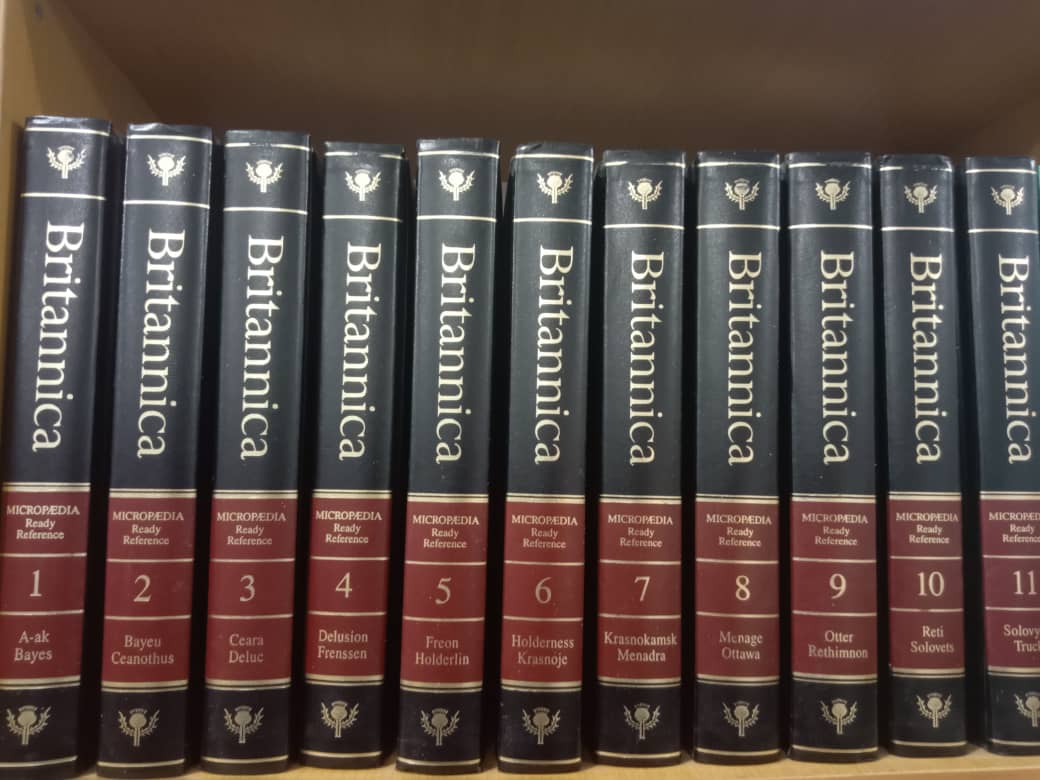
We also had a 12 (I think) volume reference from the ’60s. This was much slacker about the definitions of riverine features. It also had beautiful full colour insets with cutaway diagrams of flowers, sailing ships, hydroelectric dams and (less lovely) frogs. Instead of doomscrolling or getting lost on a Wikiwalk, we could spend a wet Sunday leafing through these reference works and bore each other with really interesting facts.
Early days of the internet
I first heard about email in 1990, at university. One of my tutors explained how he could use his computer (he had a computer in his office!) to send a message to a friend in Southampton and would likely have a reply that afternoon. A miracle!
Academia and the military were the first adopters of internet. When I started work at Liverpool university in 1993 I got my first email address. I didn’t have anyone to email until a few years later when my dad, an early adopter, got home internet in ‘96. He used it for research – he was a keen genealogist, and the digitising of parish records and the availability of registry office records online was just beginning.
What now?
I’ve written before about how the internet changed how I did my job as a research scientist. I’m now self-employed and the internet enables my work. My online shop couldn’t exist without the internet. I’d have to have the goods printed for me or buy a suitable printer and then have the hassle of storing unprinted goods (t shirts in all sizes and colours, bags, cups, blank stickers…) .
The impact that the internet has on our lives is astounding when you think about it from the point of view of what it was in the 1990s. In an interview with Jeremy Paxman in 1999, David Bowie said he was convinced that it would change our lives and our idea of what media could be. Paxman was sceptical, as most people would be. Who really needs a computer in their homes, just to do shopping or read emails?
Bowie and Paxman could not have foreseen the rise and ubiquity of smart devices, where almost everyone can have access to the internet. It’s now so routine to have internet that to be without can seem, for some, to be a personal disaster.
I could also have used ‘jejune’, but let’s keep things suitable for family viewing, shall we? ↩︎
You might think he’s one of the greatest actors of his generation, a philanthropist and mentor, but there are other sides to Michael Sheen. He’s got more sides to him than a full set of D&D dice.
Who is he, really? One minute he’s a dishevelled wild man in the poorly-shot Staged, the next he’s Arthur, the exquisitely groomed robot in the better-filmed Passengers.
Michael Sheen as he really is (left) and being paid to pretend to be a robot (right).
Often he’s too lazy to think up a character to portray, such as Arthur in Passengers, Paul Bates in Midnight in Paris or Brain Clough in The Damned United, so he resorts to pretending to be real people. But which one is he? Is he satirist and interviewer David Frost, slightly smarmy Prime Minister Tony Blair, effete and prickly actor Kenneth Williams, or the tragic revolutionary leader, Lucian the vampire?
Michael Sheen in four roles depicting actual people. David Frost in Frost / Nixon (2008); Tony Blair in The Queen (2006), Kenneth Williams in Fantabulosa (2006), and Lucian in Underworld (2003).
Feud with David Tennant
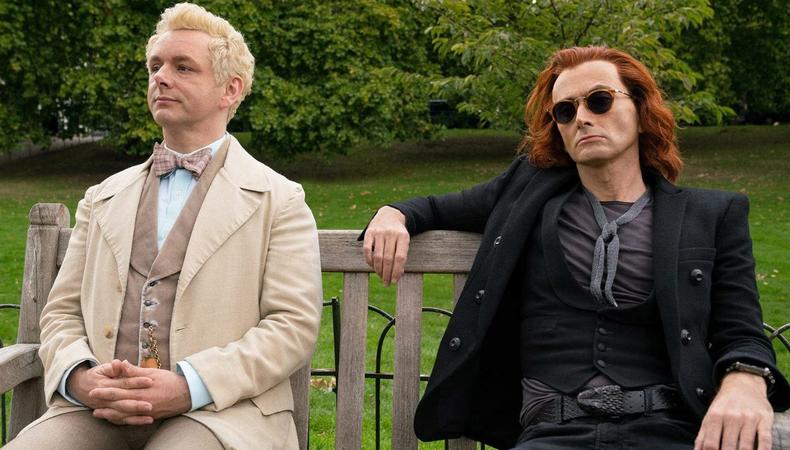
Sheen first worked with Tennant on the TV adaptation of Good Omens, the book co-written by Terry Pratchett and Neil Gaiman. The relationship got off to a bad start, with Sheen replacing Tennant as the angel Aziraphale during rehearsals. Pretending to be the Good Guy again. The third series is due out soon, maybe he will show his true colours this time round.
Michael Sheen (right) as the angel Aziraphale and David Tennant as the demon Crowley in Good Omens. Sheen looks very smug and totally mis-cast as an angel. And I’ve only just noticed that Crowley’s belt buckle is a snake’s head.
I’ve mentioned Staged and this is at the nub of my issue with Sheen. This public, ongoing war with Scotland’s greatest actor and the second-best Dr Who1 David Tennant was pitched as a distraction during Covid. Yet Sheen chose to heap humiliation on David, flaunting his art skills in the first episode and repeatedly correcting his Welsh pronunciation.
Staged Series 1, Episode 1. Sheen gets the humiliation in early with this display of artistic talent.
All actors are evil
Not content with pretending to be someone he’s not – for money! – he’s turned his sights on his hometown of Port Talbot. Not content to constantly insist that the ‘t’ in port shouldn’t be pronounced, he’s plotted to flood the British stages with Welsh actors. Firstly, he’s funded and is Artistic Director of the new Welsh National Theatre and secondly he initiated ‘Welsh Net’, a talent-scouting project aimed at finding and developing Welsh talent.
This is clearly misguided. Apart from Sheen there are no known actors or entertainers from Port Talbot or anywhere in South Wales. Well, none of much note.
He’s set up a charity to provide housing, little thinking that in doing so he might affect house prices in Por’ Talbot. He sold his houses to fund a the Homeless World Cup in 2019. Again, without a thought of the effect on property prices. He also used his own money – gained through devious means, don’t forget – to wipe out £1 million of debt for 900 people in South Wales.
Gameshow takeover
The latest calumny is his ousting of poor little Richard Osman on House of Games, no doubt the result of a hostile negotiations. What next? A series of successful murder-mysteries, I’ll warrant.
Studio shot of the new House of Games studio, now that Michael Sheen has completed his conquest.
In summary
The answer to the question at the top is ‘no’. I think he’s a brilliant actor and a wonderful person.
We’ve not been to many live performances recently. Having kids put a cramp on going out at all, and we’d lost the habit of going out by the time they were old enough to leave alone in the evening. When we do go out together, it’s a comedy night. We are both fans of comedy, though mainly on telly1.
Last January Mrs S got us tickets to see Bill Bailey in London in January ‘25. This was just after I’d been made redundant, so the mood lift was needed. This is the fifth time we’ve seen him and he didn’t disappoint.
First time was in 1992, when he was part of a double act called The Rubber Bishops with Martin Stubbs. They performed at Loughborough Uni at one of the regular Saturday night shows. During my time at Loughborough, I also saw Eddie Izzard and Lee Evans during their early years, and Rory Bremner who was quite a big star to get at a little uni in the Midlands.
We saw Bill a few more times in Brighton on various occasions, whenever we could get a babysitter.
This was the first time we’d seen him since his ‘dramatic’ haircut, but that didn’t affect his act. Highlight was the account of getting a cappuccino in Amsterdam. Yes, really.
Bill Bailey before and after his ‘dramatic’ haircut.
Prior to Bill, we saw Ed Byrne at our local theatre in September ’24 and The Mousetrap at St Martins Theatre for its 29,692nd performance in July ‘24.
I’ve seen Bill more than any live performer. Second place would have to be New Model Army (four times), probably the only other multiple-watched performers.
I should get out more.
We mostly agree on comedy. Except for Stewart Lee. Mrs S can’t understand what’s funny about his stuff. ↩︎
I always vote, whatever the level of the election. We have local council elections in my area this coming Thursday and I’ll be voting. Not sure who for, yet.
Voting is a hard-won privilege. In the UK, the Reform Act of 1832 passed after hard-fought campaigns to allow the growing middle class the vote. Not everyone was in favour, of course. The fear that the working class might have a say in the make-up of parliament was primary. The Duke of Wellington said that he couldn’t envisage a better system. This was a system where Leeds, a city of 130,000 people, shared two MPs with the whole of Yorkshire, and Old Sarum (population: 0) also returned two MPs. Notable among these MPs was William Pitt, the elder, Prime Minister from 1766-68.
Non-property owning men gained the vote, provided they paid a rent of over £50 a year (about £5000 today).
Women won the vote in 1918, but then only to women over 30. Male voting age was 21 at the time. The property-owning stipulation was lifted for men in 1918, but not for women, though. They still had a property-related restriction until 1928.
Across the Atlantic, voting privileges in the USA seem to be under attack. It’s already very difficult to vote in The States – every time there’s an election we see footage of enormous queues of people wanting to vote. Who knows how many are disenfranchised because they cannot spare two hours waiting to vote? The logical alternative – postal voting is also under attack.
Voting is a ‘use it or lose it’ privilege. I’ll be using it on Thursday.