I’ve not updated for a while, but I’ve not neglected the course. I’m nearly finished the course I started, having made a dungeon scene and a low poly dinosaur.
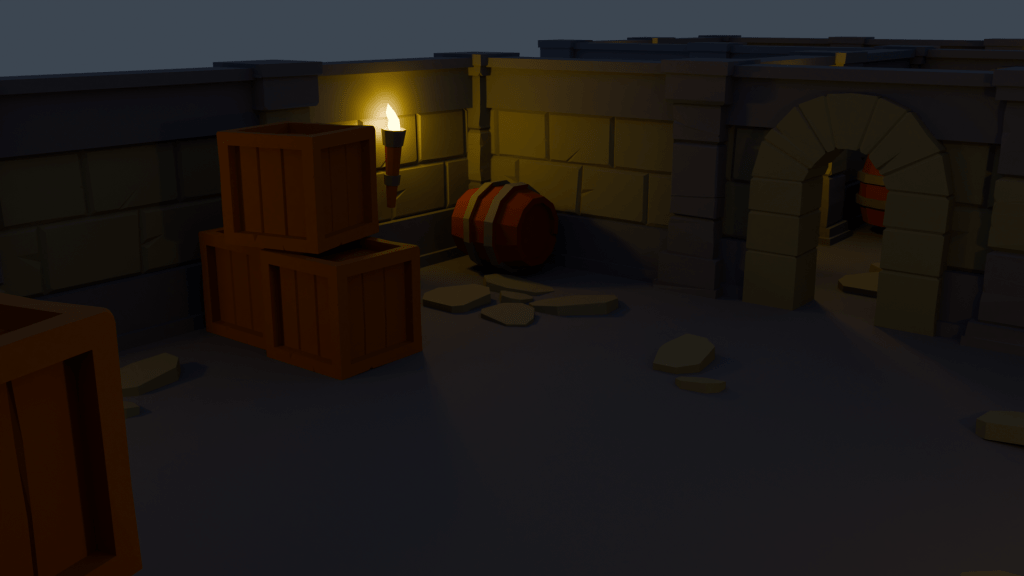
Dungeon scene, with crates, barrels and ineffectual lighting.
The dungeon was interesting to do, I can see why that would be useful for a game engine. How you put it into a game and how you make a game is not really anything I am thinking about right now.
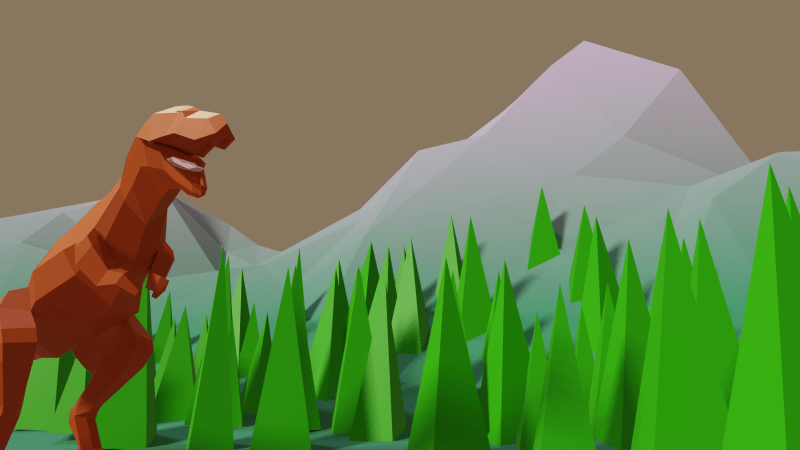
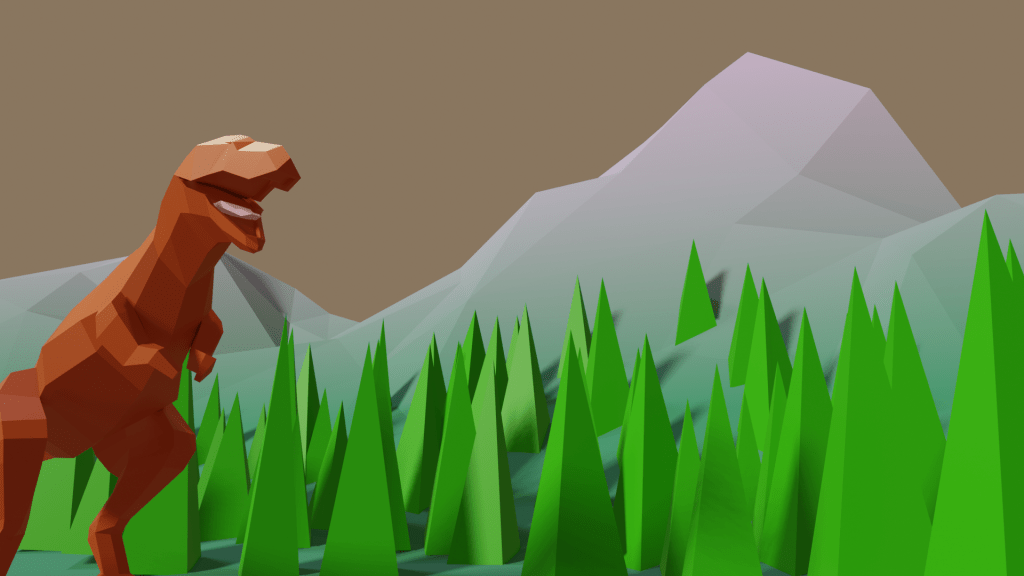
I am a mighty dinosaur! Hear me roar!
Not a very convincing scene. I’m sure there are ways of improving the look of the landscape and making it look like the T Rex is further away from the trees.
We’ve started what sounds very scary – UV mapping. So far, it’s using downloaded images to make barrels and crates look authentic without faffing around and adding texture, like we did for the dungeon scene. Grant has likened this to putting labels on jars, which is a nice cozy way of describing it. I’ll be finished with this part soon and will post if I remember.
Mostly I laugh at what has no agenda and is mainly silly. This will be why I love Taskmaster, Morecambe & Wise, Bob Mortimer, Airplane!, Ghosts, Eddie Izzard, Monty Python and Stewart Lee.
Silly songs, too!
You could include Terry Pratchett, though the elevated level of silly hides sharp commentary and anger.
There’s plenty I don’t find funny, but that’s another story.
One of the things that has been rattling round my head for many years is the idea of 3D printing from an SEM image. I know, it’s a common issue and one you’ve all heard many, many times.
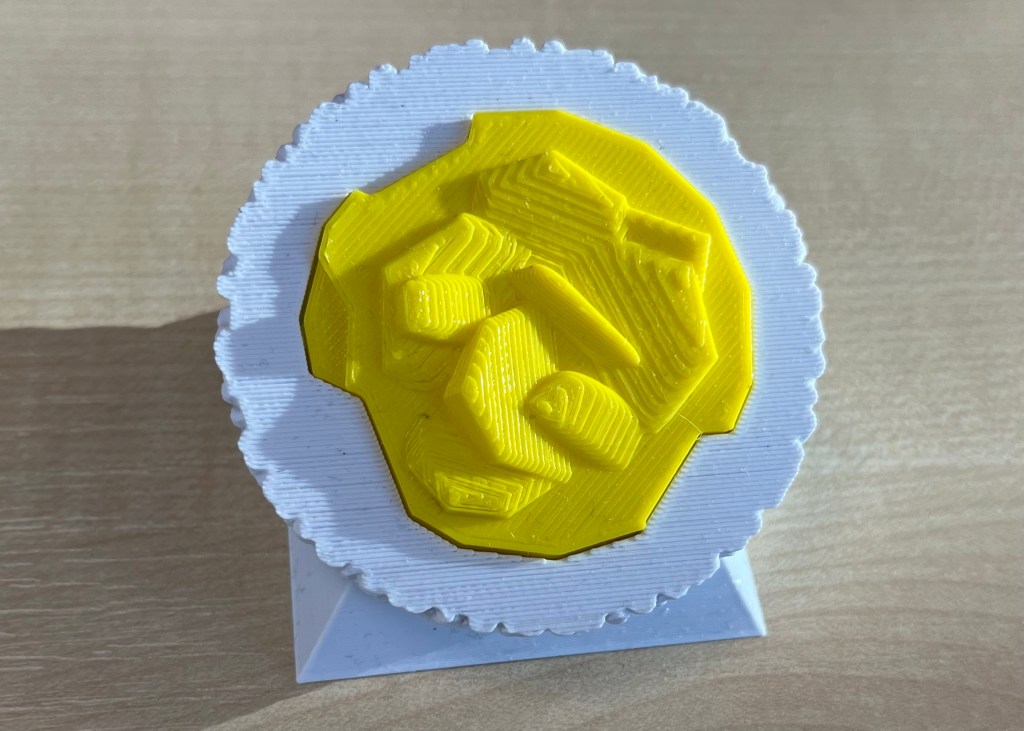
In a previous post, I mentioned how I’d done some of this already using Blender and a bit of artistic licence. What I made needed to be printed in two part (one white, the other yellow) because I didn’t have access to a multicolour printer.
Original version of a 3D printed oil in water droplet. Some artistic licence required and I had to design and print in two parts. You can see the join.
Scrolling through Blender instruction videos (as you do) I saw a post by Architecture Topics on how to convert an image into a 3D Element.
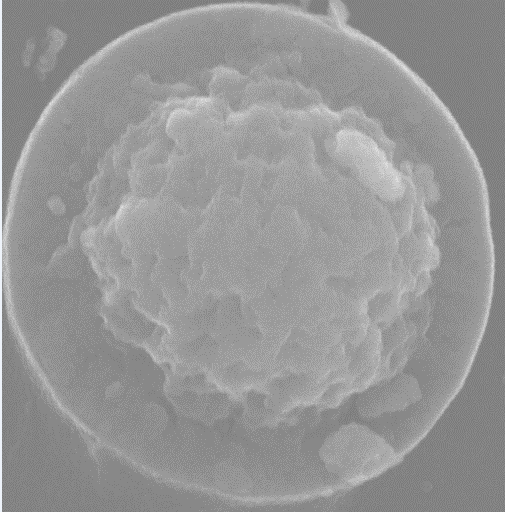
This pinged a synapse in my brain and I wondered if the SEM of the broken oil droplet I took some years ago could be used in the same way.
Scanning electron micrograph of a split oil droplet. I took this image about ten years ago and have been thinking about making a 3D version ever since. I can work faster. Honest.
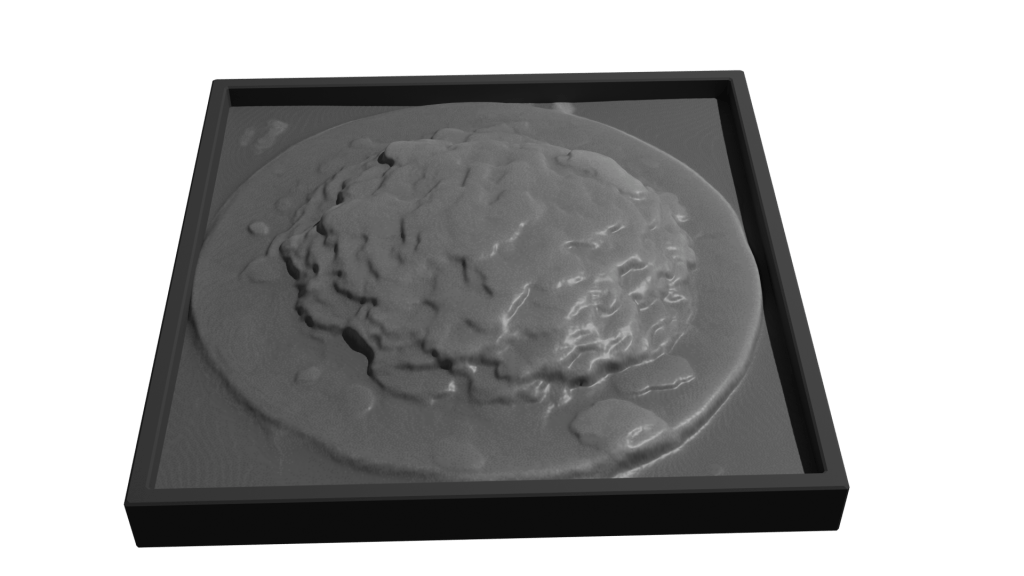
How hard would it be to convert the original image to a 3D Element?
Rendered version of the converted image. I’ve stuck to black and white since electrons don’t do colour. I could reasonably render this with a gold effect since the sample prep involved coating with gold to get better imaging.
It took a while, but I got there. For the final render, I put the converted image into a box to hide the ragged edges of the conversion. Also I had the opportunity to go into my old work and have a go on the 3D printer there.
After a bit of faffing (because I’d not applied a solidify modifier to the final image) I got a .stl file that the slicer said would print.
My first attempt wasn’t great. I’d only applied enough solidify modifier to give the final print a thin shell. To quickly fix this, rather than going back into Blender and increasing the solidify level, I set the slicer to do 100% infill.
That didn’t work. I’d need to go back to Blender and learn how best to use the 3D toolbox that I learned about while I was doing this.
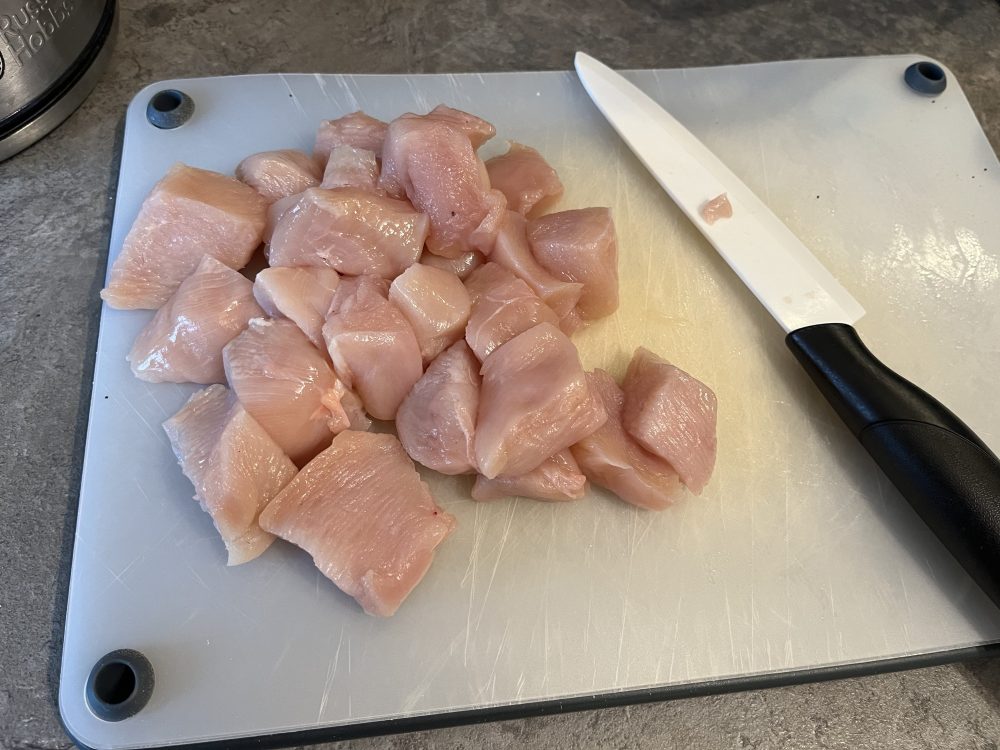
Dice the chicken breasts, brown off in a frying pan. Put to one side.
Diced chicken on a chopping board.
In a large saucepan (the whole thing is made in this pan), add the butter and fry the onion over a low heat for 5 minutes until they’re clear. Add garlic (crushed or chopped) and give that 30 seconds frying. Add herbs and stir them in, too.
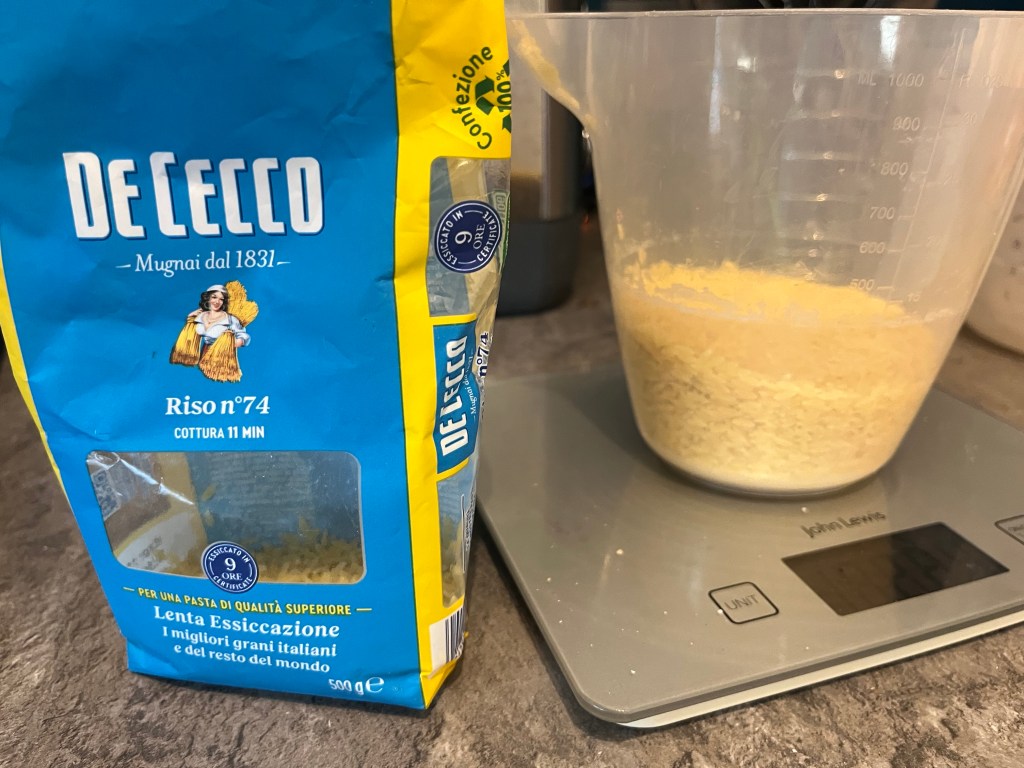
Orzo pasta. I must have been feeling flush to buy DeCecco pasta.
Add the orzo and toast until lightly brown. This is critical to the texture of the finished dish.
Add the chicken pieces and half the stock. Turn up the heat and stir well to avoid anything sticking to the pan.
Once the pasta has absorbed the liquid, add half the remainder. Keep stirring (though Nigella says not to bother. But what does she know?)
Add the peas and the rest of the stock. Cook until the pasta has the texture you like; ideally a bit of bite should remain. You can cook until it’s all soft if you prefer.
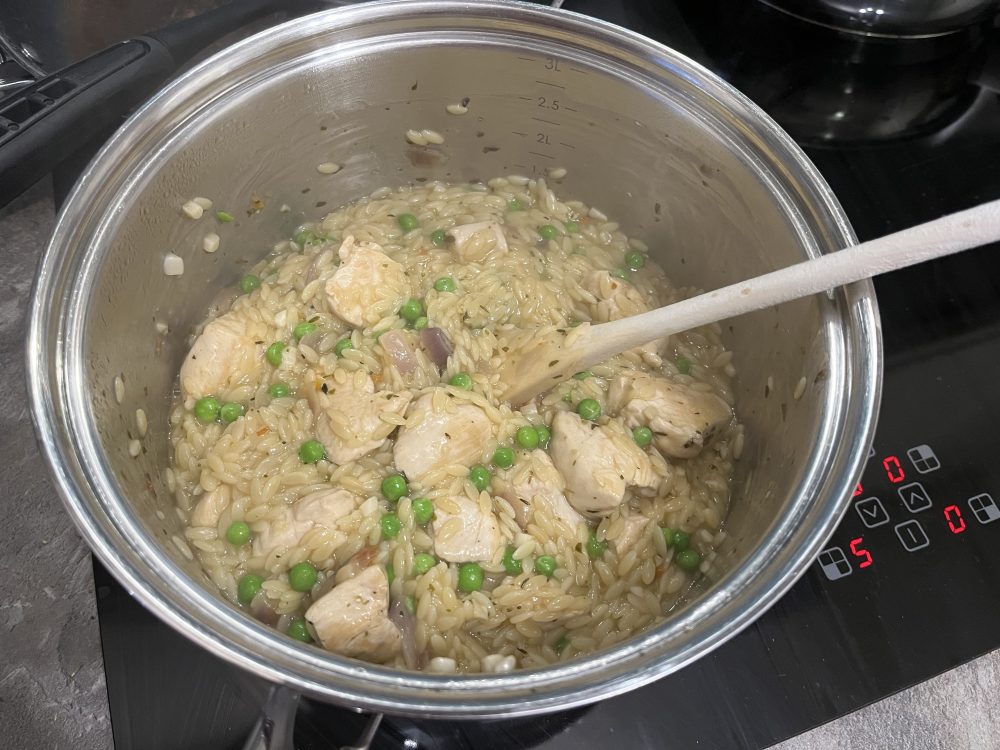
Chicken risottata, almost ready fo rdisingup.
Stir in the grated parmesan and serve. Garlic bread would be a good addition. Maybe use smaller pieces, or add chorizo to give more variation in the texture.
Timings: Prep = 10 min. Cooking = 30 min. Eating = 5 min
Ingredients
500 – 600 g potatoes (Baking potatoes or big, floury ones)
500 -600 g leeks (about the same amount of leeks and potatoes)
Veggie stock (Knorr stock pot, if possible)
2 garlic cloves
I add chilli flakes and cumin (half a teaspoon) to pep it up a bit, oregano and thyme (teaspoon or more) to help make it interesting.
Additions
Bacon lardons
Parmesan
Method
You’ll need a big saucepan and a blender.
Chop the leeks, roughly – only use the white and pale green parts.
Peel then dice the potatoes and put into water.
Add a splash of oil to a large saucepan – the soup is made in this pan, so it needs to be big. I use peanut oil, because I’m like that, but vegetable or olive will be fine. Don’t use extra virgin olive oil. though. Fry the leeks over a medium heat until they start to soften and before they go brown. If they go a little brown, don’t worry.
Add crushed garlic, spices and herbs if using them – fry for about 30 seconds. Add water and stockpot to cover the ingredients. Add the potatoes and more water to cover the spuds.
Simmer for at least 20 minutes, until the potatoes are softened.
Use the blender (I bought a stick blender from Wilco years ago and use this. Well worth the £12 it cost.) to mash up the ingredients. You may need to add more water to get the viscosity right – this is a matter of preference.
Warm the soup through on a low heat. This helps thicken up the soup as starch is released from the potato particles. Meanwhile, fry the bacon lardons until they’re crispy. Grate a good pile of parmesan.
Serve soup with a sprinkle of bacon and cheese. Serve with bread; Mrs S makes excellent bread that is great with this. But we had none, so I had Warburton’s white instead.
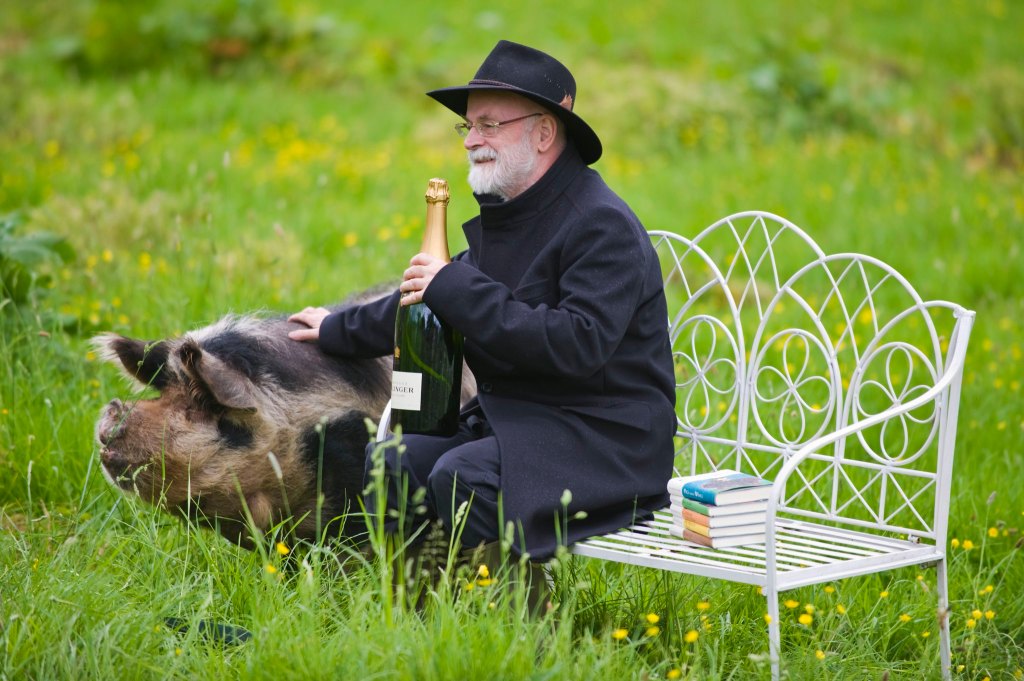
Today is the tenth anniversary of Terry Pratchett’s death.
We knew it was coming, but it wasn’t any easier.
I read The Colour of Magic just after it came out in paperback in 1985. There was a very favourable review in White Dwarf, I may have borrowed my brother’s copy before splashing out a few quid on my own copy. I’d enjoyed Anne McCaffrey’s Pern series (lightly parodied in CoM) and read the Fafhrd and the Gray Mouser series a year before. Conan/ Hrun the barbarian was a trope I knew and I had probably seen Schwarzenegger in the film. I later learned that Bel-Shamharoth was a parody of the Cthulu mythos. I have tried to read Lovecraft, but I can’t get on with him. Just get on with the story, already.
By the time I went to Uni in ’89 there were seven Discworld books. Pyramids, detailing Pteppic’s time at the Assassin’s Guild (modelled on public schools) in the first part had come out, not long after I’d tried (and failed) to read Tom Brown’s Schooldays. This was unrelated to Pratchett – I’d read the available Flashman books and thought I’d try the original. This did nothing to assuage my antipathy towards Victorian literature, which was based on having to drudge through Oliver Twist for O level English. I also have issues with books set in public schools – by brother loved the Jennings books, I was never keen.
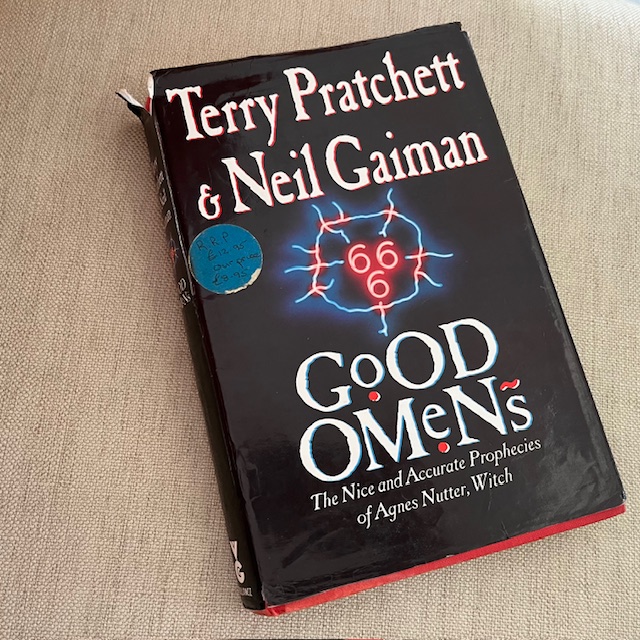
Anyway, I was a fan of his work and bought the paperbacks when they came out and I could afford them. I also came across The Unadulterated Cat and, by chance, Good Omens in hardback at the irresistible price of £8.95. I was in Quiggin’s in Liverpool, looking for cheap clothes probably, and was astonished to see this for sale.
I had no idea who this Neil Gaiman person was.
First edition (I think) Good Omens, bought in Quiggin’s Market, Liverpool.
Back at Loughborough, I was sharing a house with Simon, a fellow metalhead who was doing English and Drama. As is the nature of Drama types, they tended to congregate as a group. One of the group became friends with Simon’s girlfriend. Over a curry one evening, this friend and I got chatting about books and fantasy. We shared a love of Anne McCaffrey and a growing disdain for high fantasy, but she’d never read Terry Pratchett, could she borrow one?
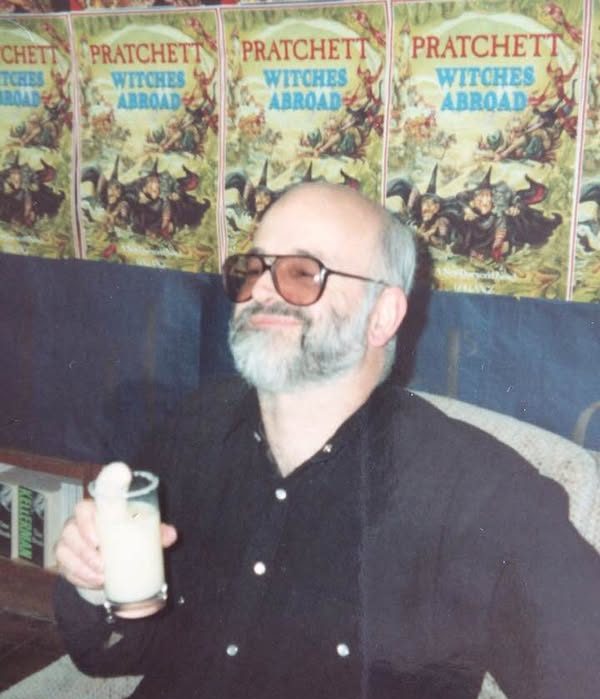
By the time she’d borrowed all my books, we realised that we really liked each other. So much so, that we got married, bought more Pratchett books and had two children together. But not before we got to meet him and nearly poison him with a bananana dakry.
Pterry at Loughborough University, signing for Witches Abroad in 1992. Our friend Emma and I colluded to get him a bananana dakry which, to his credit, he drank and pretended to enjoy.
So Pterry meant a lot to us and we were saddened by his death, although we had known it was going to happen. Not as sad as when family have died, but still upset.
Not long after my dad died, I read “A Life With Footnotes”, Rob Wilkin’s biography of Sir Terry. My dad had had vascular dementia, which stripped him of his memory, his independence and his dignity. Reading the last part of the biography was difficult for me. Not only because of how accurately Rob described his final days and Terry’s decline, but because I was crying while reading it.
I’m rereading A Life With Footnotes. I keep meaning to do a re-read of all the books, revisit old favourites and maybe, finally read The Shepherd’s Crown.
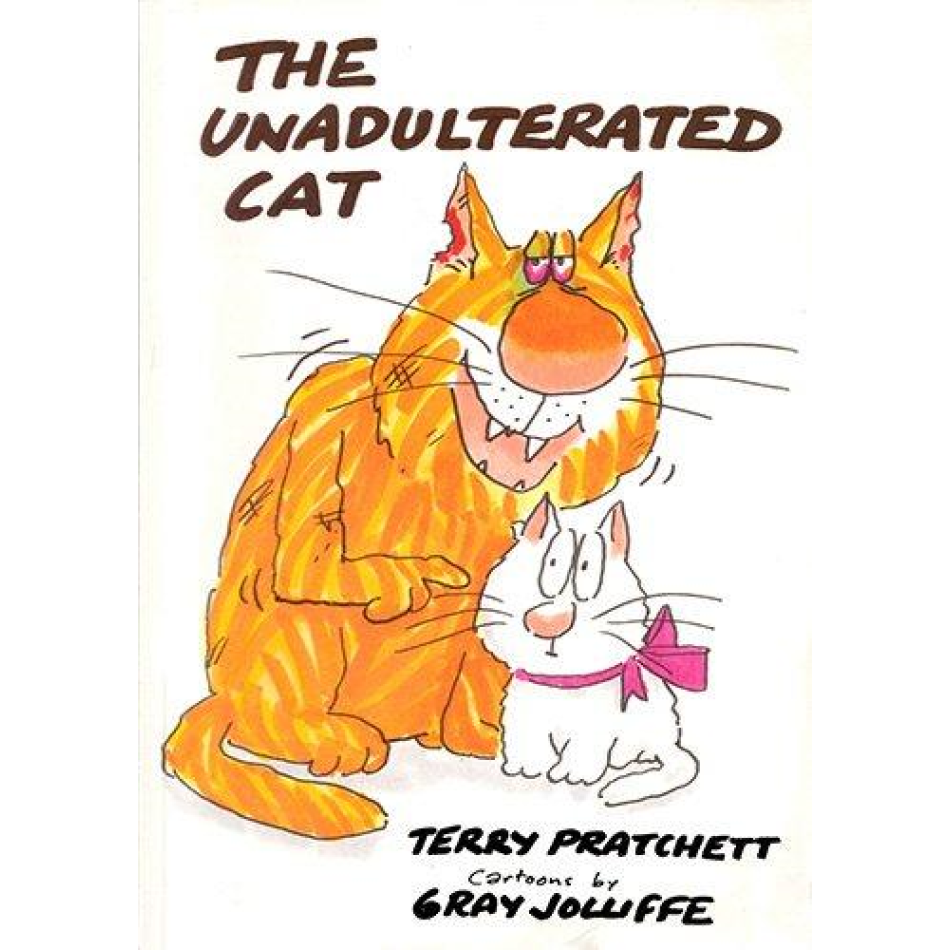
But I do need to find a copy of The Unadulterated Cat.
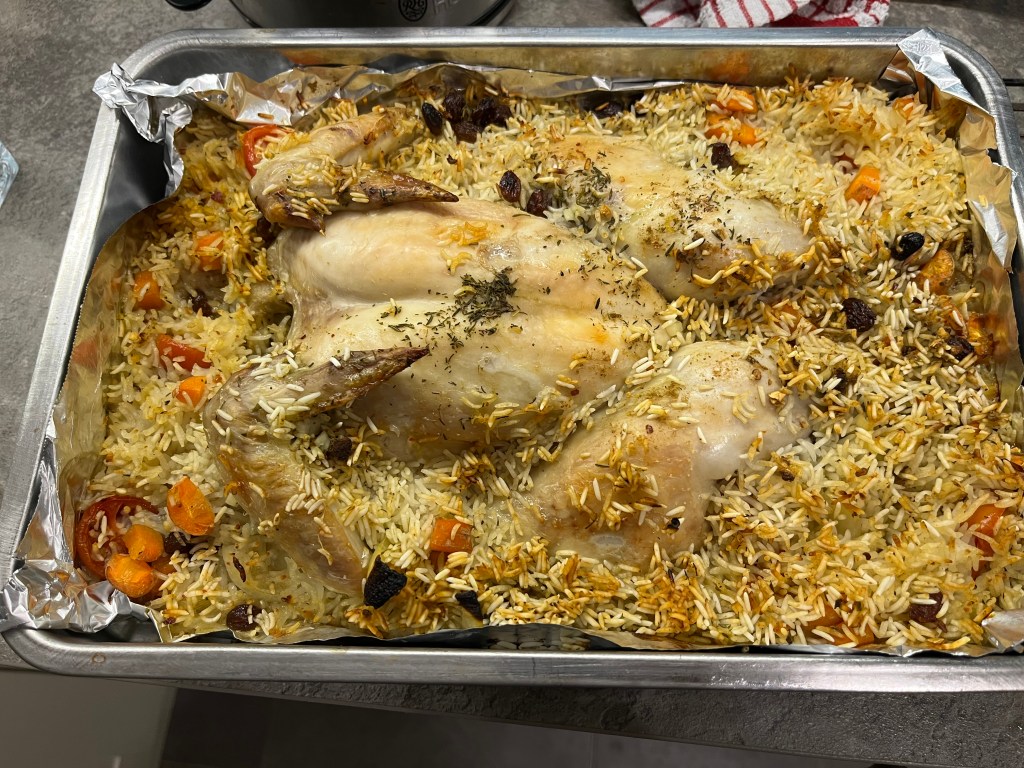
Based on a recipe I can’t find for an Iranian dish. It falls under the general category of ‘pilaf’, where rice is cooked with other stuff. Chicken is spatchcocked to (a) reduce cooking time and (b) fit in the roasting tin.
Timings: Prep: 20 minutes. Cooking: 1 hr to 1 hr 15. Eating: about 10 minutes.
Ingredients
Medium roasting chicken (1.8 kg ish)
250 g basmati rice
500 ml chicken or veg stock (I used Knorr stock pots)
One onion
6 cherry tomatoes or a couple of normal tomatoes
One carrot (diced) and a handful of raisins
A teaspoon each of chilli flakes, cumin, oregano, and black pepper (to be more authentically Iranian, sumac should be used. But I didn’t have any. Sue me).
Method
Set oven to 180 C (fan). Will need at least one hour, up to 1 hr 15 min.
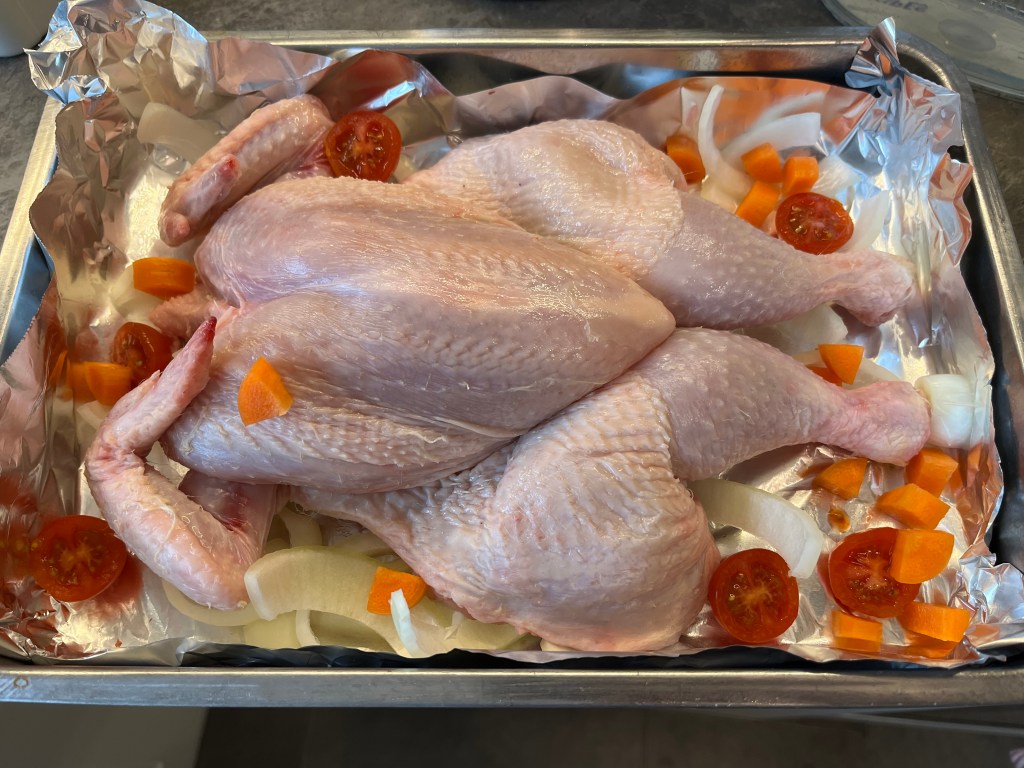
Chop the onion into thick slices and scatter on the bottom of a lined roasting dish. Cut the tomatoes and add to the onions.
Spatchcock the chicken (pictures below). I marinated the chicken overnight – rub the skin with olive oil and salt, put into a big plastic bag and put in the fridge. I try and do this when I do a roast, it tenderises the meat.
Add the chicken to the roasting tin.
Chicken ready for the rice and stock.
Add the rice, diced carrots and raisins. Pour over the stock.
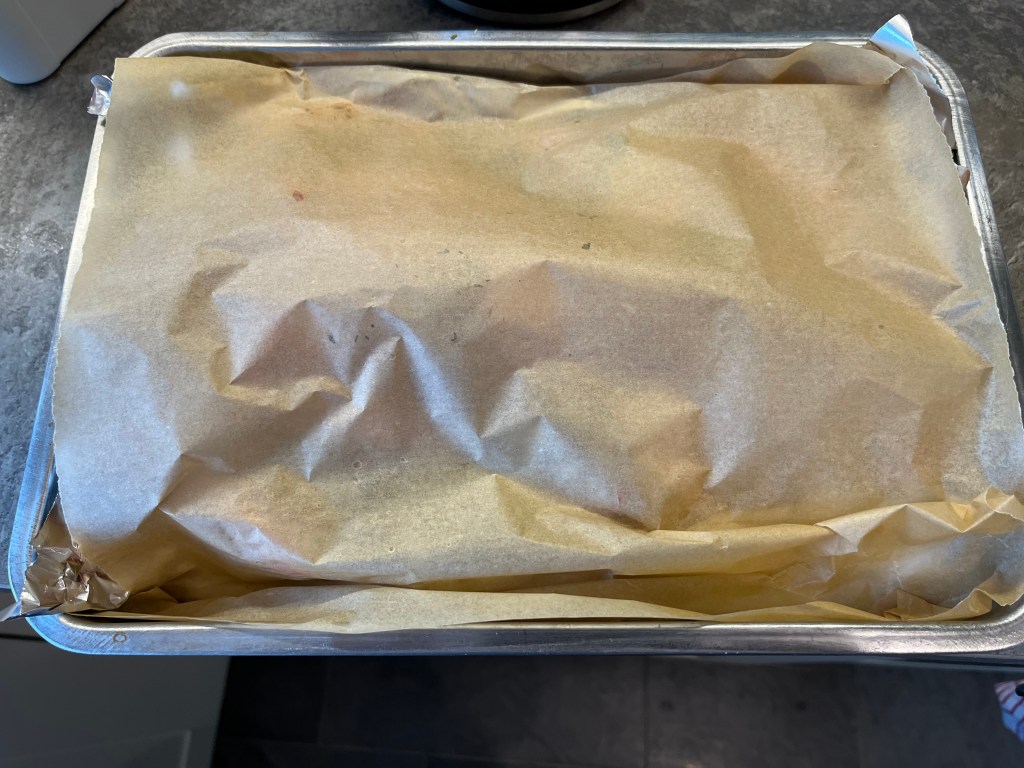
Cover with baking parchment, then foil to seal in the steam as it cooks.
Bye, bye birdie.
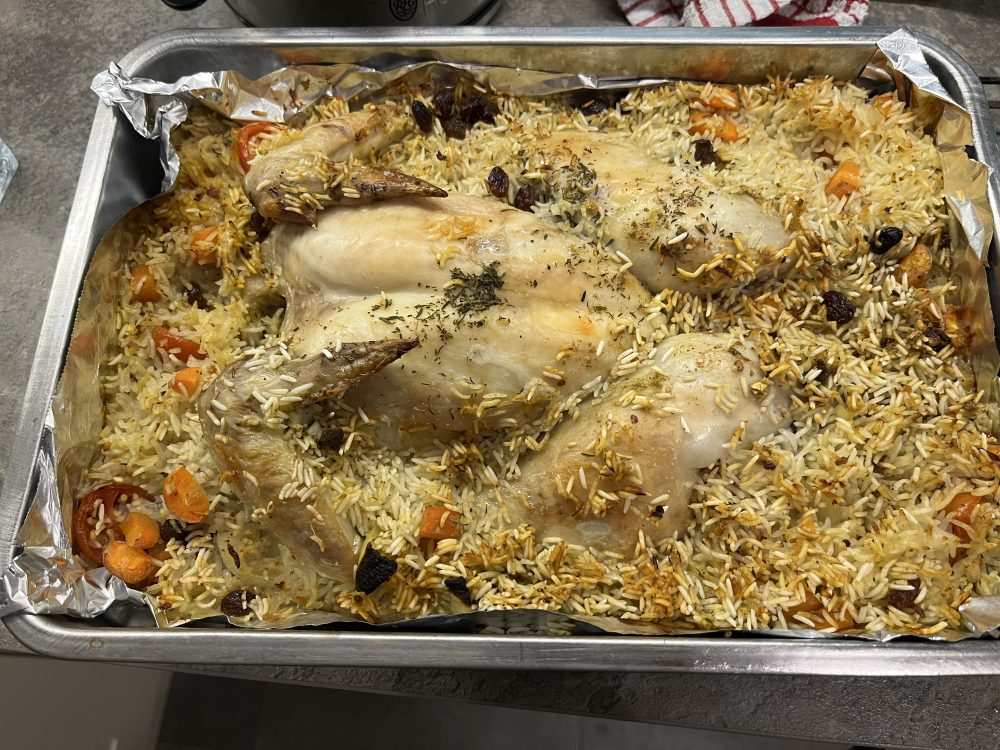
I used a thermometer to check that the chicken was cooked. After an hour it was nearly done (not yet at 74 C) , but the rice looked a bit dry on top so I added 100 ml water. I gave it another 10 minutes and it was done.
Dinner’s ready!
There was a nice contrast in textures between the rice at the top and the rice at the bottom, so there was crunch and softness.
I’d go heavier on the spices next time. Maybe buy sumac, or look into the traditional Turkish method.
Also some recipes call for grilling the dish before serving to brown the chicken and give extra burned rice. Maybe next time.
Spatchcocking a chicken
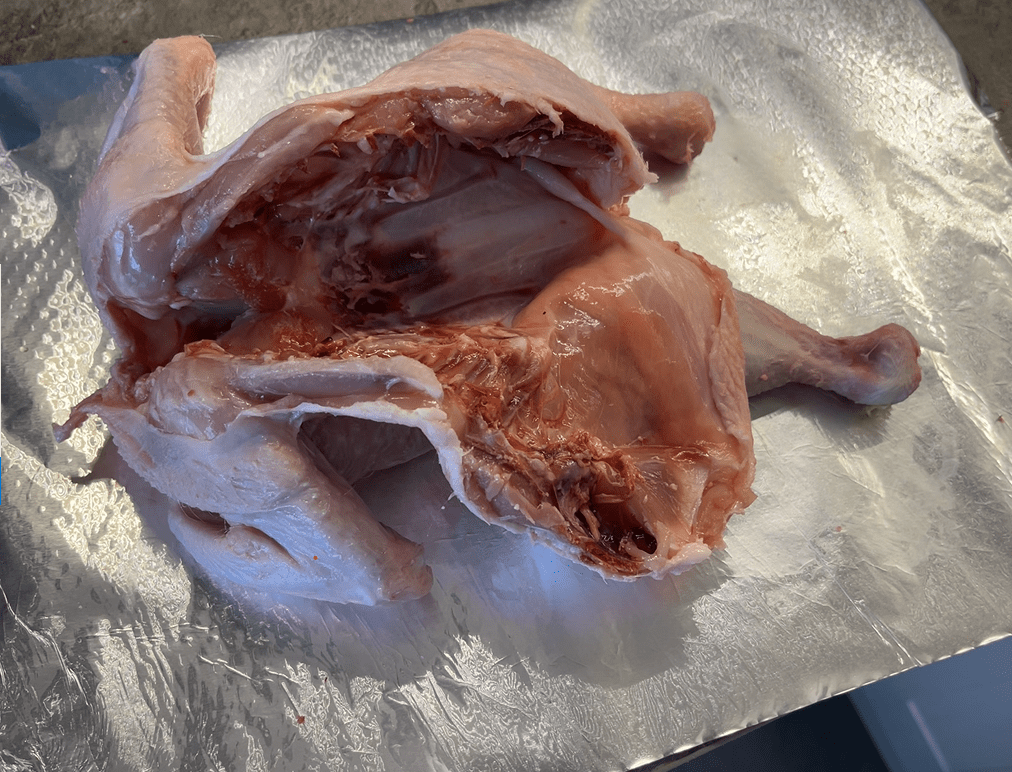
This is removing the spine of the bird and pressing it flat so it cooks quicker.
Another Taskmaster reference. Hugh Dennis spatchcocked a camel, which I won’t be doing.
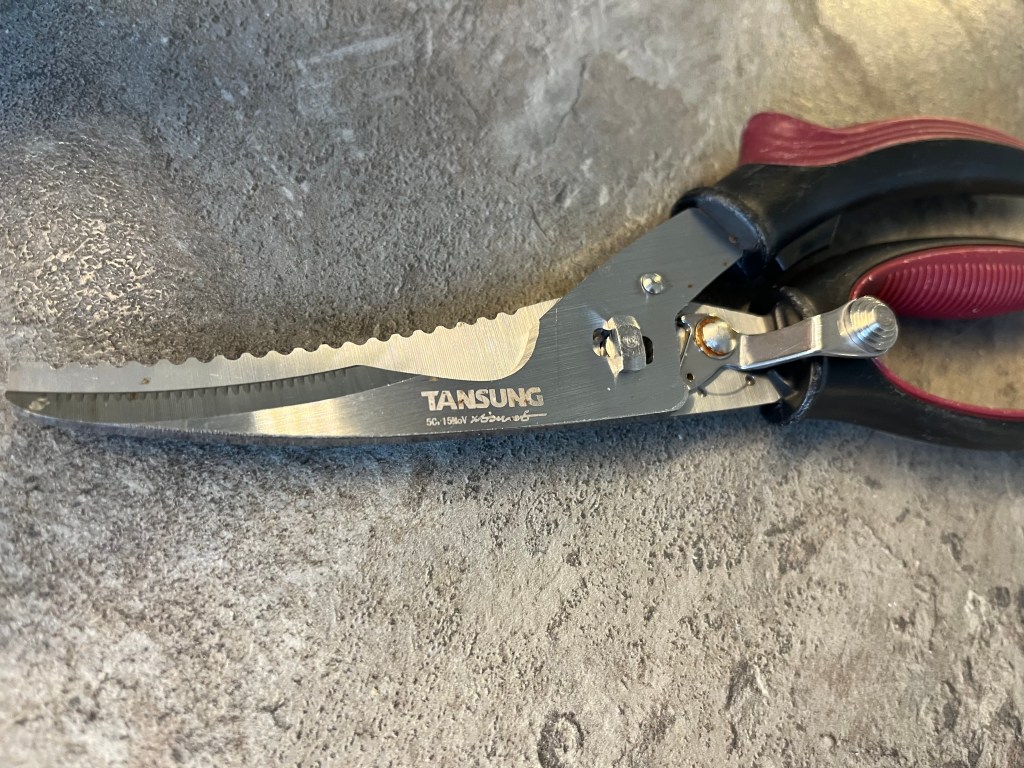
I bought bone scissors some time ago because doing this without the proper tools hurts and can ruin a normal pair of scissors.
“You Tansung?” “You asking?” “I’m asking.” “Then I’m Tansung”. A reference for the youth, there.
I use these to cut the legs off roasted chicken, so they are used at least once a month. And they come apart and are dishwasher safe.
I chopped off the parson’s nose then cut down one side of the spine. The skin is more difficult to cut properly with these scissors. I removed the spine fully.
The world’s most cowardly animal – a spineless chicken!
I wiped the inside with kitchen towel to get rid of rogue bits from inside. Turn it over and press down to flatten. The wishbone needs to be broken so the bird will lie flat.
A favourite when we go to France. And it’s pancake day!
Ingredients (pancakes)
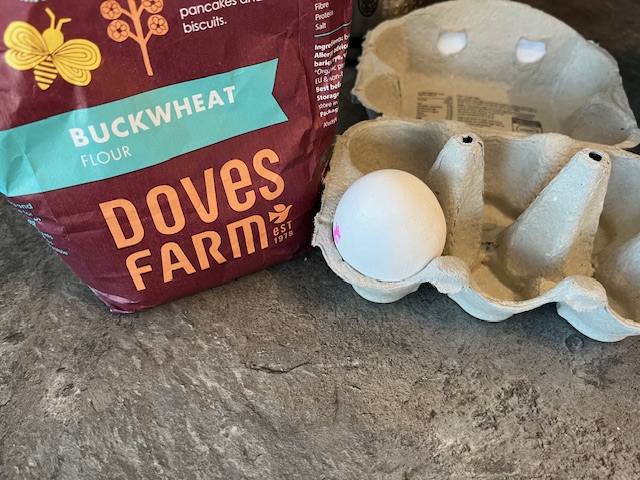
80g buckwheat flour
1 egg
250 ml milk
pinch of salt
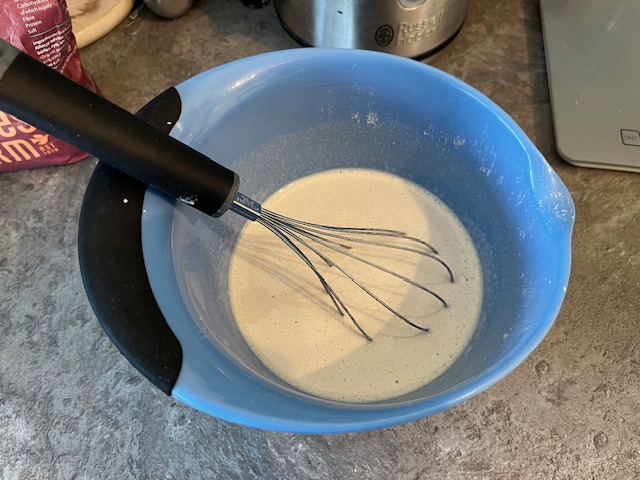
Mix flour, egg and salt in a bowl. Once mixed, leave to stand for at least 30 minutes. Overnight in a fridge is supposed to be better.
When it’s time, put a blob of butter in a frying pan. Once it’s bubbling add enough batter to cover the pan and fry until the top is almost solid. Then flip and continue to fry until the bottom is solid.
We had buckwheat flour left over from youngest daughter’s Food Tech last month. And an egg! Currently a luxury in the USA. Quite a thick batter (not that you can tell). If I was working I’d do some rheology and a design of experiments on this and determine the ideal ratio of flour, egg and milk. But I’m not working, which is why I’m doing this nonsense.
In the end, they were OK. We had them with baked salmon (from frozen – salt, chili flakes and frozen onions, bake 30 minutes at 180 C) and corn on the cob (butter and salt, wrap in foil, bake with the salmon).
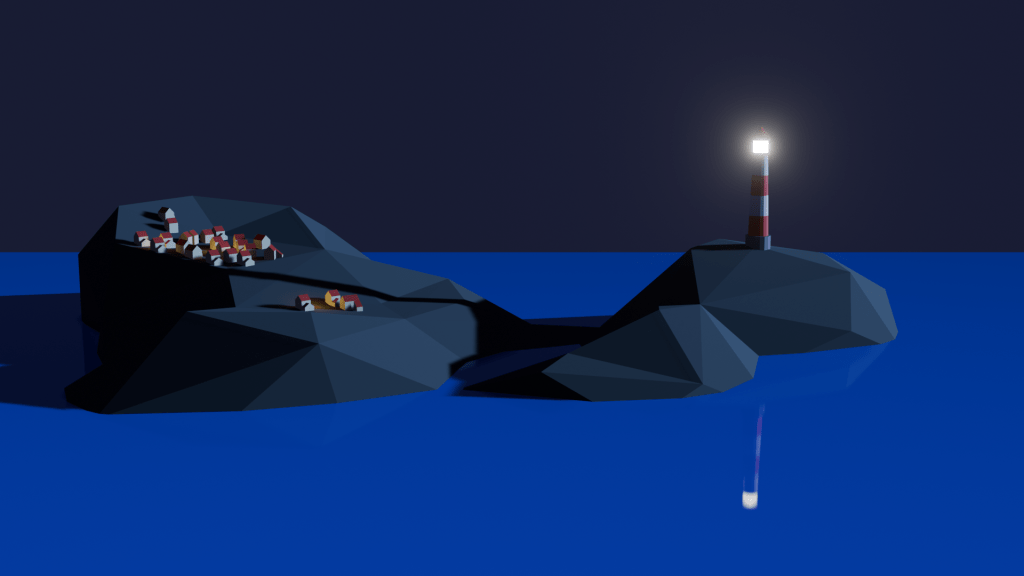
I’ve spent more time on Grant Abbitt’s course; I’ve been finding out about low poly landscapes and how to add lights and glow.
Finished lighthouse scene. I like the glow from the lighthouse and how it reflects in the sea. Maybe I will learn how to make it flash and post that, too.
Having more than one colour on a single object, adding street lights of the right colour (the glow by the houses matches the sodium lights I grew up with in the 1970s.) Grant also covered how background affects the scene and where lights go. This is often skipped over in lessons by other presenters.
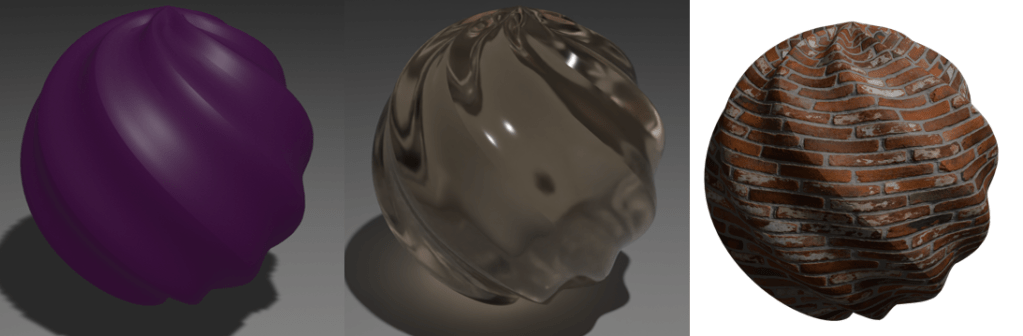
Besides this course, I’ve had a look at how to make shapes for 3D printing applications. I went through a short vid on how to make a spiralised ball. It was titled ‘how to make a spiral in one minute’, but it took me over half an hour, stopping and starting the video to squint at what the presenter had. done. Maybe I’m being unfair – if he wasn’t intending to make an instructional video, then I shouldn’t have expected one.
Spiral balls in Blender. These would be interesting to 3D print, maybe adapt for Christmas decorations.
I’m still a long way from being comfortable with the interface and I doubt I will ever fully know how to use the program. But as long as I have fun and a creative outlet and don’t scare the horses, it’s all good.
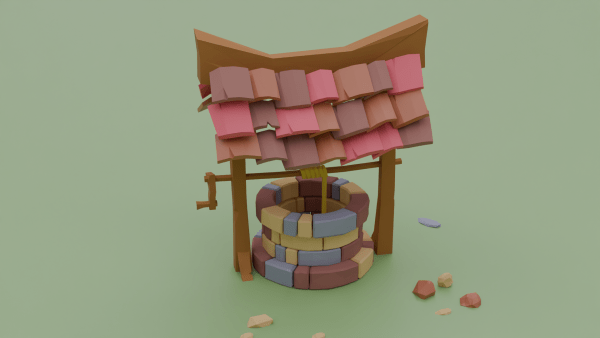
I started a course and, unusually for me, I paid actual money for it. It’s presented by Grant Abbitt, some of whose free video tutorials I’ve seen. I did finish the low poly well, it took me a few days (no idea how many hours) and I was pleased with the result.
Not sure where such low poly work would find a home, but it’s good to do something creative that I think will lead to better 3D prints. I just need access to a 3D printer.
Learned quickly how to change materials and do lighting so that you get these great effects with transparent materials. This was done on the second day of the course, maybe four hours to get this far.
What’s so good about this course is that Grant takes you through the steps to make a thing. This isn’t unique, but I see a lot of courses that show you how to use tools in Blender and other programs (Excel, for example), but there is no context.
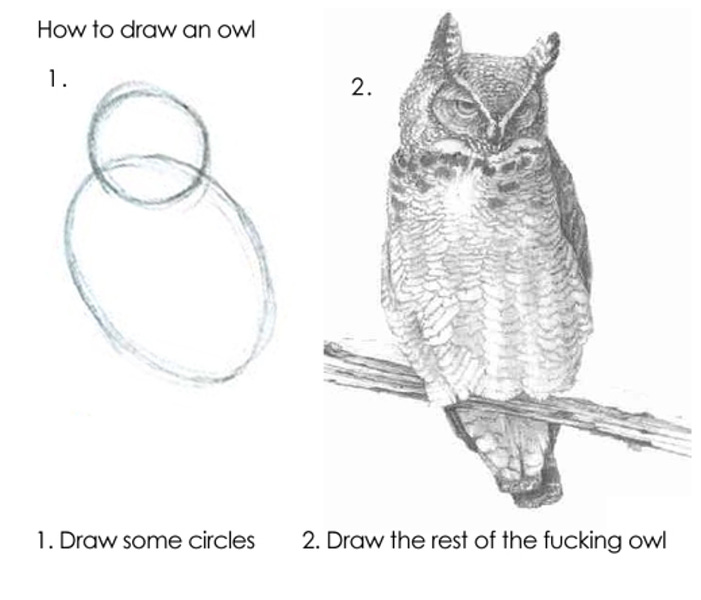
What he also avoids is the “Draw the rest of the fucking owl” trap that I see so often. You’ll be shown how to design something, then magically it’s all lit with a background, multiple lights and a camera fly-round.
The original “Draw the rest of the fucking owl” meme. Original artist unknown, but it’s been around since 2010. Which is medieval by internet standards.
I got the course through Udemy, it may be available elsewhere. It’s called “Complete Blender Creator” and I reckon it’s been worth the £15. If I was making stuff in real life it would cost me at least that much to buy some clay or paper and paints.
More to follow. There’s a lot to learn, but I’ve got time while I’m on gardening leave. I can’t spend all day looking for work when there’s no suitable jobs.


 Grim up North Heath