Author: Fraser Steele

  • What’s yellow and dangerous?

    What’s yellow and dangerous?

    Shark-infested custard!

    It’s an old joke, but also a bad joke. It’s old enough to be the subject of a new design to go on the RedBubble shop.

    Finished design. Lumpy yellow custard in a blue bowl with three shark fins poking out.

    Blender fluids

    To make a bowl of custard with sharks in it, I used Blender. There was no other choice, apart from drawing it from scratch. This meant three things. One, model a bowl. Two, add fluid – viscous custard. Three, add shark fins.

    Simulating a viscous fluid in a bowl is theoretically easy. Making a bowl was quick enough to do with the experience I’ve built up over the last few months. I took a cylinder, fiddled with that and made a fairly crude bowl. I did a version that was more conventionally bowl-shaped, but Mrs S preferred the straight sided version.

    When using fluids you have to define the space where fluids can be simulated, a source for the fluid, and what objects interact with the fluid.

    The simplest thing in fluids is to have a sphere that lets liquid out constantly into a volume. It’s not very exciting, but it’s a start.
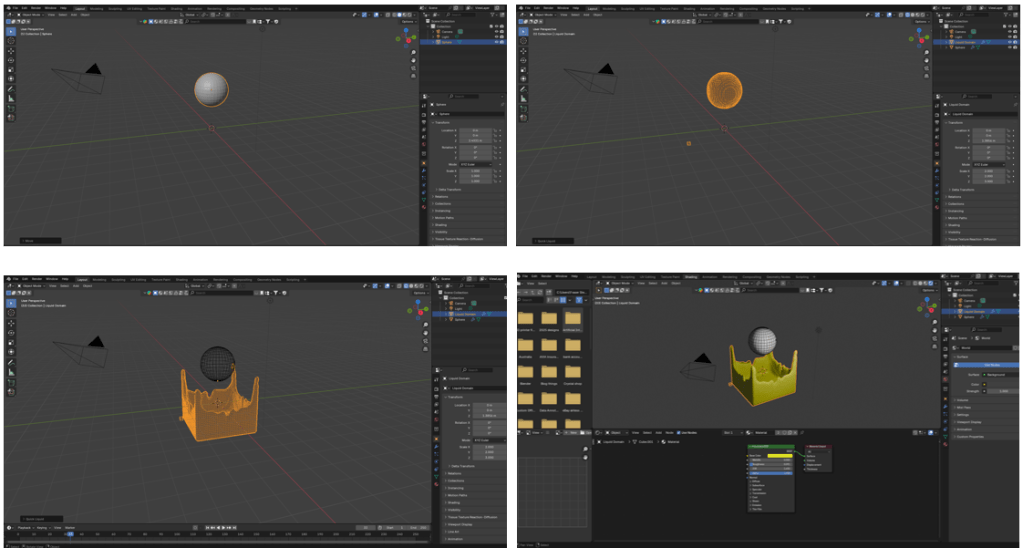
    Fluid simulation in Blender. Make a sphere, add fluid domain (the volume where the fluid will be simulated – not visible here), then press start on the animation and you get liquid flowing. Change colour as required.

    Then you can add a vessel or other object that the fluid can interact with and overflow. You also have the option- which I used for this – of making a given volume of liquid and only generating that. I used this to make a sphere of custard that flopped into the bowl. I could adjust the volume of the sphere so that the bowl filled, but didn’t overfill.

    Shading was next. Yellow is the obvious colour for custard and a blue bowl contrasts well with that. I think a cartoon style works well for this type of product design. It reduces the number of colours in the design and also allows a for a bold appearance. To get the fins, I just added some planes and adjusted to make into fin shapes.

    After that, I ran the animation to the point where I liked the look of the piece and rendered just that frame. I rendered this with a transparent background so that the design would look good on products and also allowed me to export to Canva to add text.
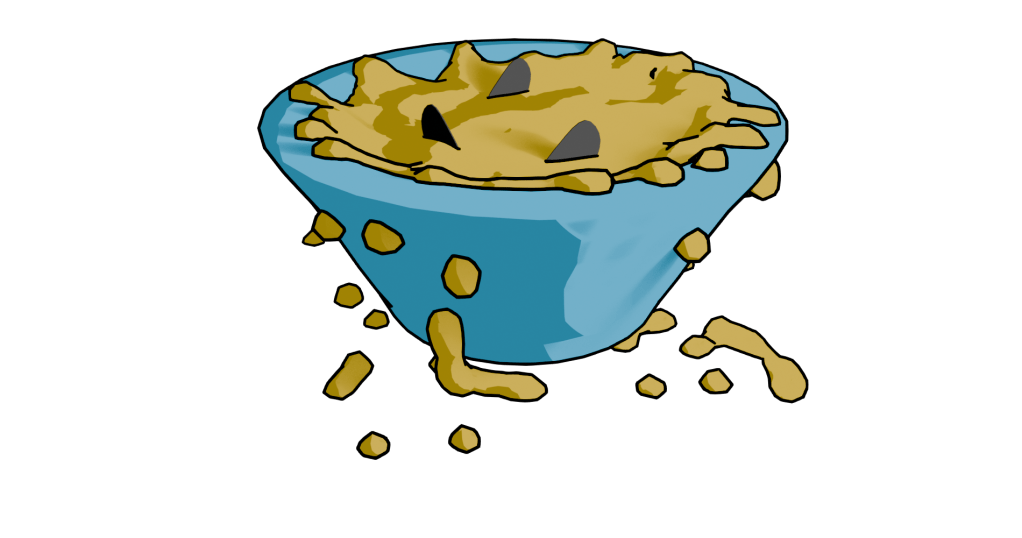
    Sharks in custard
    Not the design that I went with, but close enough. There is too much custard (or not enough bowl) in this one.

    I’ve mainly used Canva for the promotional videos I make for Facebook and for some t-shirt designs. Here I added text in Hellprint font with a brown outline and was able to curve the text to a circle. This was easier than the method I used for the chilli and caffeine designs, but there is less control.

    Finished design. Lumpy yellow custard in a blue bowl with three shark fins poking out.

    Because I’m using RedBubble rather than Etsy, I can offer the design on a variety of things. I think this one works best as a sticker or fridge magnet, but it doesn’t cost me any extra to make it available on t-shirts and other clothes.

    Let me know if you have any favourite old and bad jokes that you would like to see immortalised in cartoon form.
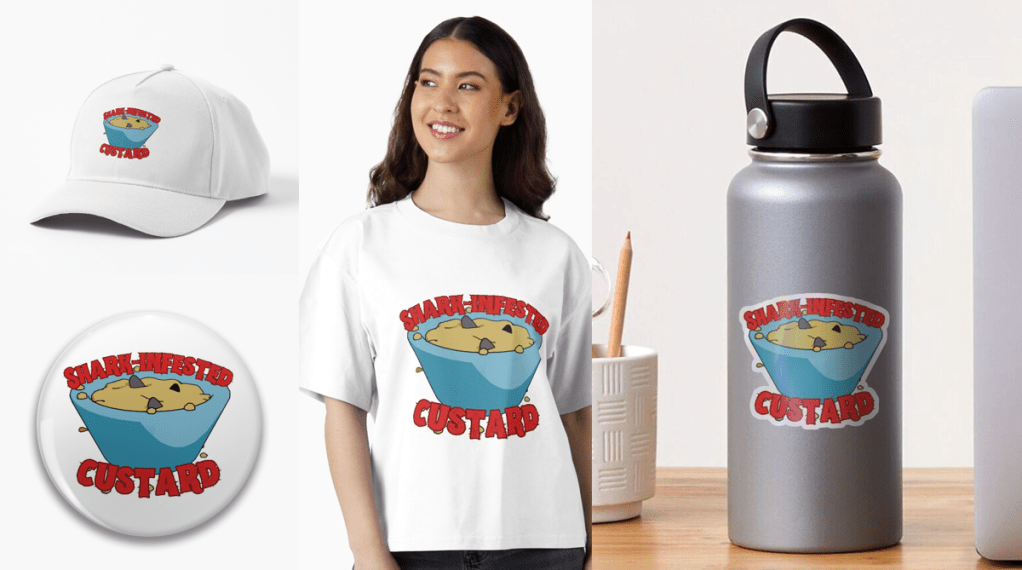
    A selection of the products available with the ‘Shark infested custard’ design. I think the sticker works best, though I like the badge too.

  • Spinning doughnuts and brollies!

    Spinning doughnuts and brollies!

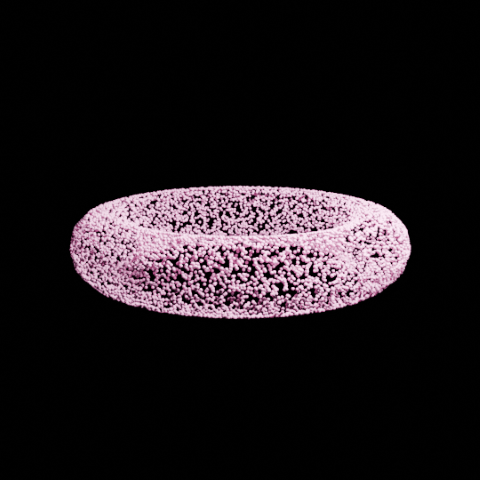
    Now that I’ve learned how to add music to my videos, I can fill my Drew Ackermann channel with mediation-type videos with looped animation and relaxing music.

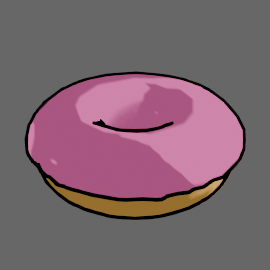
    For this one I used the Falling Rings video as the basis and replaced the rings with a doughnut. There was a slight issue with the tumbling effect because the original rings turned 180 degrees through the animation sequence. This looked OK because they had horizontal symmetry. The doughnuts don’t, the icing meant that the doughnuts would spin 180 degrees then suddenly shift to the original orientation. Once I realised that this was happening it was fairly easy to fix. It was slow because the doughnuts have a lot more faces than the rings so it took longer to render each time I wanted to change anything.

    Cartoon doughnut! There are a few tutorials about making a doughnut in Blender, some of them also add sprinkles but I thought that would be too much detail for the type of video I planned to do.

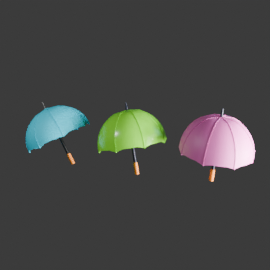
    There’s a similar video of tumbling brollies that I’ve put up as well. This one uses three different brollies. I designed the brollies all by myself!

    Three different brollies for the tumbling animation. Not sure how much detail is needed for the animation, but they certainly look brolly-ish.

    I really think Blender is like a language, you don’t understand a lot of what is going on for the first years but you can quickly make up your own sentences.

    I may set up another channel of unsettling animations, because people like all sorts of things. A cycled tune in a disturbing key accompanied by melted figures falling into a fire. That sort of nonsense.

  • Ozzy Osbourne (1948-2025)

    Ozzy Osbourne (1948-2025)

    Pioneer of heavy metal

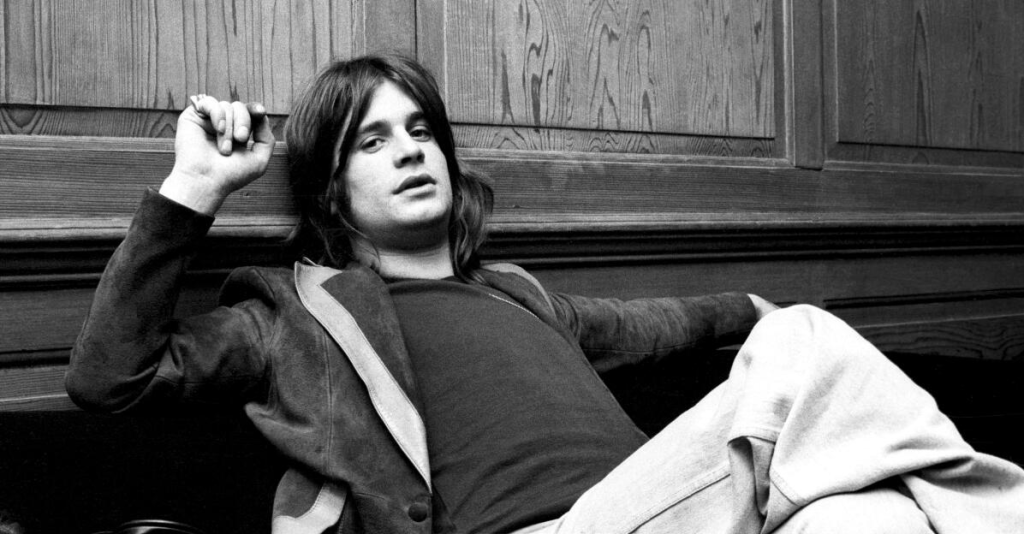
    I came home late last night and saw the news that Ozzy Osbourne had died. He looked unwell a few weeks ago at the final Black Sabbath gig in Birmingham, but I thought this due to the Parkinson’s disease, which was diagnosed in 2019. He was clearly a lot worse than was being let on.

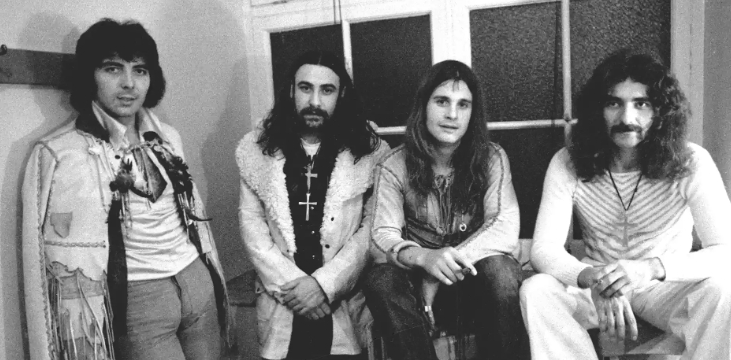
    Black Sabbath in the early 1970s.
    Black Sabbath, early days. Tony Iommi, Bill Ward, Ozzy Osbourne, Geezer Butler.

    Having been a metal fan since the mid-80’s I obviously listened to a lot of Black Sabbath. By the time I was listening to a lot of metal, Ozzy was a few years into his solo career and regularly appeared in the pages of Kerrang! usually alongside the title ‘Clown Prince of Darkness’ after some onstage mishap.

    The place of Black Sabbath in defining heavy metal has been discussed at length by many people. Without them we wouldn’t have Judas Priest, Metallica and my favourite, Iron Maiden. It’s easy to dismiss heavy metal as a one-dimensional music genre and a lot of lazy journalist have done just that. Obviously, I disagree and to my mind metal has a greater range of emotion, power, volume, musical skill and lyrical content than any other music genre. Restricting to guitar, bass and drums with judicious use of synthesisers is a choice, in the same way other artists stick to one medium.

    Enough beard-stroking.

    With Osbourne, Sabbath released eight albums in the ’70s. I don’t have a favourite album, but all my favourite Sabbath songs are from this era, plus the two albums with Ronnie James Dio. ‘Black Sabbath’, ‘Paranoid’, ‘War Pigs’1, ‘Children of the Grave’, ‘Sabbath Bloody Sabbath’… quite a list. ‘Supernaut’ remains one my favourite Iommi riffs.

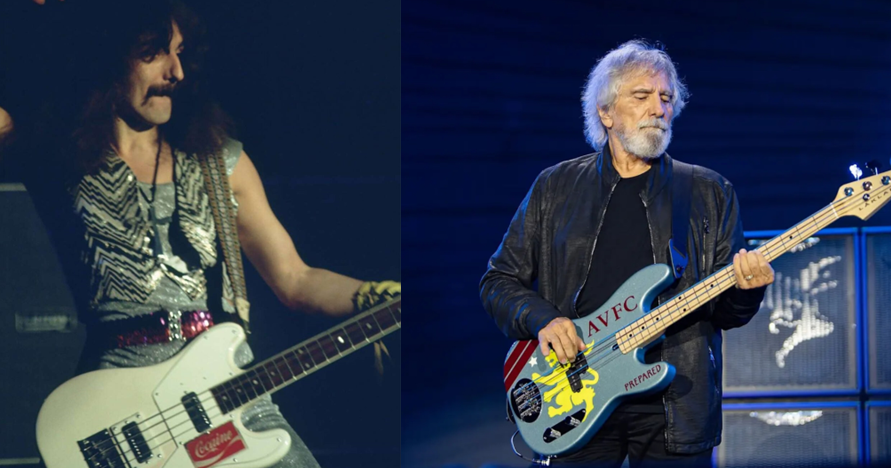
    In 1979 Ozzy was sacked from Sabbath, apparently for doing drugs. This is akin to sacking the Pope for being Catholic. The band got through kilos of cocaine in their time. The song “Snowblind” is about cocaine, Geezer had an “enjoy cocaine” sticker on his bass at one time2 and there is footage of a concert in 1978 where they are all clearly off their tits.

    Terry "Geezer" Butler, bassist for Black Sabbath as a young man playing a white bass with an 'enjoy cocaine' sticker, and as an older man playing a bass with Aston Villa decoration.
    Geezer Butler was the brains behind Black Sabbath. He was the main lyricist (except when Ronnie James Dio was in the band) and he is one of the founders of metal bass playing. He also never did drugs and does not support Aston Villa.

    However, sacked he was and Black Sabbath went through a rotation of vocalists starting with Ronnie James Dio3, then Ian Gillan and others and I’m afraid I lost interest after that.

    Ozzy’s first solo album, released in 1980, was “Blizzard of Ozz” and included “Crazy Train”. This was the first of his solo songs that I remember, its distinctive Randy Rhodes riff lodged into my brain and hasn’t moved for 40 years. The early death of Rhodes in a plane crash devastated Ozzy and it took much persuasion from his wife and manager Sharon for him to continue. But continue he did, racking up 13 solo albums while occasionally reuniting with Sabbath.

    Ozzy’s voice is a divisive issue. I’ve seen it described as ‘soulful and plaintive’, but to me he was always a vocalist rather than a singer. But without that voice, Iommi’s distinctive guitar sound4, Geezer and Bill’s blues-based rhythm section and the overall doom-laden sound and lyrics of the early albums5 and an indifferent, verging on hostile, press (they were described by Lester Bangs as ‘Like Cream, but worse’) they would not have built a fan base and grown to found two distinct music genres. Not only were Black Sabbath the first heavy metal band6 , but they produced the first thrash song in “Symptom of the Universe”.

    It is good that his last public appearance was at the final Black Sabbath gig and he looked like he was having a blast. I hope this is the memory he carried with him at the end.

    1. Which rhymes ‘masses’ with ‘masses’ in the first verse, which always makes Mrs S laugh. ↩︎
    2. Since replaced with a slightly less controversial AVFC sticker. ↩︎
    3. One of my favourite vocalists. ↩︎
    4. A result of a well-documented industrial accident where the tips of his fretting fingers were sheared off by a metal pressing machine. ↩︎
    5. “The Wizard” and “Planet Caravan” notwithstanding. ↩︎
    6. Other groups – including The Beatles – had produced heavy metal songs, but Black Sabbath were the first to concentrate on and expand the genre. ↩︎
  • Morphing animation in Blender

    Morphing animation in Blender

    While I looking at ways to morph objects to create soothing animations, I came across a way to make a less-soothing, but still fun, way of morphing any two objects.

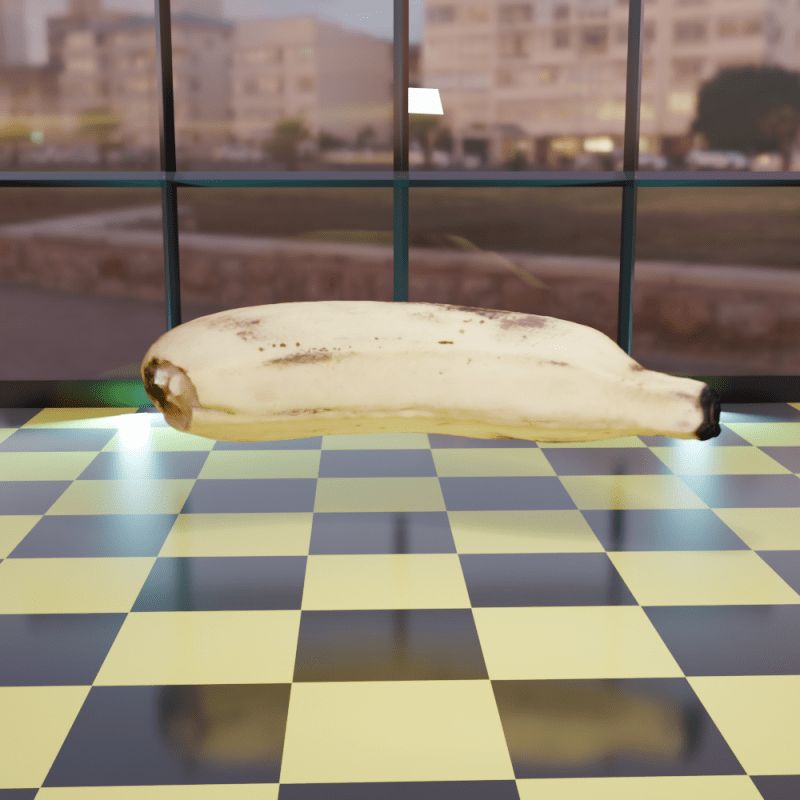
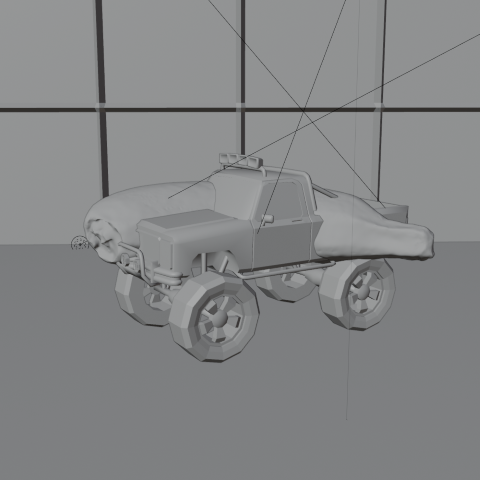
    For the base models I’ve used some resource that are in an ‘add-on’ in Blender. Not sure why I chose a banana and a monster truck, you’ll have to ask my brain about that and it’s not talking to me.

    Once you have the two models there’s some animation to be added to make the objects spin. The changeover happens at maximum spin speed at which point the banana becomes invisible and the truck appears.

    This is how the truck and banana look without any rendering. The floor and wall are also just grey objects waiting to be coloured in.

    Once I’d done that, I realised I’d set the banana quite high above the floor, so I animated the truck falling and bouncing.

    Setting the scene was next. I thought it would be nice to have it look like the morph was happening in a car showroom. I made a chequered floor1 and a wall at the back with windows. Getting the window glass to look convincing needed a bit of fiddling around with various settings, but in the end I got it so you can see through the windows to the scenery behind. A couple of blue-tinted backlights add an extra dimension to the objects.

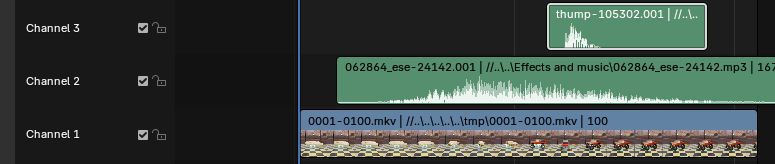
    Once the animation had been rendered, I used the video editing suite to add two sound effects that I downloaded from Pixabay, where I also got music for the ambient videos. The swoosh and the thump could be positioned in time to get them synced with the animation. This is one of those things that’s easy when you know how, but I had a hell of a job finding how to even start video editing.

    Screenshot of a video and audio editing screen.
    Video editor in Blender. The videos and the sound effects can be moved and cued up to happen at the right time. It’s a click and drag system, so pretty easy to use.

    So the ‘swoosh’ in Channel 2 reaches its peak as the banana speeds up and there’s a ‘thump’ in Channel3 timed to coincide with the truck hitting the floor. I did search for a sound effect of a monster truck hitting a tiled floor, but couldn’t find one. Surprisingly.

    1. This is one of the many presets for the Shader editor in Blender, so easy when you know what to look for. ↩︎
  • Ambient videos

    Ambient videos

    Ambient YouTube videos, under a pseudonym for now. I may link further to ‘how-to’ videos once I work out how to do a ‘how to’ video.

    I need a ‘how to do how to do’ video, then.

    Mrs S suggested that I change the rings to doughnuts, though this would be less relaxing IMHO.

  • Koffein -Redbubble

    Koffein -Redbubble

    Having done a design with caffeine, I thought I’d go multilingual with a German-language version of the design.

    This is on RedBubble, so it is available on a wide range of items.

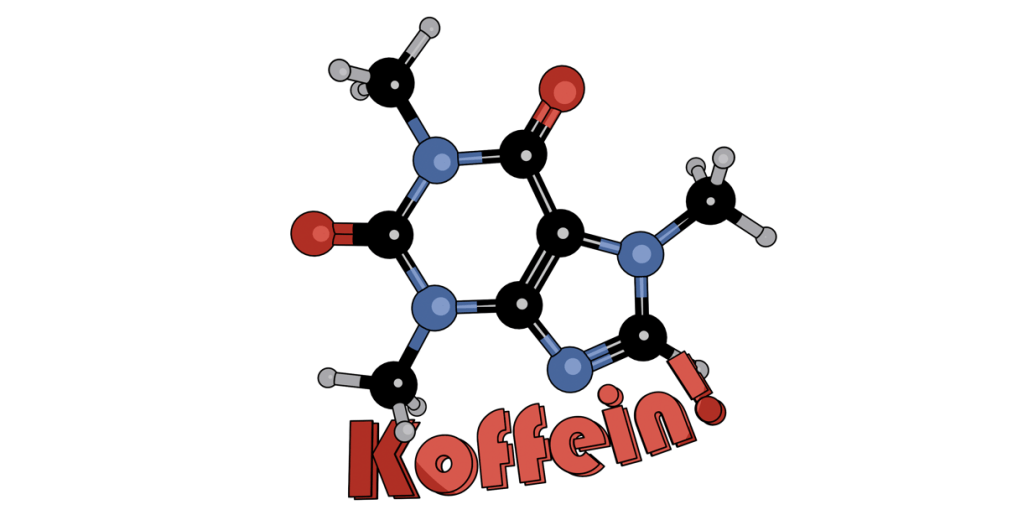
    Cartoon of a caffeine molecule with the word 'Koffein' underneath.
    The German language version of the Caffeine design. There’s some tweaks to the lighting and a change in font, but the aesthetic is the same.

    As discussed in the previous post, this uses Bauhaus, a slightly different font to Berliner that I used in the English language version. I’ve kept the same aesthetic as before, I like the ligne clair look of the cartoon and the ball and stick molecular model is a design classic that has served chemists for decades.

    The ball and stick model was first used by August Wilhelm von Hofmann in 1865, so this year is the 160th anniversary of the ball and stick model. Hofmann’s is a name familiar to all organic chemists, with several organic reactions named after him as well as a device for electrolysing water.

  • Blender part 12 – Steve’s back again!

    Blender part 12 – Steve’s back again!

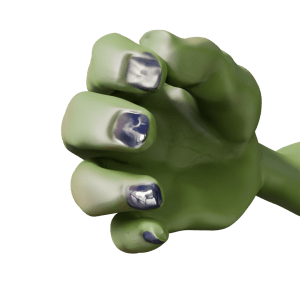
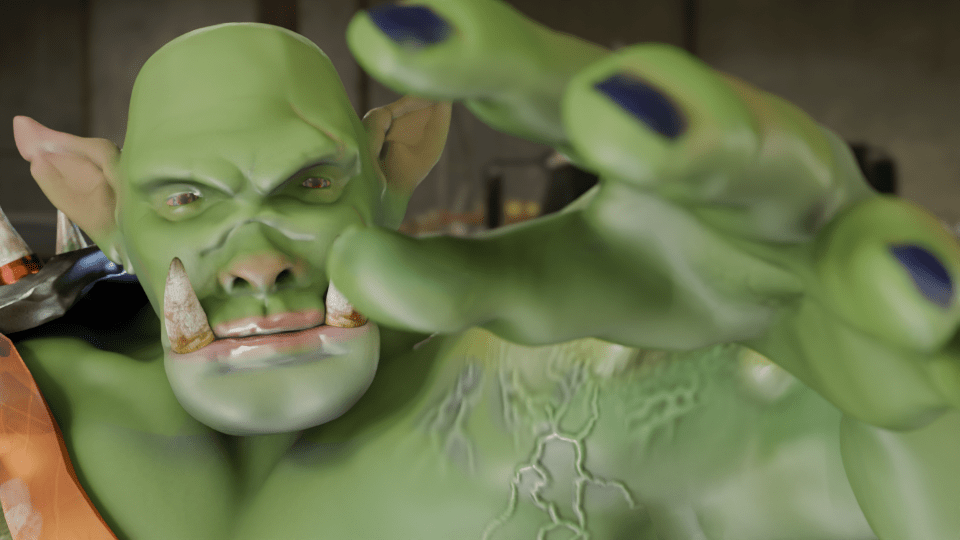
    So I fixed his fingers somewhat – still not perfect, I can’t get a good fist, but the fingers no longer twist in an awkward way.

    Orc's hand, gripping with straight fingers.
    After a bit of fiddling around, I got Steve’s hand to look a lot better. The fingers are straight, at least.

    Stand-up comedian

    As mentioned in a previous post, I’m a fan of comedy. Also, I’m a fan of Stewart Lee1. To my mind, he elevates stand-up to an art form2 and is also hilarious. To Mrs S he just drones on about stuff3. Anyway, I have a picture of the man in full flow.

    Stewart Lee in action.

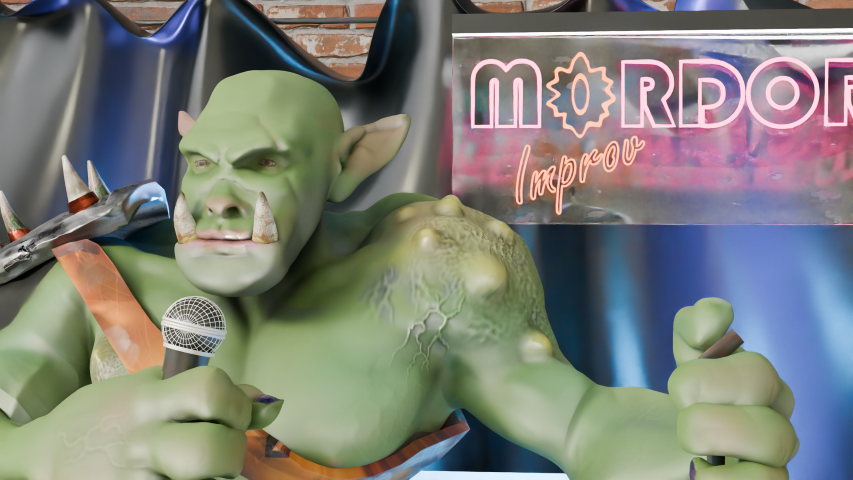
    This photo was the inspiration for Steve’s new job as a stand-up comedian. But to make it more obvious that Steve is in a comedy club, rather than giving a lecture (on the use of Lammas bread in recipes for hobbit), I thought it was necessary to add comedy club trappings. This means a curtain and lights such as Stew has and a neon sign so we know he’s in a comedy club. And a microphone, mike stand and a suitable pose.

    Aisling Bea wearing an orange hat under a neon sign reading 'Camden Comedy Club'.
    The sort of thing I was thinking of for the Mordor Improv stage. Sadly, Aisling Bea was not available for comment.

    The mike stand was the easiest part. A cylinder for the upright and another, cut in half lengthways, for the clip.

    The microphone was also fairly simple. I decided to just show the top of Steve’s hand, so I didn’t need to model the flex, mainly because the right arm looks a bit weird when it’s bent. So a cylinder, tapered a bit, a sphere as the inner part of the microphone and another sphere given a wireframe look as the input bit. And a flat cylinder as the metal ring around the bit you speak into4.

    Posing Steve wasn’t too hard since I’d done a bit of this already. Getting the hands to look reasonably realistic depended on getting the curl of the fingers right, which I had done already.

    Now I just needed to set the scene.

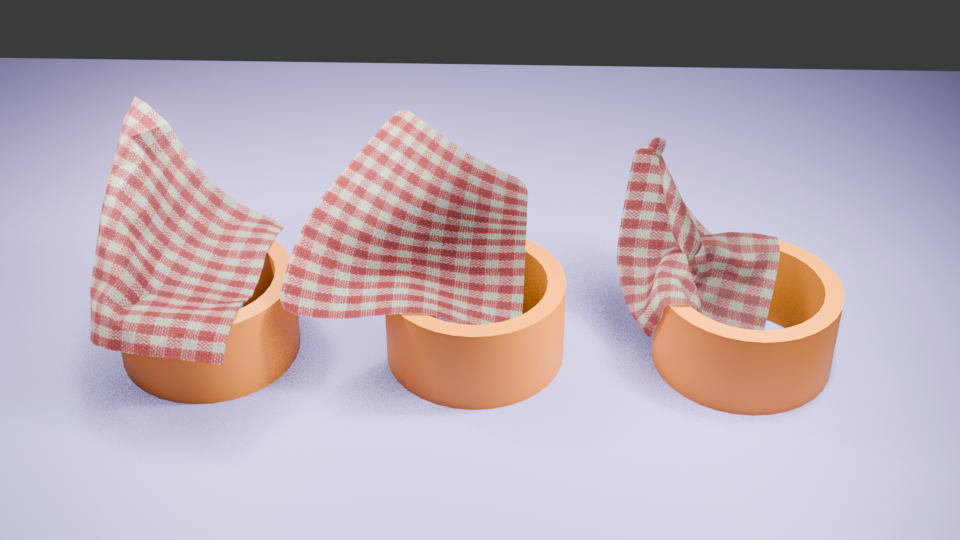
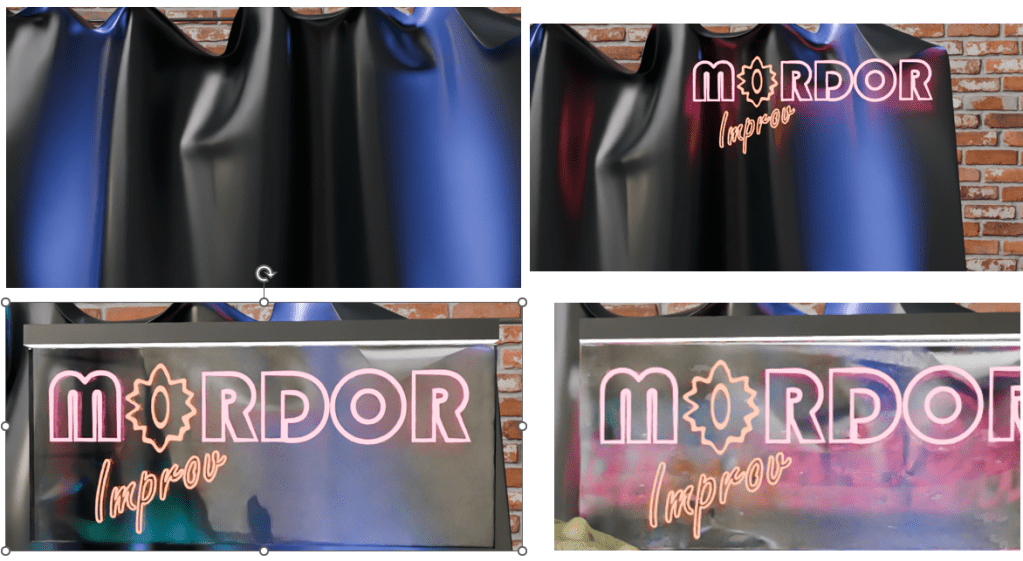
    Blender can add physics to an object, and the physics I needed for the curtain is the Cloth Modifier. Using this, an otherwise flat object can be made to act like cotton, silk, leather whatever you like. You can drop it, drape it or pin it in place to react to gravity and other forces.

    Cloth can be pinned in place to drape. You can also change how many faces are in the cloth. From left to right, there are 400, 4000 and 50000 faces. More faces means more drapable cloth.

    For this, I followed a tutorial to make a curtain which would hang behind Steve. And I decided that the Mordor Improv is a slightly down-at-heel establishment, so the curtain is drooping a bit.

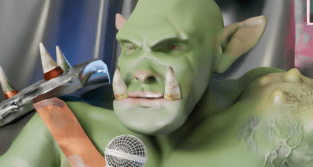
    More interesting is the neon sign behind Steve. I had to go through a couple of tutorials to get from ‘I have this idea’ to ‘I can do this now’. Two fonts are in this – Bauhaus (Mordor) and Freestyle Script (Improv). The Eye of Sauron was originally the O of Mordor, pulled around a bit and given a different colour to look more evil eye-like.

    Curtain, original neon work, added plastic backing and as the sign appears in the final render after some bashing around.

    So now Steve has a job. He’s struggling to keep Sauron’s minions entertained at the Mordor Improv.

    Orc part way through a comedy routine. He's holding a mike, standing in front of a neon sign saying 'Mordor Improv'.
    “Two hobbits walk into a bar. Must have been a low bar.”

    If you have any Middle Earth jokes, let me know!

    1. Some would say the two are mutually exclusive. Mrs S, for one. ↩︎
    2. Strokey beard moment. ↩︎
    3. She’s right. But it’s the way he does it. ↩︎
    4. Sorry to get all technical with you, there. ↩︎
  • Blender part 11 – Banksy

    Blender part 11 – Banksy

    Now that I have Steve the orc, what can I do with him?

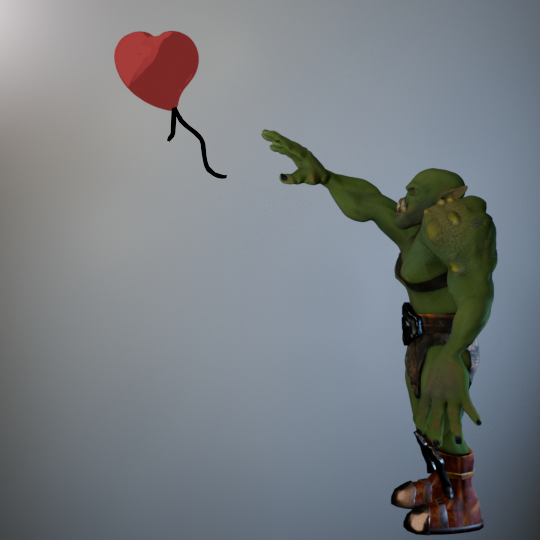
    Orc with Balloon

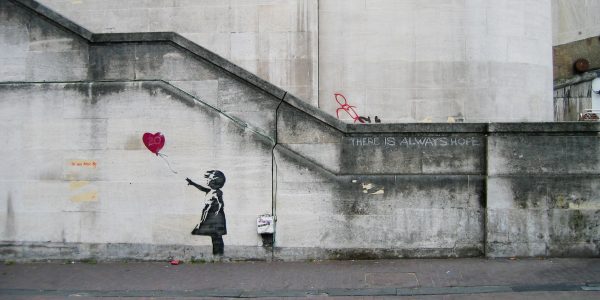
    One of the best-known British artists is Banksy. Best known, even if we don’t know who they are1. Most of the works attributed to Banksy are stencil-based, the work is in the preparation of the stencil, rather than the application of the paint which was done stealthily and quickly.

    Here, I’m redoing their ‘Girl with Balloon’, which first appeared on Waterloo Bridge in London in 2004.

    The original Girl with Balloon, on Waterloo Bridge, London. Photo by Dominic Robinson from Bristol, UK – Banksy Girl and Heart Balloon, CC BY-SA 2.0, https://commons.wikimedia.org/w/index.php?curid=73570221

    Blender allows you to add a reference image to the work so that you can use guides to pose or build the model you’re making. This was used in a couple of the earlier lessons, building the spitfire and also the original modelling of Steve was done using an outline provided as part of the lesson plan.

    Adding a version of Girl with Balloon, I used this to get the pose of the orc similar to the original. Not exact – Steve has longer arms and I wanted the balloon to be a bit closer.

    Original image of Steve with the balloon. The wall behind has been lit to look a bit like a wall – Banksy’s work appeared on several walls around the world, one of them must have looked like this.

    Modelling the heart-shaped balloon was done by using a Webding heart as the base. Text in Blender is treated as an editable object with access to all the fonts you have on your computer. For the caffeine molecule mug design, I had used Berlin and Bauhaus fonts and added a bit of a curve to the text. Here, I coloured the heart and added a curve to the top surface so it would look a bit more balloon-like.

    For the trailing ribbons I used Grease Pencil to draw black lines. I’d used grease pencil before in the caffeine molecule, adding lines automatically. This time they were hand drawn.

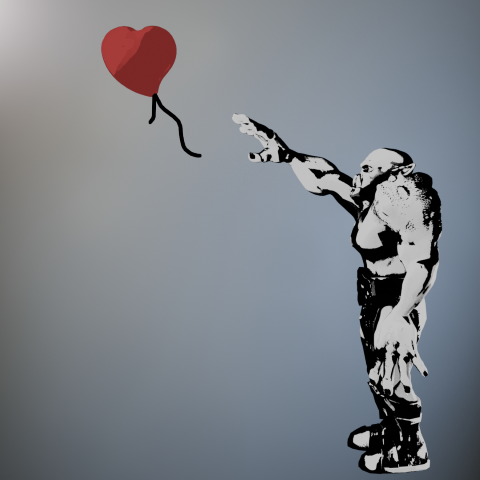
    The cartoon effect I used on the caffeine molecule was repurposed to give a stencil look to the posed orc. Instead of using one colour for the light parts and another for dark, I just used black and white. Shading in black and white wasn’t difficult, but getting the lighting right so that the finished figure would look like a stencil and be recognisable as an orc took a bit of fiddling around.

    Stencil image of an orc letting go of a red heart-shaped balloon. Similar to Banksy's Girl with Balloon.
    Orc with Balloon. Final image of Steve with his balloon.

    And finally, a short video of the transition from live orc to stencil.

    The transition of Steve from rendered to stencilled in four seconds.

    Next up, Steve has a go at stand-up comedy.

    1. According to Wikipedia, his name is Robin Gunningham, he’s from Yate near Bristol. ↩︎

  • Philo Farnsworth

    Philo Farnsworth

    Electronics pioneer – celebrated with a new t-shirt design!

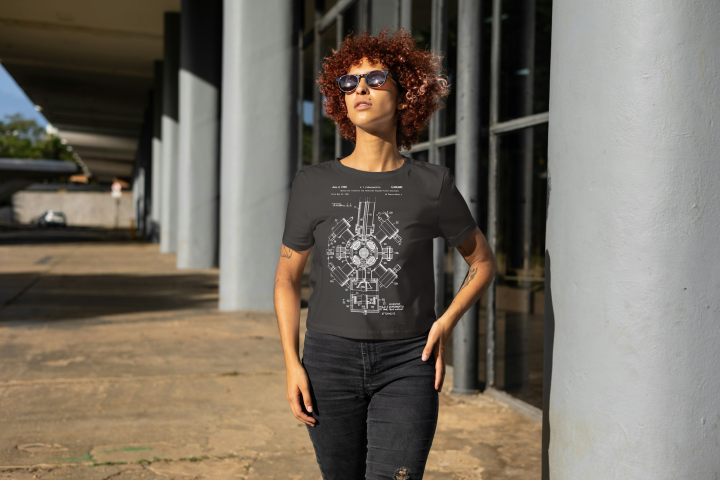
    Young female model wearing the new T-shirt design discussed in the blog post. She is standing outside a modern building.
    Mock-up of a model wearing the black version of the Farnsworth fusion patent image.

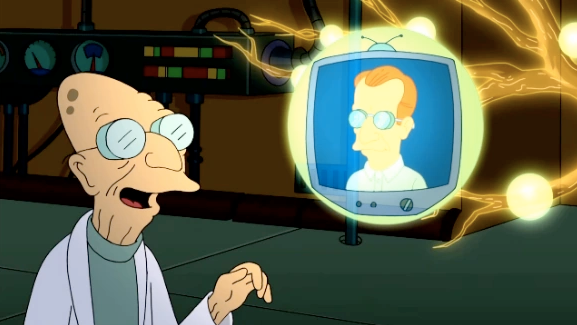
    Philo T Farnsworth (1906 -1971) is likely best known for two things. First, he was the inventor of the fully electronic display which is the basis of cathode ray tubes – he invented the all-electronic television1. Second, his name is the inspiration for Prof Farnsworth from Futurama.

    Cartoon image of Prof Farnsworth - a very old man - looking at a floating futuristic television with his namesake, Philo Farnsworth, show on the screen.
    Hubert J. Farnsworth off of Futurama. He is the 160-year-old nephew thirty times removed of the protagonist, Philip J. Fry.

    What’s less well known is his work on nuclear fusion.

    Biography

    Born on a farm in Utah, he was by any measure a genius. Some people express surprise that the son of a farmer could be the man who invented television, but then he had the sort of mind that makes the best of the opportunities presented to him. The farm his family moved to happened to have some disused electrical equipment which he was free to investigate. From this and with a like-minded friend he learned about electronics and electricity and became one of the pioneers of what was, in the 1920s, a young field.

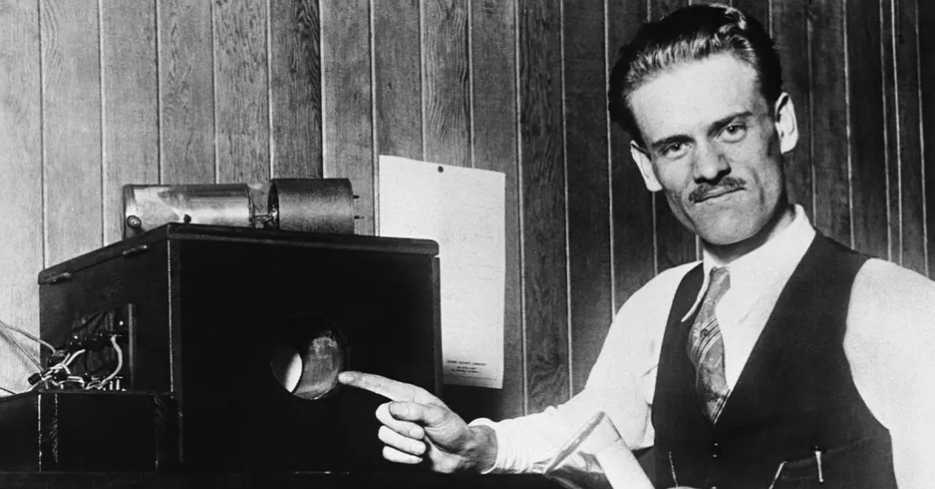
    Black and white photo of Philo Farnsworth and one of his very early televisions. The screen is about 10 cm in diameter.
    Philo Farnsworth pointing at his most famous invention, the electronic television screen.

    Electronics and electrical power

    Like all geniuses, Farnsworth didn’t concentrate on one invention. By the time he died in 1971 he had patents in several fields, including light sensors, amplifiers and nuclear fusion.

    His work on fusion reactors didn’t result in limitless free energy, as you may have noticed. But the reactor has had applications for the generation of neutrons. Why do we need neutrons? Most of us don’t need them, which is why they don’t sell them as such at Waitrose2. However, they are needed in nuclear power, medical neutron radiography, material inspection and to stimulate gamma radiation among other things.

    Black and white patent image of a nuclear fusion reactor, invented by Philo Farnsworth in 1968.
    Image from US patent 3386883, Philo Farnsworth’s Nuclear Fusion apparatus.

    The exact model shown in the t-shirt design, the Farnsworth-Hirsch fusor – is no longer used. After over 50 years, it should be assumed that progress has been made in this field, and indeed there has. Benchtop fusors have been made for demonstration purposes and there is a fusor hobbyist network whose website has far more information on these devices.

    What we have is a striking patent image from Farnsworth’s 1968 patent. I used the techniques used previously to strip the background from the image and make a file suitable for uploading onto a t-shirt in Gelato.

    Young female model wearing the new T-shirt design discussed in the blog post. She is standing outside a modern building.
    Mock-up of a model wearing the black version of the Farnsworth fusion patent image.

    I also put this design on a sweatshirt, mainly to see how that would look and if it would sell.

    This is also available with white print on a blue sweatshirt.

    1. John Logie Baird’s earlier system used a mechanical spinning disk at its core. This imparted limitations on the line count and frame rate because the holes in the disk determined both these values. The size, weight and durability of this system and the wear and tear on the parts meant that this pioneering system could never achieve the resolution people were used to in the cinema. ↩︎
    2. Neutrons are at the core of almost all atoms, so Waitrose do sell them, but mixed up with protons and electrons to form fresh ziti and other everyday essentials. ↩︎
  • Blender part 10 – Textures

    Blender part 10 – Textures

    Now that the GameDev course is complete – I even got a certificate! – I can have a look at other tutorials and find out more about what can be done with Blender.

    Green orc, staring at the camera, face partially obscured by a grabbing hand.
    Don’t forget about Steve. He will be back! I just need to fix his fingers.

    Textures featured in the previous course, not only in getting Steve’s skin and clothes looking good, but also in the mech when I added glitter. More interesting textures can be downloaded for use from several websites and the uses for these are only limited by your imagination.

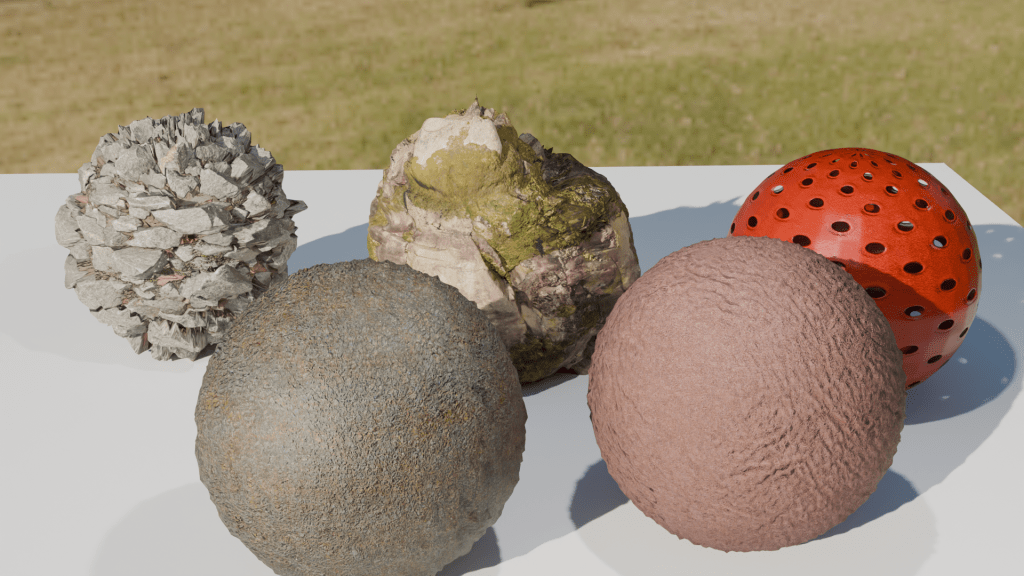
    To keep this blog post short and to show some of the things you can do with textures, below are a few spheres with added textures. Despite their appearance in the rendered image, they are just spheres and can be edited and shifted around as such. Using these textures instead of trying to sculpt your own lava flow or mossy stone reduces the load on the computer and is a lot quicker. The downside is that you are restricted by what is available.

    Five textured spheres. Two types of rock and a hollow plastic ball (back) and snakeskin and leather (front).

    You can make your own textures, but that’s way too advanced for me. What’s interesting is that the shadows agree with the textures. The jagged rock (middle back) casts a jagged shadow. And also the hollow plastic red ball is see-through, the holes act as they would in real life.

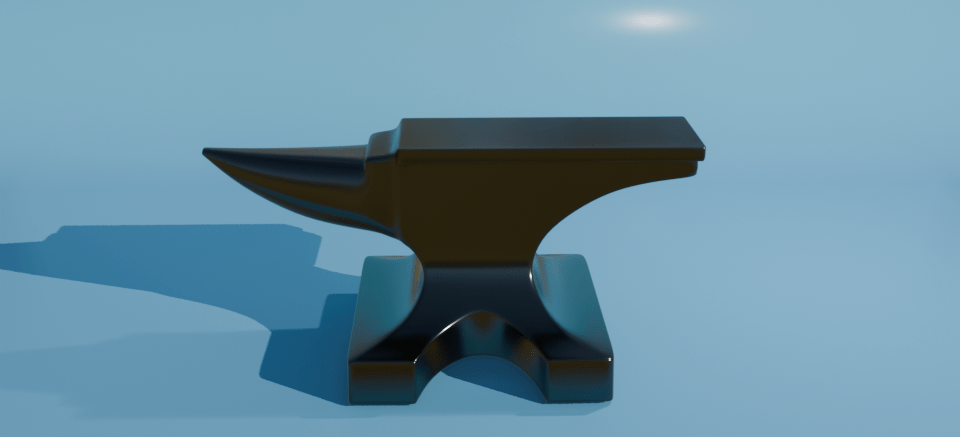
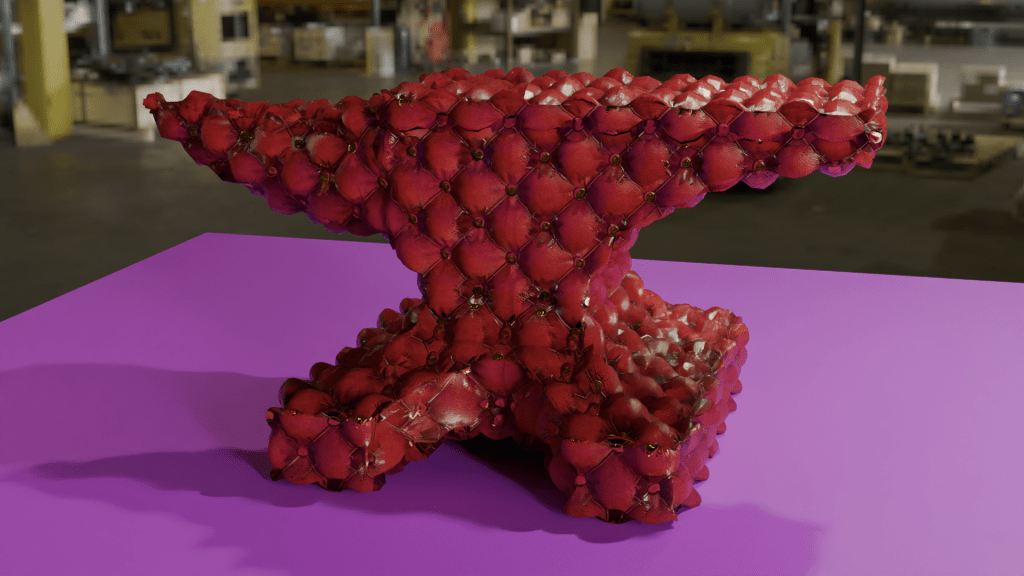
    For further mucking around, I downloaded an anvil model and decided that it would be nice if the blacksmiths didn’t have to put up with all the noise of hammering metal all day. So I made an anvil with a soft furnishing texture – a Chesterfield anvil.

    Anvil with a Chesterfield texture. I don’t know why nobody thought of this before. Think how quiet forges would be with soft anvils to work on.

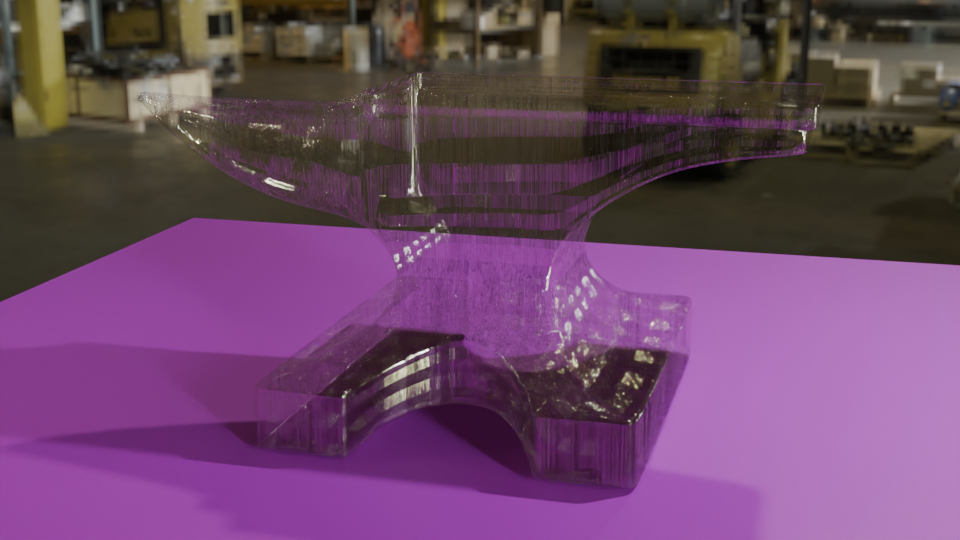
    You could also have a glass anvil, for those extra-delicate jobs. Or as the focus for a strokey-beard discussion about the juxtaposition of use and material as a Dadaist/surrealist concept1 , or as a satire on the impermanence of the permanent and the transparency of the solid.

    Glass anvil on a purple table with a workshop in the background.
    Anvil with a textured glass appearance. Add your own philosophical musings in the comments.

    Or an inflatable anvil, for the blacksmith on the move.

    Just because it looks like metal, doesn’t mean it has to behave like metal.

    I think I’ll step away from the artistic discussions, it’s well above my pay grade and makes my head hurt. I’m only a simple scientist!

    Next, more work with Steve, trying to get him to earn a living.

    1. See also Man Ray’s “Cadeau”, an iron with 14 nails glued to the base. ↩︎