Tag: television

  • Philo Farnsworth

    Philo Farnsworth

    Electronics pioneer – celebrated with a new t-shirt design!

    Young female model wearing the new T-shirt design discussed in the blog post. She is standing outside a modern building.
    Mock-up of a model wearing the black version of the Farnsworth fusion patent image.

    Philo T Farnsworth (1906 -1971) is likely best known for two things. First, he was the inventor of the fully electronic display which is the basis of cathode ray tubes – he invented the all-electronic television1. Second, his name is the inspiration for Prof Farnsworth from Futurama.
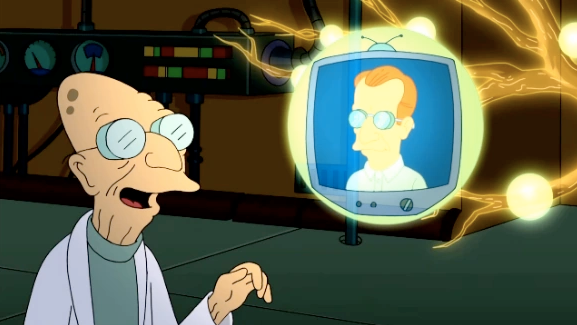
    Cartoon image of Prof Farnsworth - a very old man - looking at a floating futuristic television with his namesake, Philo Farnsworth, show on the screen.
    Hubert J. Farnsworth off of Futurama. He is the 160-year-old nephew thirty times removed of the protagonist, Philip J. Fry.

    What’s less well known is his work on nuclear fusion.

    Biography

    Born on a farm in Utah, he was by any measure a genius. Some people express surprise that the son of a farmer could be the man who invented television, but then he had the sort of mind that makes the best of the opportunities presented to him. The farm his family moved to happened to have some disused electrical equipment which he was free to investigate. From this and with a like-minded friend he learned about electronics and electricity and became one of the pioneers of what was, in the 1920s, a young field.
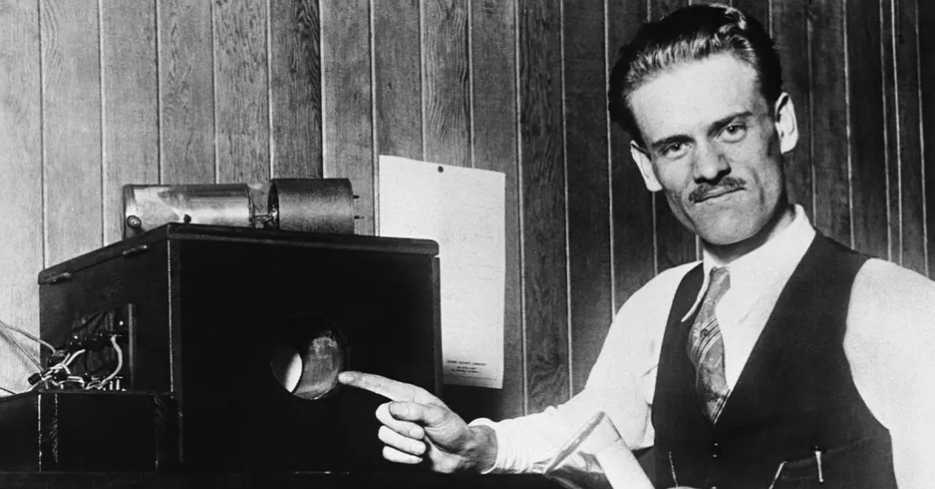
    Black and white photo of Philo Farnsworth and one of his very early televisions. The screen is about 10 cm in diameter.
    Philo Farnsworth pointing at his most famous invention, the electronic television screen.

    Electronics and electrical power

    Like all geniuses, Farnsworth didn’t concentrate on one invention. By the time he died in 1971 he had patents in several fields, including light sensors, amplifiers and nuclear fusion.

    His work on fusion reactors didn’t result in limitless free energy, as you may have noticed. But the reactor has had applications for the generation of neutrons. Why do we need neutrons? Most of us don’t need them, which is why they don’t sell them as such at Waitrose2. However, they are needed in nuclear power, medical neutron radiography, material inspection and to stimulate gamma radiation among other things.

    Black and white patent image of a nuclear fusion reactor, invented by Philo Farnsworth in 1968.
    Image from US patent 3386883, Philo Farnsworth’s Nuclear Fusion apparatus.

    The exact model shown in the t-shirt design, the Farnsworth-Hirsch fusor – is no longer used. After over 50 years, it should be assumed that progress has been made in this field, and indeed there has. Benchtop fusors have been made for demonstration purposes and there is a fusor hobbyist network whose website has far more information on these devices.

    What we have is a striking patent image from Farnsworth’s 1968 patent. I used the techniques used previously to strip the background from the image and make a file suitable for uploading onto a t-shirt in Gelato.

    Young female model wearing the new T-shirt design discussed in the blog post. She is standing outside a modern building.
    Mock-up of a model wearing the black version of the Farnsworth fusion patent image.

    I also put this design on a sweatshirt, mainly to see how that would look and if it would sell.

    This is also available with white print on a blue sweatshirt.

    1. John Logie Baird’s earlier system used a mechanical spinning disk at its core. This imparted limitations on the line count and frame rate because the holes in the disk determined both these values. The size, weight and durability of this system and the wear and tear on the parts meant that this pioneering system could never achieve the resolution people were used to in the cinema. ↩︎
    2. Neutrons are at the core of almost all atoms, so Waitrose do sell them, but mixed up with protons and electrons to form fresh ziti and other everyday essentials. ↩︎
  • Taskmaster

    Taskmaster

    The best panel show ever. I bloody love it.

    It’s based in silliness, which I have come to realise is where my humour lies. If I think of all my favourite sketches and stand-ups, there is a strong thread of the silly about them. Morecambe & Wise with Andrew Preview. “Who’s That Girl” from Harry Enfield. Ray Alan and Lord Charles, with Lord Charles demonstrating the art of ventrickolism. Monty Python, The Goons. Etc.

    I’m not sure when I started watching it, I think I saw season 4 (Hugh ‘Desky’ Dennis and Mel Giedroyc were the two main draws) first.

    I’m pretty sure Season 7 (2018) was the first I watched as it came out. This is up there with the best of the seasons, absolute chaos all the way through.

    The strength of Taskmaster is the cast. With Season 7, they hit it right. In particular, we got Greg more involved due to his long-standing friendship with Rhod Gilbert. Oddly enough, I didn’t click with Jess Knappett to begin with. She was this vague, slightly annoying presence. That was until ‘Cul de Sac’.

    This seemed to transform her into a 3 dimensional person worthy of having a piece of the stage named after her, and from then on, I loved them all.

    There is an ongoing controversy about this series, centring on James Acaster’s performance. He maintains that he was the moral winner of his series, despite coming fourth.

    Final scores for series 7, clearly showing that James, finishing on 165, was fourth behind Rhod (167), Jess (175) and Kerry (176).

    However, I wouldn’t be a proper fan if I didn’t get a bit obsessive about the show. Is there any substance to James’ claim? Let’s have a think about another, inferior1, panel show hosted by someone who is far too tall – House of Games.

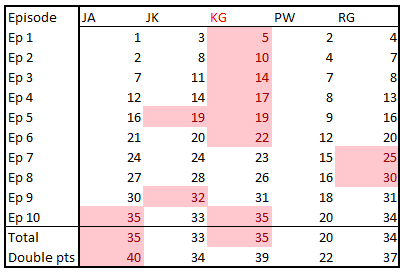
    House of Games runs for five nights with the same cast of four. At the end of each episode the contestants are awarded points depending on where they finish – winner gets four points, second three, etc. So winning by ten points doesn’t translate to a certain win. What if we apply this to Taskmaster and see how James would have done?

    Summary of the seventh series of Taskmaster using House of Games points scoring. The leader after each episode is highlighted.

    We can see that James had a shocking start to the series, coming last in the first two episodes. Even Phil was ahead of him!

    So using House of Games rules, Kerry and James would have been tied, Jessica Knappett would have been third with Rhod in fourth. Again. And then there’s Phil.

    However. On House of Games the last episode (broadcast on Friday) is worth double points. So, because James won the last episode his points total rises to 40 and he, therefore, is the champion, just edging out Kerry and leaving Jess in fourth place.

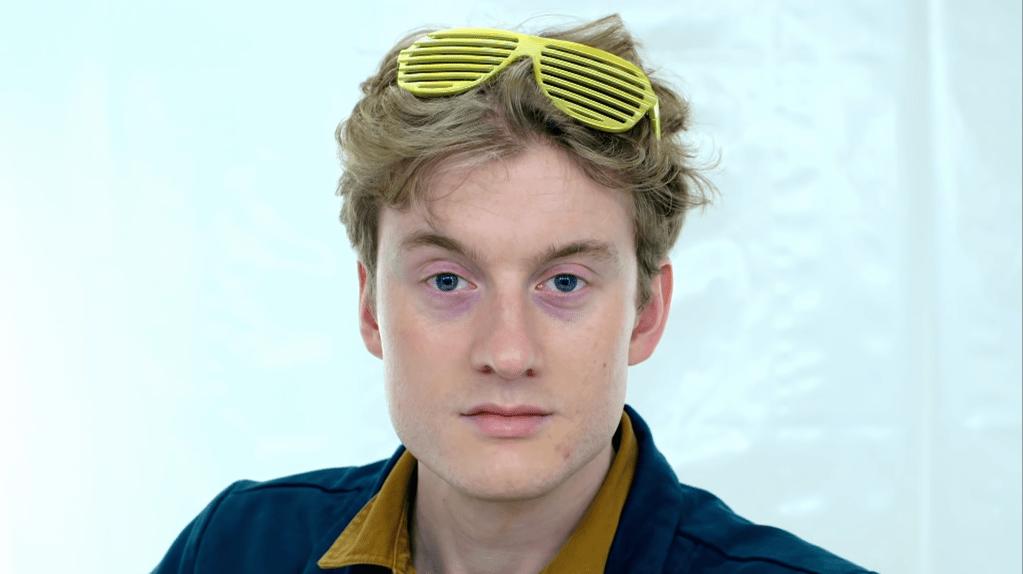
    Look me in the eyes and tell me I’m not a champion.
    1. Inferior, but still a lot of fun. I particularly like the song intro round, where they play the intro to a song, fade it out and you have to guess when the singing starts. ↩︎