Today’s Limerick challenge was to rhyme the word ‘disease’.
I was going nowhere with this for ages. There are plenty of rhymes available, but how to make it interesting?
Initially I tried to work in words to do with living by water for some reason. I worked on the idea that living by the sea or a river would be healthy. That went nowhere.
Later – after writing another blog about weird films, going shopping, doing a bit of design work, cooking dinner (Thai green curry) and watching an episode of Taskmaster NZ, I mentioned the trouble I was having to Mrs S. Among the words she suggested was ‘Socrates’ (from the film Bill & Ted’s Bogus Journey) and I thought “hang on – who’s the Greek guy that the Hippocratic oath is named after?” Took me a while to remember.
So-crates, the old Greek philosopher dude, benefits from 20th century wisdom.
Hippocrates, that’s the bloke!
Younger daughter helpfully added that Hippocrates used to drink wee. Not for leisure purposes, but to detect diabetes.
If I could make Hippocrates fit into the meter of the limerick, I was most of the way there. And then jam as many rhymes into the last line as possible (see the ‘absurd’ limerick for my previous go at this).
The middle section was the last part to be written, which isn’t how I usually go. I’d tried ‘before you say ‘wick’/ they’ll make you less sick’ which wasn’t satisfying English, and ‘wick’ as a synonym for ‘fast’ is quite specific Lancashire dialect.
Other names for doctors passed through my mind. I thought about ‘bone-setter’, to rhyme with ‘get better’, then hit on the most famous sci-fi doctor, Leonard ‘Bones’ McCoy. His nickname is short for ‘saw-bones’, a Victorian epithet for surgeon.
It’s worse than that, it’s a limerick, Jim!
Why do you go to a doctor? Because you’re ill and need to moan to someone. And with that, the short lines were done.
Got lurgy, a cough or a sneeze?
See a modern-day Hippocrates
A decent saw-bones
Will attend to your moans
Then squeeze fees to ease your disease
The idea of a doctor demanding a fee is a bit old-fashioned, at least in the UK. Even if you go private it’s a matter that the insurance company sorts out.
Today’s Reddit limerick challenge had me dashing to the dictionary again. The challenging word to rhyme was tanka.
I’m not the only one unfamiliar with this word. It took three goes before the auto-correct would accept that I wasn’t trying to type ‘tanks’. The tanka is a Japanese verse form, five lines of 5-7-5-7-7 syllables. So another form that would repel a pentastichophobe.
I don’t know how much poetry has been written about tanks, armoured, fish or water.
With its strictly defined syllable structure, the tanka has a similarity with the limerick; though because the limerick is a comic verse form you’re allowed to muck around with this.
Let’s get this limerick writ
My first thought was that it may be possible to write lines that could be rearranged to change the meaning of the poem depending on whether it was presented as a limerick or tanka. Brian Bilston did this in his poem Refugees, which reads differently depending on which direction you read it in.
I didn’t think too long about it before I realised it would be quite a very tricky thing to do and I wasn’t up for that challenge right now. Or maybe ever.
So, to write a limerick with tanka as a rhyme and have someone from somewhere in Japan as a subject. I couldn’t think of any places in Japan that rhyme with ‘tanka’, so maybe put that into the third and fourth lines. ‘Thank her’ was a placeholder rhyme that made it into the final version.
The city of Sapporo on Hokkaido – Japan’s northernmost island – is rich with rhyming words; ‘borrow’ came to mind quickly and the idea of stealing someone’s work came from that to the final form. Some mucking around with the exact words to get a better flow and avoid repeating words gave me the final limerick:
There was a young girl from Sapporo
A poet whose genius I’d borrow
She’d write me a tanka
I’d fulsomely thank her
Then publish as mine on the morrow
The write of reply
Now, how would you feel in the place of the girl from Sapporo? You’d poured your heart into these poems only to find that the cad was passing your work off as his own. You’d do what every right thinking person would do: write a poem about it.
In Sapporo style
I would write my love tanka
So earnest his thanks!

My heart broke when I found his
Longstanding plagiarism
I’ve no idea if there’s a particular Sapporo style to tanka.
Back from holiday (Ten days in Brittany. Very nice, thanks. I should write a blog about it, you say? Oh, OK) and there have been two limerick challenges on the subreddit since I last looked. The words to rhyme in limericks were absurd (22nd August) and pentastichophobe (29th August).
It is so wearisome to have to follow one’s muse.
There are different challenges with these words. There are loads of rhymes for absurd, so getting a poem that avoids obvious rhymes is the key. Or, since there are so many rhymes, why not try and pack a load into the piece?
For the second word, the first thing to do was find out what pentastichophobe means. A quick Google told me that it’s someone who fears or hates five-line poems. So they wouldn’t be a fan of limericks, at least not in their normal presentation. On the other hand, Edward Lear would often present his limericks1 as four lines with the two short lines as a single line. So playing with the formatting is a possible way to go.
Aren’t all limericks absurd?
Taking inspiration from the ‘young fellow named Tate’ limerick I quoted in my first limerick post, I built this limerick from the bottom up. Once I had the last line, I had to reach it.
I collected a dozen rhymes for absurd before the final line “my word! That furred bird is absurd” emerged.
Other words for fur – hair, pelt, mane, wool, fuzz… none rhyme with each other, but pelt and felt give the rhymes for the two short lines. But what one syllable bird? A hen – which also has a lot of synonyms of various length to put into the first two lines.
A fear the potential dangers of genetic engineering came to me as the subject for this one. If I’m writing about furry birds, then some sort of tinkering with genetics has been going on. You can’t trust scientists.
I had a couple of goes at filling in the first lines of the limerick, then read it out to Mrs S. She didn’t like my first draft.
Try harder.
It was the first two lines that were the problem, so a rewrite to introduce the issue of genetic engineering. A blurred line between the species and the piece is done. Using the word twixt was necessary to keep my poetic licence intact.
The line twixt the species is blurred
They've bred hairy chickens, I've heard
I can say, now I've felt
A hen with a pelt:
"My word! That furred bird is absurd!"
A fear of five line poems
The second challenge is a different matter. Any long and unusual word2 needs to be shoehorned into the meter of a limerick, and it is sometimes necessary to draw attention to the shoehorning. But since this word is about poetry, the limerick should also address the fact that this is a poem. Self-referential poems and songs are usually something I don’t like3.
I decided to play with the format of the limerick. If five lines is the problem, then we can change the number of lines and still get a silly poem out of it. And to whom do we write poetry? Usually, a subject of love. What sort of poem? How about a sonnet?
What’s a sonnet, Daddy?
A sonnet is a 14-line poem with a strict rhyme and meter scheme. So, a bit like a limerick. William Shakespeare wrote at least 154 sonnets4, going against the contemporary norm of idealistic love and introducing the concepts of lust and infidelity. That said, the best-known line from his sonnets (Sonnet 18) is a heart-felt tribute to a lover:
Shall I compare thee to a summer’s day?
Thou art more lovely and more temperate
You’re supposed to keep to 5 lines in a limerick. How can you write a 14-line limerick?
You cheat.
Drafting and shaping the limerick
When I was drafting the limerick, I had the middle section quickly. Since bonnet rhymes with sonnet, the couplet “I’ve a bee in my bonnet – I’ll write her a sonnet” serves well. Then I wrote the numbers 1 to 14 and drafted a couple of last lines that could be written one word per line to reach 14.
The rhyming words had to end in ‘-obe’. Luckily, there are plenty of those including, handily, a couple of real places. It’s a tradition in limericks to start with a place-name at the end of the first line. I chose Latrobe, a town in Victoria, Australia5. And what do we want to see when we finally meet the love of our life? Why, to see them disrobe.
When I wrote the last line – “And maybe then I’ll get to see her disrobe” I was one word short, so I split the second line of the limerick into two, and so I’d got a 14 line poem:
I love a young girl from Latrobe
A beauty-
  But pentastichaphobe
I've a bee in my bonnet
I'll write her a sonnet!
And
Maybe
Then
I'll
Get
To
See
Her
Disrobe
They weren’t known as limericks until the 1890s, after Lear’s death. ↩︎
It was ultracrepidarian a couple of weeks ago. I rhymed that with hairy ‘un and onion. It makes sense, honest! ↩︎
I’m looking at you, Robbie Williams, with your “That’s a good line to take it to the bridge” nonsense. ↩︎
The 154 collected as one, plus six in his plays, plus no doubt he wrote others that are lost. Same goes for his limericks. ↩︎
There’s also a Latrobe in Tasmania and Pennsylvania. ↩︎
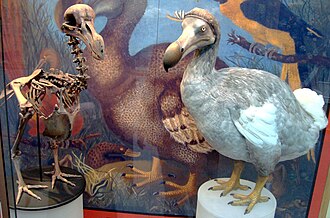
I threatened to return to limericks in a recent post, and here we are again. This time, it’s a limerick or two about dodos.
Dodos in literature
This is also inspired by a post on the limericks subreddit, but not by the ‘rhyme of the week’1. Someone posted a limerick about the dodo. Interestingly, googling “dodo limerick” only comes back with hits for a journalist and animal lover from Limerick, Ireland, known as Dodo Reddan.
The limerick poem and a reply are shown below.
Limerick and a reply on the subreddit /rlimericks.
The original poem – in case the image doesn’t show – is:
The dodo once lived on Mauritius, The sailors all thought it delicious, The rats and the men, Could all sneak up on them, Since the poor dodo wasn’t suspicious
There is a reply which starts with the phrase “Um, actually” (which I hate more than people starting a question with the word ‘question’), followed by a correction to the effect that the dodo was pretty inedible.
Now, only a small and petty man would get annoyed enough by this to write a reply limerick. So that’s exactly what I did.
There once was a bird called the dodo Whose knack for survival was so-so Pigs, rats and pests Would ravage their nests Though eating their flesh was a no-no
Not content with that, and since I’d seen that the Latin name for the dodo is raphus cucullatus, I wrote another.
The dodo (or raphus cucullatus) A victim of rats (rattus rattus) Their nests on the ground Could also be found By pigs and by cats (felis catus)
Shakespeare in limerick form
After remembering the Macbeth summary I wrote when I was doing my O levels, I found another Shakespeare limerick. This one, written some time in 2015, summarises Romeo and Juliet, the harrowing morality play dressed up as a love story. This limerick, like the second dodo limerick, makes heavy use of parentheses, because, well, why not?
Juliet love Montague hunk Who kills Paris (impetuous lunk!) There’s the balcony scene (What does ‘wherefore’ mean?) And they both die (I blame the monk)
Which is ‘dolor’. Or ‘dolour’, since I’m playing in the UK. ↩︎
The subreddit /rlimericks runs a weekly challenge to rhyme a difficult word in a limerick. I’ve had a couple of goes, which has reawakened my interest in this verse form.
What’s a limerick?
Named after the county in Ireland – or possibly the song ‘Won’t You Come to Limerick’ – the limerick is a five-line verse form with a set meter and rhyme scheme. The first, second and fifth lines have eight syllables and rhyme with each other, while the third and fourth have five syllables and rhyme. There’s no rule against all five lines rhyming (see below). They’re usually comic verse, as in this example:
There was a young fellow called Tate
Who booked dinner for two at 8 – 8
But I will not relate
What it was that young Tate
And his tête-à-tête ate at eight eight
Popularising the form
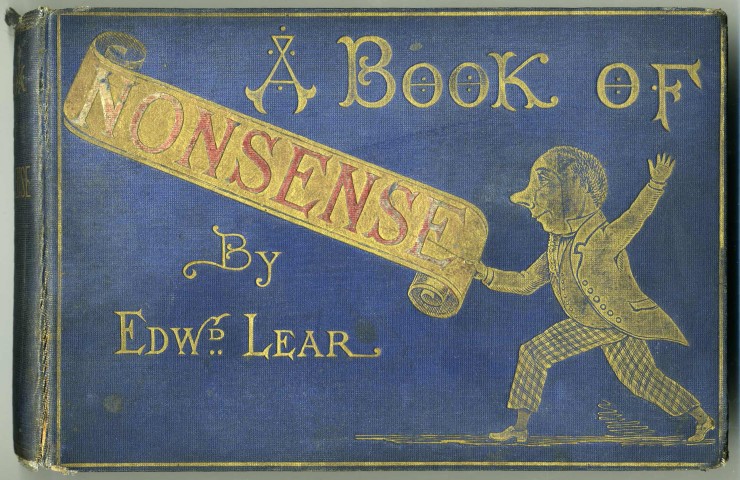
Edward Lear (1812 -1888) popularised an established form, producing 212 published examples for the amusement of the Victorian gentry. In hindsight, his output was quite poor, mostly relying on using the same word at the end of lines one and five. This was the traditional form, but restricts the writer somewhat.
One of Lear’s limericks. There are other poems of his that I like, and he was also a fantastic illustrator of birds. But these verse leave me cold.
Using the same word to end the first and fifth lines saved him trying to find a rhyme for Thermopylae, I suppose.
Being comic verse, the format can be played with. WS Gilbert, out and off of Gilbert & Sullivan, is credited with one such:
I’ve written a few limericks, but only came back to them again when I stumbled upon the subreddit. A favourite of Mrs S’s is one I wrote in the late 80s called ‘Yuk!’
With scarcely concealed delight
Christopher switched off the light
Bit a chunk from the cat
Spat it out on the mat
And rolled around, laughing, all night
Judge for yourself the mental state of the seventeen year old who wrote that. Though this isn’t the most disgusting Limerick I’ve written2.
An earlier one, which I wrote during my ‘O’ levels, summarises MacBeth, which I was studying at the time. The inspiration is Stanley J Sharpless’ summary of Hamlet (link).
King Duncan was mortally bedded
And MacBeth’s killing hand was well redded
His Mrs went gaga
And to finishes the saga
In vengeance MacBeth was beheaded
I’ve done a few other of Shakespeare’s play. I’ll blog them at some point.
Limerick accent challenge
In the time between my ‘O’ levels and this year, my output dried to a trickle. One I wrote maybe ten years ago is an accent challenge. Younger daughter hates this one, because it makes her talk like me. In other words, correctly.
A Mathematician reflects
“G&Ts help with my maths”
He leans back and casually laughs
“A reduction in mass
Of the gin in my glass
Helps me travel binomial paths”
If you think that doesn’t rhyme, you’re wrong.
Saturday Reddit challenge
Yesterday’s3 challenge was to rhyme the word ‘philodox’. I had to look up the word – it means someone who loves their own opinions and thoughts.
It’s a interesting challenge, since the word doesn’t fit into the standard meter requirements of a limerick. This means breaking the standard rhythm a bit. But that’s fine, as long as it’s done consistently.
I started with a search for words and phrases that would match the word ‘philodox’. Orthodox and heterodox are related terms4, also Goldilocks, pair of crocs, Robert Knox5, letterbox and cotton socks.
I went with the last one, since there’s a British expression ‘bless your cotton socks’, equivalent to ‘bless your heart’. Though a crossover involving Goldilocks and the surgeon involved in the Burke & Hare murders would be a challenge in itself. The idea of blessing and words involved with philosophy and theology seemed to fit. First draft had ‘sinnin’’ rhyming with ‘opinion’, but that didn’t work. So the idea of socks in general and things that are worn on the feet also arrived. There’s a lot of them.
How to make a short story of it all? My experience of the type of person who would be a philodox is a person set in their ways, who would suffer any consequences if it meant they could say they were right. So how about he insists on wearing uncomfortable hosiery, despite the norm is to wear comfy socks? From there the story came about in a few minutes: