Today would have been a red letter day at home when I was growing up. My dad loved horse racing. Our Saturdays had a steady routine; shopping in the morning when dad would visit the bookies, home for lunch, then flicking between BBC and ITV for the races he’d put a few pence on.
It was the lot in life of me or my younger sister (whoever was closest) to do the switching of channels so the 2:20 from Towcester could be watched without a break after the 2:10 from Leopardstown had run and, yet again, Daddy’s Donkey didn’t win.
He never gambled much. In the 70s, I think it was a matter of 5 p on each horse, maybe 6 or 7 races. It was never more than £10 total on a racing day, until he stopped going when he fell ill.
So gambling was only ever a small indulgence for my dad. Over the years I picked up on a lot of information about horseracing. Dad would patiently answer my questions about what betting odds were, what the numbers in the Form line meant, the handicap system, and why some jockeys were better than others.
Rabbit holes and Gatwick Airport
I was down a rabbit hole earlier in the week. It was sparked by an article on BBC News about the history of the Grand National and the little known fact that the Grand National had been run at Gatwick during the First World War.
I knew there had been a race course at Gatwick. There’s an excellent resource held by the National Library of Scotland (https://maps.nls.uk) where you can overlap old maps with modern OS maps. Bored one afternoon, I had a look at how the landscape had changed in my local area over the last 100 years. And there was Gatwick Racecourse on the 1925 map.
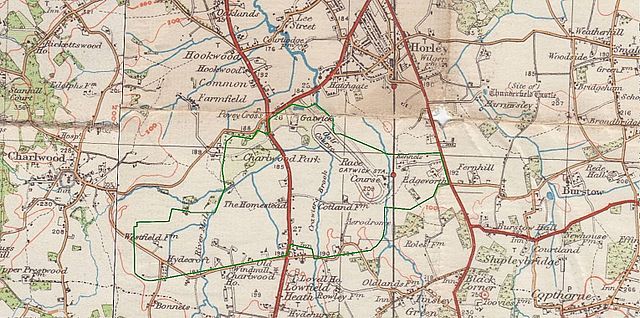
That the Grand National had been run there was news to me, though. I was surprised that sport continued during the war, though Mrs S pointed out that football carried on throughout, despite many of the players being called up.
The Grand National in 1918 was won by Ernest Piggott, the grandfather of Lester Piggott. Along with Willie Carson, he was one of the top jockeys I remember from the 80s.
Female jockeys
One strand of the rabbit hole (do rabbit holes have strands?) was sparked by the memory that the first female jockey to win the GN was only in 20211. Rachael Blackmore won on Minella Times at the handy SP of 11/1. Second horse in had odds of 100/1, which would have been a pleasing result for an each way bet.
I can’t remember dad ever being disparaging towards female jockeys, largely because there were so few when I lived at home. Checking Wikipedia, there were no professional female jockeys until the mid 70s2. It does seem strange that this area of horse riding is still a male preserve (in the UK – in New Zealand 40% of the professional jockeys are female), whereas in other equestrian events (show jumping in particular) women and men compete equally.
It was certainly a struggle to get the various jockey clubs to allow female riders. Did the established jockeys fear the rise of women in their sport? Probably not. Champion jockey Bill Hartack, in a guest editorial in Life Magazine in 1968, wrote:
“They’ll find out how tough it is and they’ll give it up. The tracks won’t have to worry about being flooded with women because a female cannot compete against a male doing anything….They might weigh the same as male jockeys, but they aren’t as strong. And as a group, I don’t think their brains are as capable of making fast decisions. Women are also more likely to panic. It’s their nature.”
I’m pretty sure he’s wrong about the strength thing. My understanding from climbing is that women tend to be stronger weight-for-weight and often outperform men. Getting used to the culture, or changing the culture, is another matter entirely.
I’d need to look more into whether flat and national hunt racing have been better than other sports at allowing men and women to compete on an equal footing. Long distance running is the only other sport I can think of where mixed races are won by women in a ratio that reflects the competitor mix.
- Discounting, of course, Elizabeth Taylor’s win in the film ‘National Velvet’. Apparently, because it was a film, it doesn’t count. ↩︎
- Officially, anyway. There were women disguised as men in the 19th century, who went so far as to wear bowler hats and smoke cigars to convince everyone they were men. Simpler times. ↩︎
 Grim up North Heath