Tag: chicken

  • Chicken and chorizo meatballs

    Chicken and chorizo meatballs

    Oven cooked meatballs! Remember to use a big pan for the tomato sauce or the meatballs won’t fit in.

    Feeds four.

    Timings: Prep: 20 min. Cooking: 40 min Eat: 10 min

    Ingredients

    500 g chicken mince

    100 g breadcrumbs

    A good pinch of salt

    One egg

    100g chorizo

    A can of tomatoes

    Onion and garlic

    Vegetable stock cube/ stock pot

    About a teaspoon each of dried oregano, thyme and chilli flakes. Add other herbs to your liking, and black pepper.

    2 tablespoons oil (peanut, vegetable or whatever is to hand)

    Pasta – about 75 g dry weight per person.

    You’ll need two big saucepans and a baking tray. Oven to 180 C (fan), gas mark 6.

    If you can’t get chicken mince, use a blender to mash up the required amount of chicken thighs1. Use the same blender to shred the chorizo (and make the breadcrumbs, unless you want to buy them).
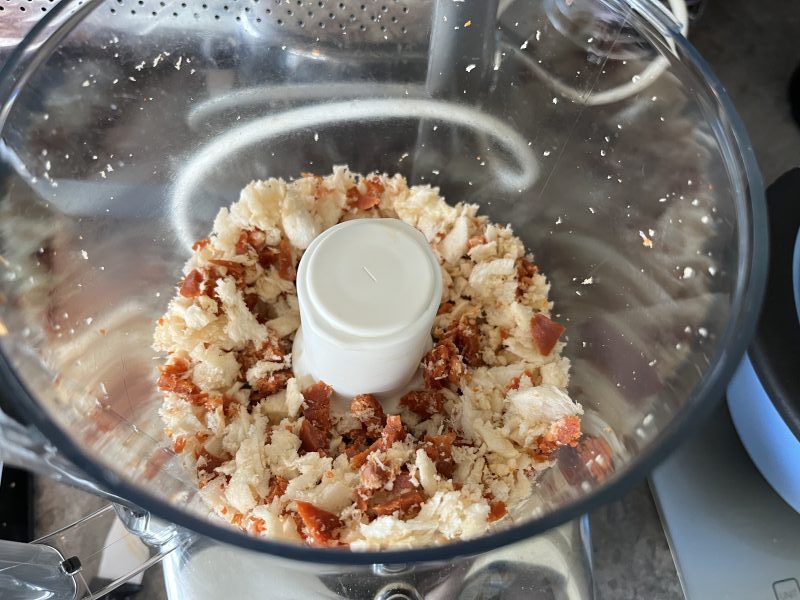
    Breadcrumbs and bits of chorizo in a food blender.
    Breadcrumbs and shredded chorizo in a Minimixer.

    Combine the mince, chorizo, breadcrumbs, egg, salt, herbs and spices in a bowl and mix well. You can do away with the egg if you add more salt or leave the mix for longer – overnight is best2. Form into 12 or so meatballs. Smaller ones will cook quicker, you might make 20.
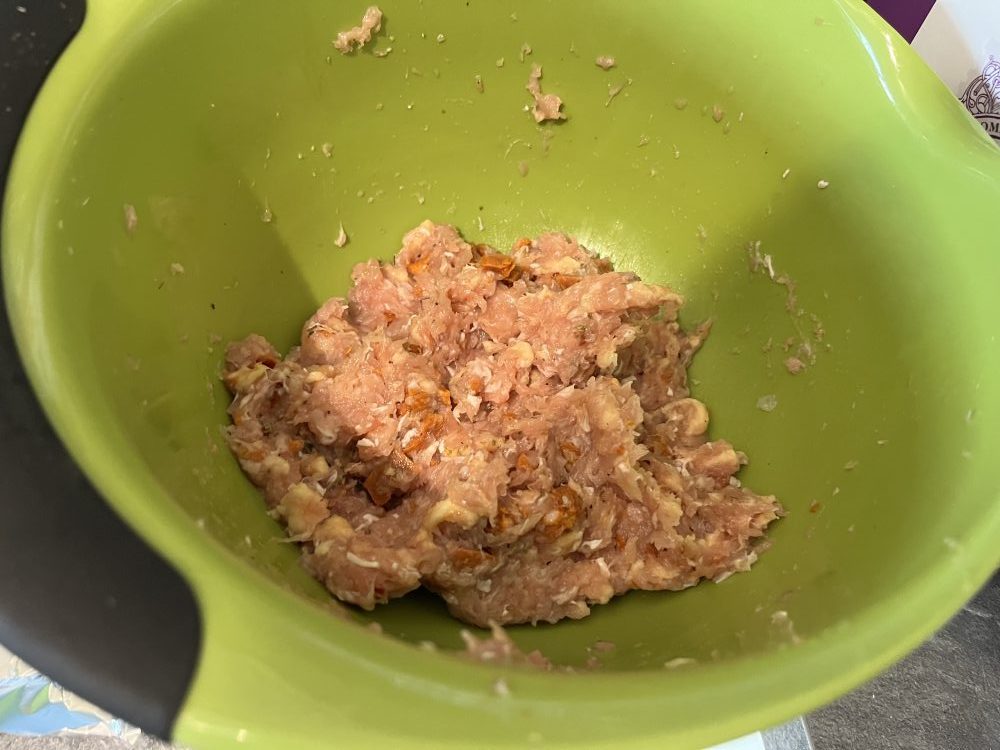
    Raw meatball mix in a green bowl.
    Meatball mix. The salt and egg help to bind the meatballs.

    Distribute the raw meatballs onto a baking tray with an oiled baking sheet. Brush with a little oil and bake for 20 minutes until browned – check they are done with a meat thermometer if you have one.
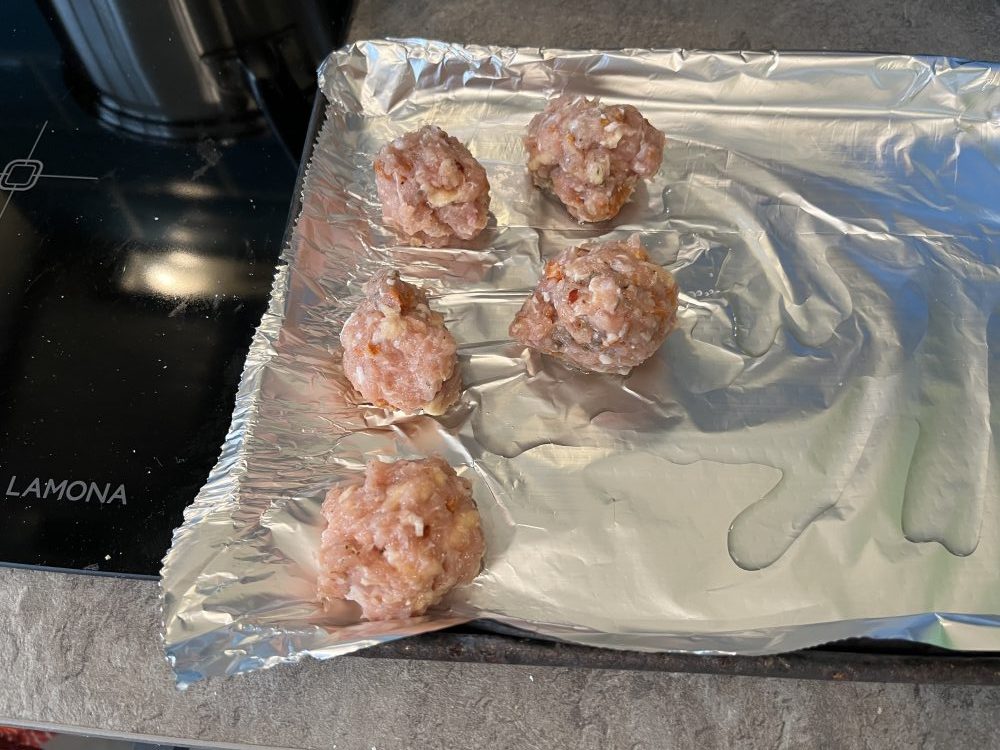
    Five raw meatballs on a foiled baking tray.
    Ready to cook, raw meatballs on an oiled, foiled baking tray. The oil helps brown the meatballs and lessen sticking to the foil.

    While the meatballs are in the oven, make the tomato sauce. It would be an option to make this earlier – a couple of hours earlier – since the flavour improves with time. Depends on how busy you are.

    Fry chopped onion at a low heat for at least 5 minutes until they are translucent. If you have time, fry at a very low heat for even longer until they caramelise. Add garlic, spices and dried herbs, fry for another minute.

    Add the tin of tomatoes, rinse out with half a can of water and add this to the sauce. Add the stock cube/ stock pot and simmer.

    Boil the pasta as directed on the packet. It’s a good idea to time it so that the pasta is done about five minutes after the meatballs are come out of the oven.
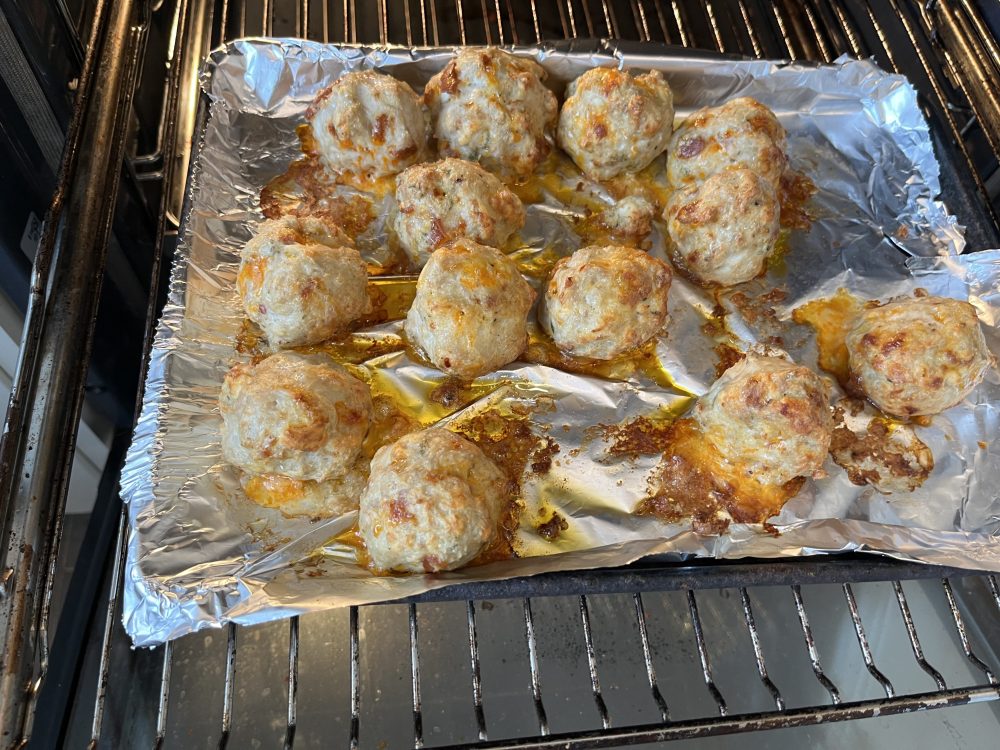
    About 12 cooked chicken meatballs. They are paler than pork or beef meatballs.
    Meatballs after 20 minutes in the oven. A bit of browning adds flavour. An yes, OK, they did stick to the foil a bit.

    Once the meatballs are cooked, transfer them into the pan with the sauce. This is why you need a big saucepan and I never made the mistake of using a small saucepan. Oh no, siree, matey Bob!
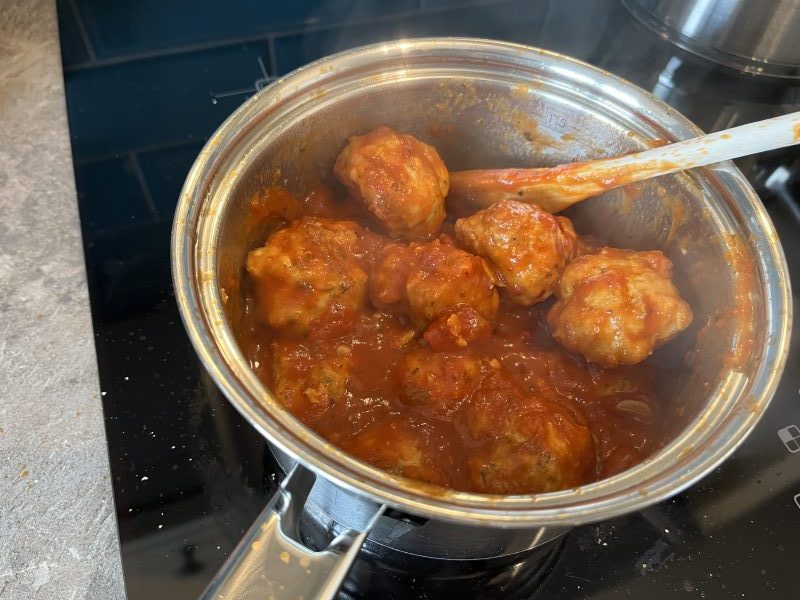
    About a dozen meatballs and a tomato sauce in a pan.
    Meatballs in tomato sauce, ready to dish up.

    Garlic bread goes well with this.
    1. Chicken thigh are tastier than breast, but not as aesthetically pleasing. ↩︎
    2. I think I got this tip from Gordon Ramsey. The salt breaks down some of the protein in the meat and helps the mixture bind by creating a natural glue. ↩︎
  • Thai Green Curry

    Thai Green Curry

    An easy favourite. Feeds 3.

    Timings: Prep: 10 min. Cooking: 10 min Eat: 10 min

    Ingredients

    Two large chicken breasts (or three small ones)

    Mangetout – about 100 g

    Green curry paste, 40 or 50 g (I used Mea Ploy brand for this one)

    A can of coconut milk (400 ml)

    Jasmine rice (200 g uncooked rice is enough for three)

    2 tablespoons oil (peanut, vegetable or whatever is to hand)

    You’ll need a big saucepan and a large frying pan.

    Slice the chicken breasts. I prefer slices to chunks for this recipe, but you do whatever you like best.

    Rinse the rice. Boil about 600 ml water in a large saucepan (more water is fine), add salt and boil the rice while you cook the chicken. The rice will take about 10 minutes to cook.

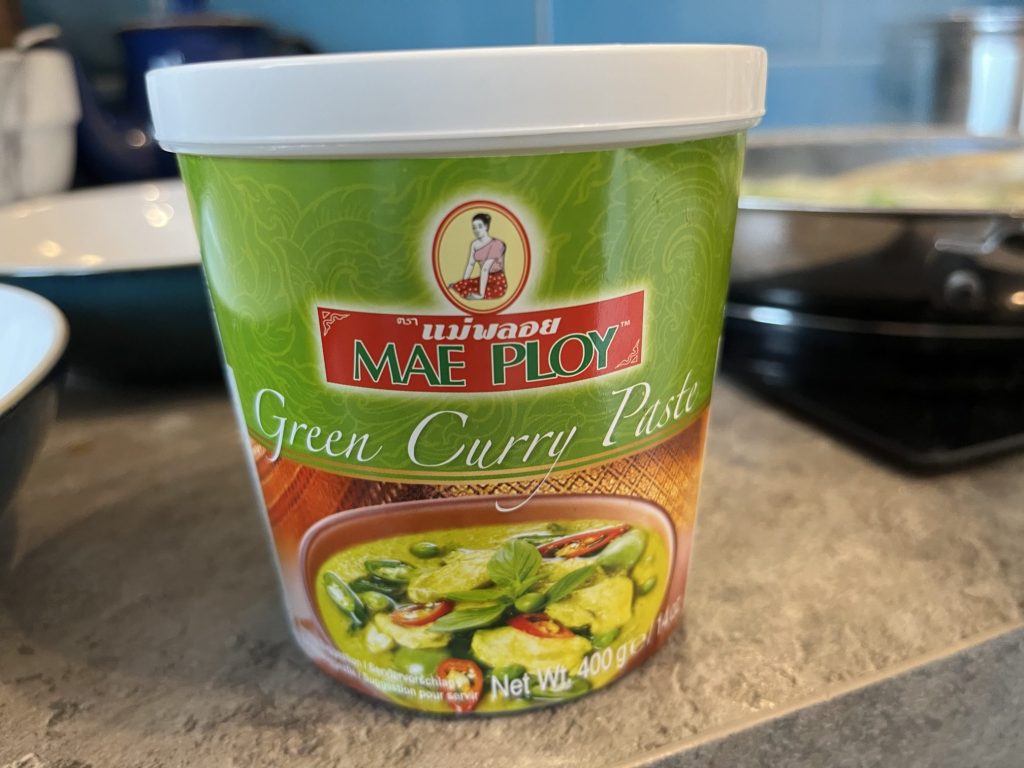
    Fry the green curry paste in the oil. If you’ve bought a one-meal batch of paste, use it all. The paste I’ve been using (see picture below) says to use 50 g. This was at the top end of our tolerance for spicy heat, so I’ve used 40 g since the first time. This makes a curry that’s hot enough to enjoy without feeling challenged.

    Plastic jar of Mae Ploy brand green curry paste.
    This is the green curry paste I’ve been using. It’s spicy enough for us without added chilis, as the serving suggestion shows. This pot cost about £3, it’s good for eight to ten meals. Bargain!

    Fry for a minute, then add some of the cream from the coconut milk. To make this easier I store the can of milk upside down so that there is a plug of cream when you open the can.

    Once the paste and cream are combined and smelling good, add the sliced chicken. Fry until the chicken has gone white on the outside, then add the rest of the can. If you don’t want too much sauce, don’t add all the coconut water from the can.

    Stir while cooking and remember to keep an eye on the rice.

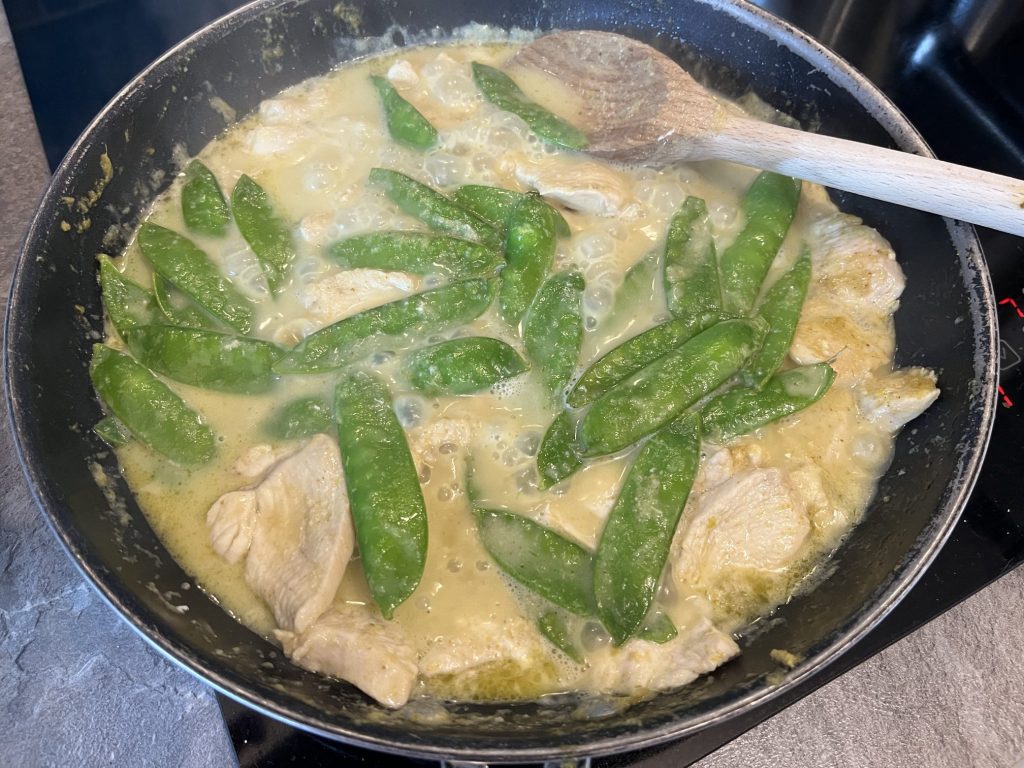
    About two minutes before the rice is done, add the mangetout. It’ll want a couple of minutes cooking to get warm, but don’t leave it too long or it’ll go soft.

    Thai green curry nearly ready to serve.
    Chicken curry nearly ready for dishing up. Just give the mangetout a minute or two in the sauce. That’s enough to warm it through without losing the crunch.

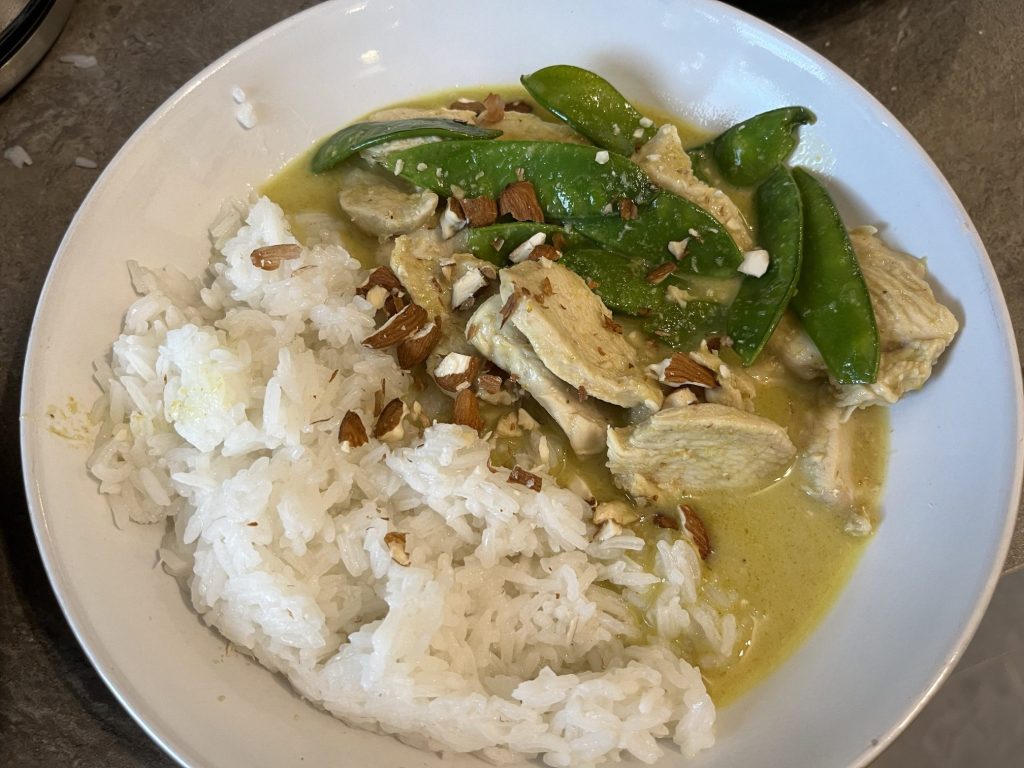
    I crushed a few almonds to add on top – peanuts or any other nut will do, but we had almonds in the pantry.

    Once the rice is done, strain in a sieve. If it’s a bit claggy for your liking, rinse with boiling hot water before serving.

    Thai green curry ready for serving up.
    Dinner’s ready! Thai green curry with jasmine rice. Some crushed almonds add a crunch.

    There’s usually quite a lot of sauce. Make sure there’s enough rice to soak it all up.

    We usually have ‘Thai inspired crackers’ with this. Last time, it was a Tesco own brand bag, I don’t think we’ve ever stretched to Sharwood’s own brand. Same with the coconut milk – it’s usually supermarket own brand.

    I keep meaning to look into how to make my own green curry paste. I don’t know what the minimum amount is that can be made or how well it keeps. I don’t want to make a kilo of paste and it all go to waste.

  • Chicken & pea risottata

    Chicken & pea risottata

    You can make risotto with pasta, orzo they say.

    Timings:

    Prep: 5 min. Cook: 30 min. Eat: 10 min.

    Ingredients

    250 g orzo pasta

    600 ml chicken stock

    2 large chicken breasts

    knob of butter

    half an onion, diced

    frozen peas/ petit pois

    garlic, oregano and thyme

    a good pile of grated parmesan

    Dice the chicken breasts, brown off in a frying pan. Put to one side.

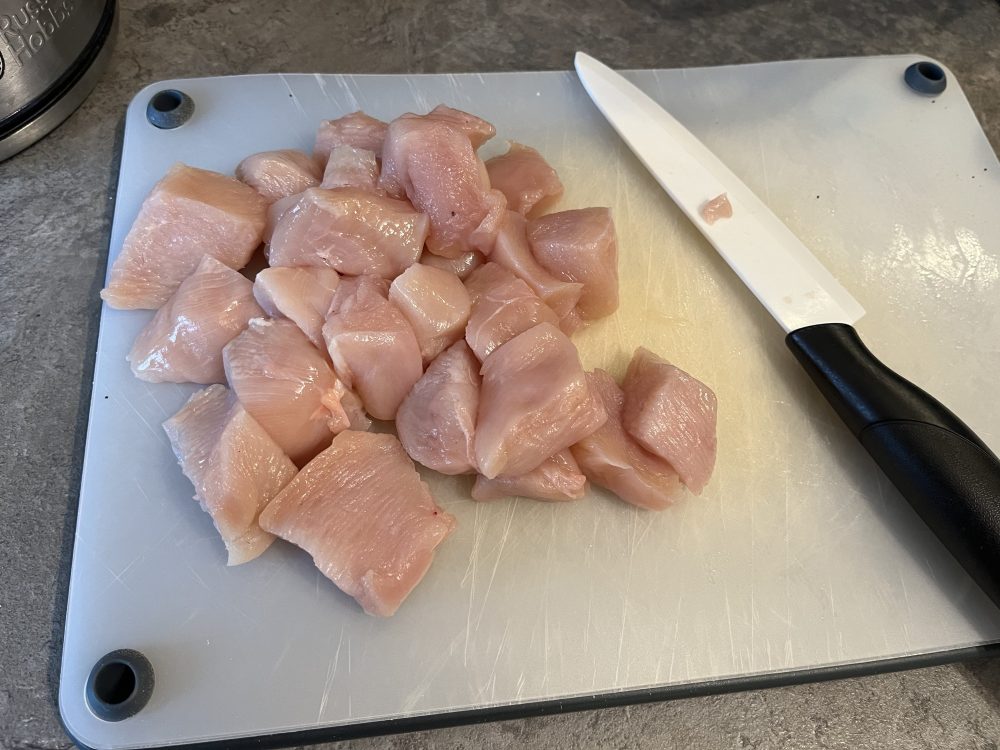
    Diced chicken on a chopping board. We bought the knife in France, it’s a ceramic blade.

    In a large saucepan (the whole thing is made in this pan), add the butter and fry the onion over a low heat for 5 minutes until they’re clear. Add garlic (crushed or chopped) and give that 30 seconds frying. Add herbs and stir them in, too.

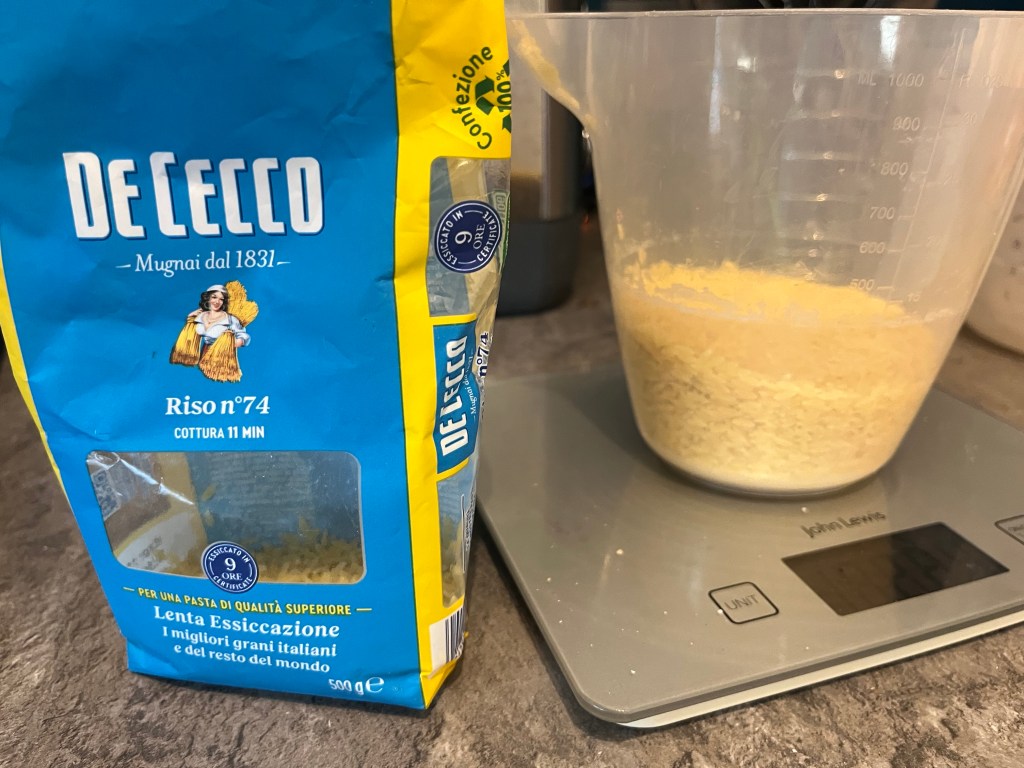
    Orzo pasta. I must have been feeling flush to buy DeCecco pasta.

    Add the orzo and toast until lightly brown. This is critical to the texture of the finished dish.

    Add the chicken pieces and half the stock. Turn up the heat and stir well to avoid anything sticking to the pan.

    Once the pasta has absorbed the liquid, add half the remainder. Keep stirring (though Nigella says not to bother. But what does she know?)

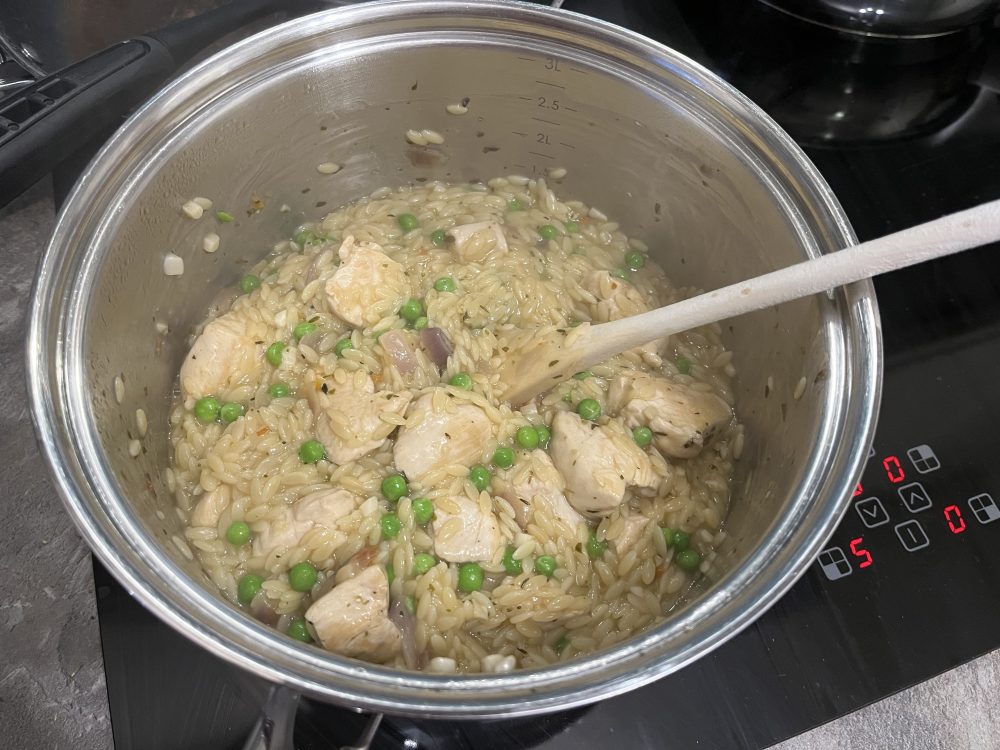
    Add the peas and the rest of the stock. Cook until the pasta has the texture you like; ideally a bit of bite should remain. You can cook until it’s all soft if you prefer.

    Chicken risottata, almost ready for dishing up.

    Stir in the grated parmesan and serve. Garlic bread would be a good addition. Maybe use smaller pieces, or add chorizo to give more variation in the texture.

  • Chicken Basmati rice pilaf

    Chicken Basmati rice pilaf

    Based on a recipe I can’t find for an Iranian dish. It falls under the general category of ‘pilaf’, where rice is cooked with other stuff. Chicken is spatchcocked to (a) reduce cooking time and (b) fit in the roasting tin.

    Timings: Prep: 20 minutes. Cooking: 1 hr to 1 hr 15. Eating: about 10 minutes.

    Ingredients

    Medium roasting chicken (1.8 kg ish)

    250 g basmati rice

    500 ml chicken or veg stock (I used Knorr stock pots)

    One onion

    6 cherry tomatoes or a couple of normal tomatoes

    One carrot (diced) and a handful of raisins

    A teaspoon each of chilli flakes, cumin, oregano, and black pepper (to be more authentically Iranian, sumac should be used. But I didn’t have any. Sue me).

    Method

    Set oven to 180 C (fan). Will need at least one hour, up to 1 hr 15 min.

    Chop the onion into thick slices and scatter on the bottom of a lined roasting dish. Cut the tomatoes and add to the onions.

    Spatchcock the chicken (pictures below). I marinated the chicken overnight – rub the skin with olive oil and salt, put into a big plastic bag and put in the fridge. I try and do this when I do a roast, it tenderises the meat.

    Add the chicken to the roasting tin.

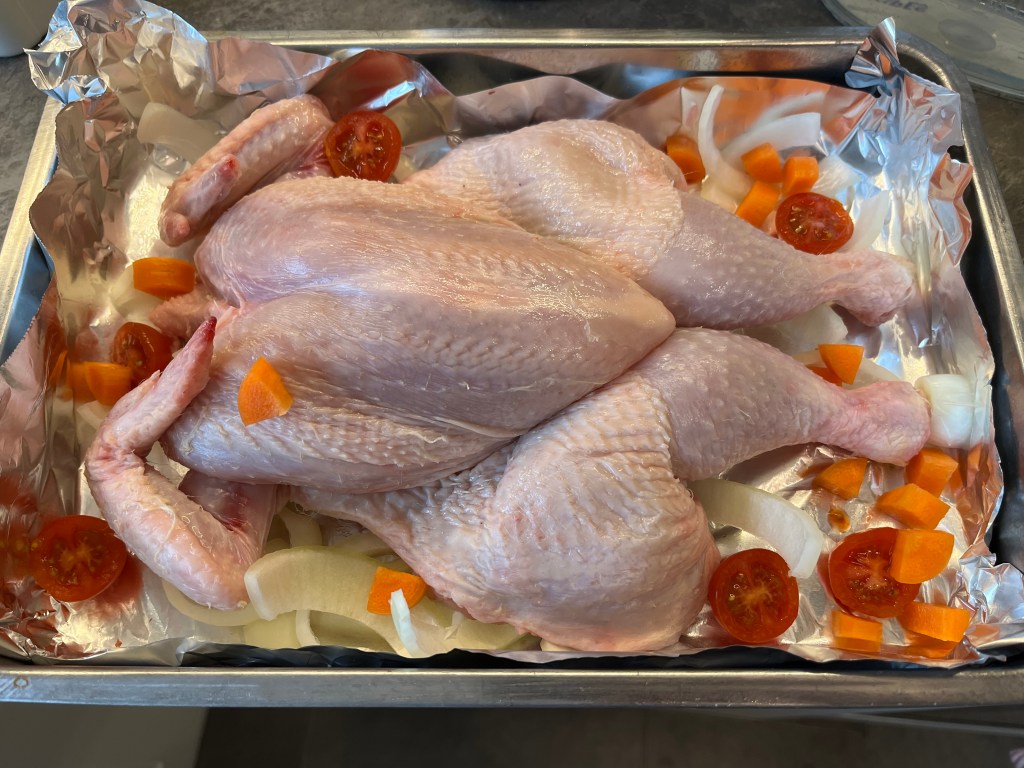
    Raw spatchcocked chicken placed in a roasting dish with sliced onions, cherry tomatoes, and diced carrots on a bed of foil.
    Chicken ready for the rice and stock.

    Add the rice, diced carrots and raisins. Pour over the stock.

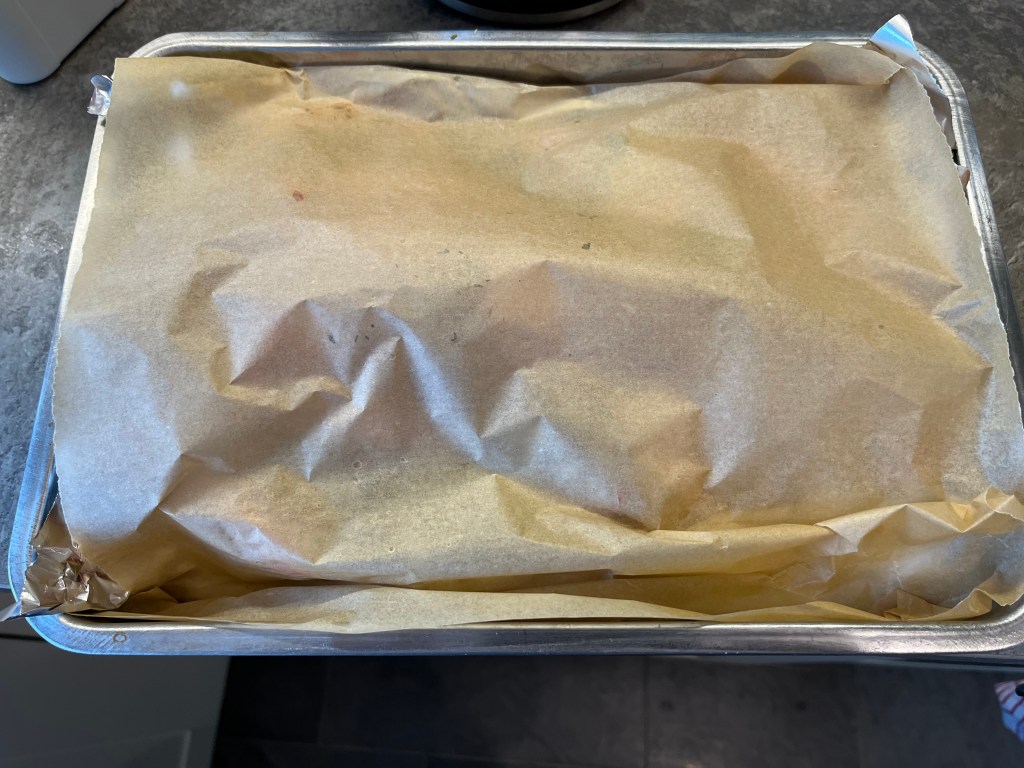
    Cover with baking parchment, then foil to seal in the steam as it cooks.

    Bye, bye birdie.

    I used a thermometer to check that the chicken was cooked. After an hour it was nearly done (not yet at 74 C) , but the rice looked a bit dry on top so I added 100 ml water. I gave it another 10 minutes and it was done.

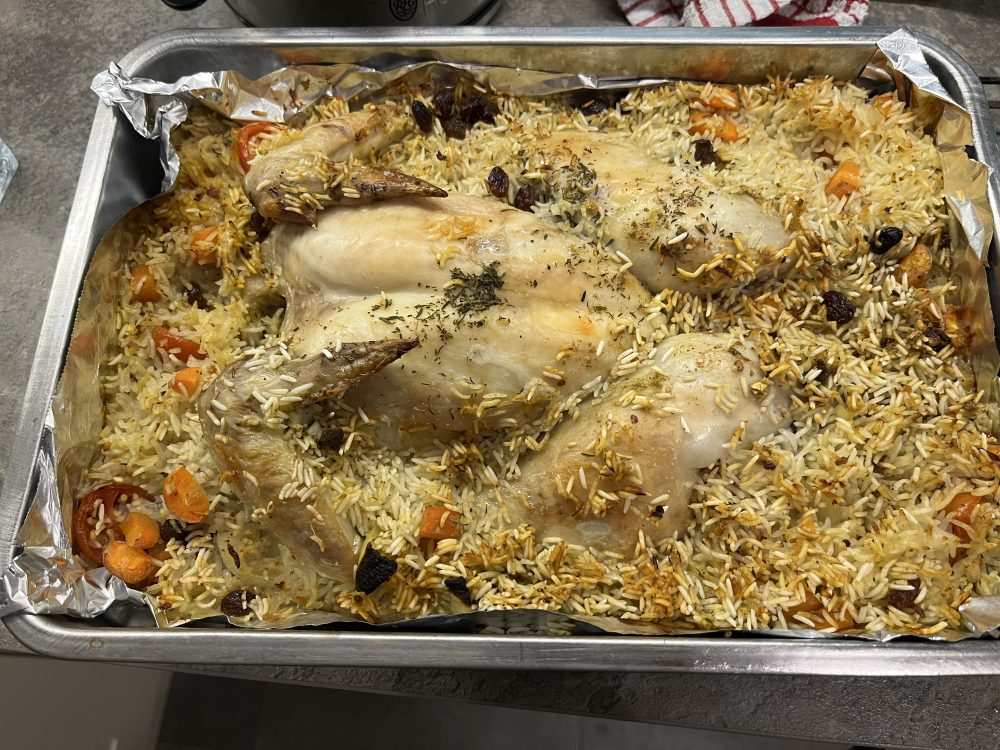
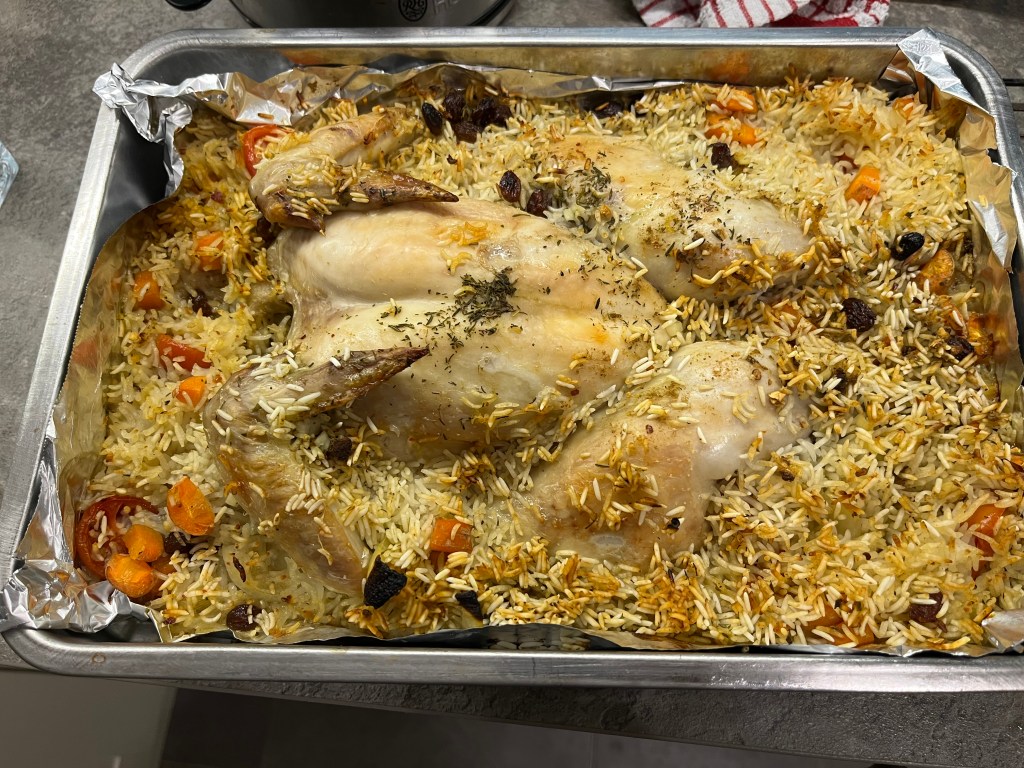
    Finished dish, roast chicken in colourful rice.
    Dinner’s ready!

    There was a nice contrast in textures between the rice at the top and the rice at the bottom, so there was crunch and softness.

    I’d go heavier on the spices next time. Maybe buy sumac, or look into the traditional Turkish method.

    Also some recipes call for grilling the dish before serving to brown the chicken and give extra burned rice. Maybe next time.

    Spatchcocking a chicken

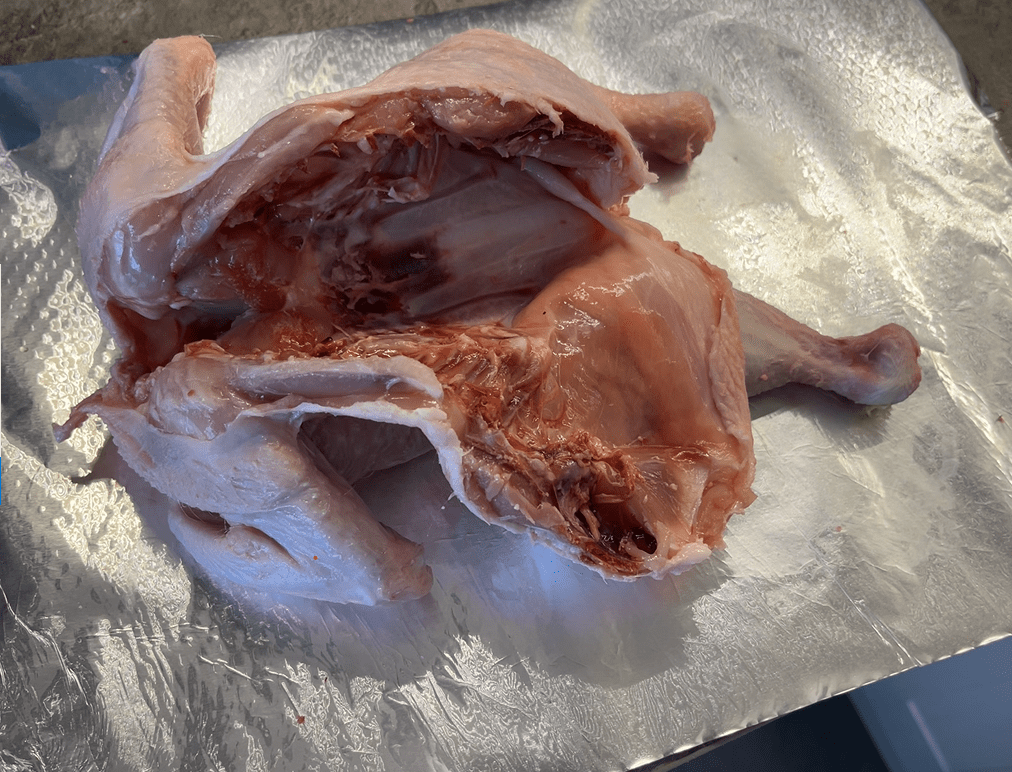
    This is removing the spine of the bird and pressing it flat so it cooks quicker.

    Another Taskmaster reference. Hugh Dennis spatchcocked a camel, which I won’t be doing.

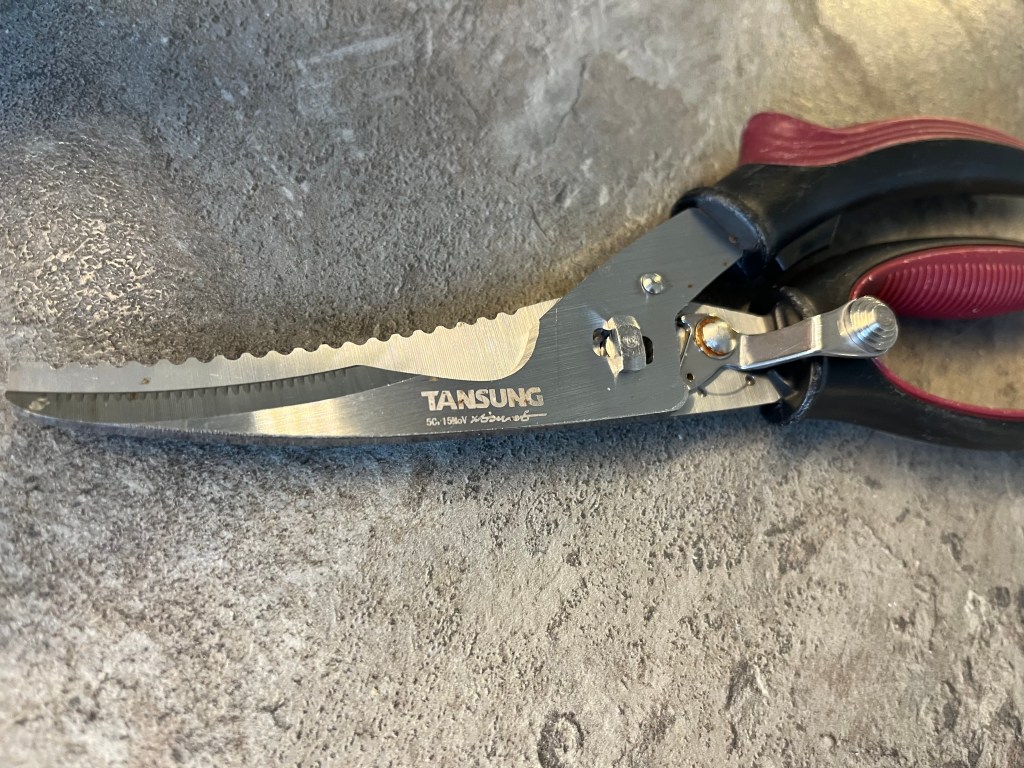
    I bought bone scissors some time ago because doing this without the proper tools hurts and can ruin a normal pair of scissors.

    “You Tansung?” “You asking?” “I’m asking.” “Then I’m Tansung”. A reference for the youth, there.

    I use these to cut the legs off roasted chicken, so they are used at least once a month. And they come apart and are dishwasher safe.

    I chopped off the parson’s nose then cut down one side of the spine. The skin is more difficult to cut properly with these scissors. I removed the spine fully.

    The world’s most cowardly animal – a spineless chicken!

    I wiped the inside with kitchen towel to get rid of rogue bits from inside. Turn it over and press down to flatten. The wishbone needs to be broken so the bird will lie flat.

    Spatchcocking reduces cooking time by about half.