I don’t look on LinkedIn much, but a recent article on how Babycham was advertised from the 1950s onwards interested me.
Babycham is still available, it’s a perry – like cider, but made with pears rather than apples. At 6% it’s on the lighter side of cider-perry drinks and the little bottles it used to be sold in wouldn’t get you very drunk. From its introduction in the 1950s it was marketed at women, a departure from how alcohol had previously been advertised.
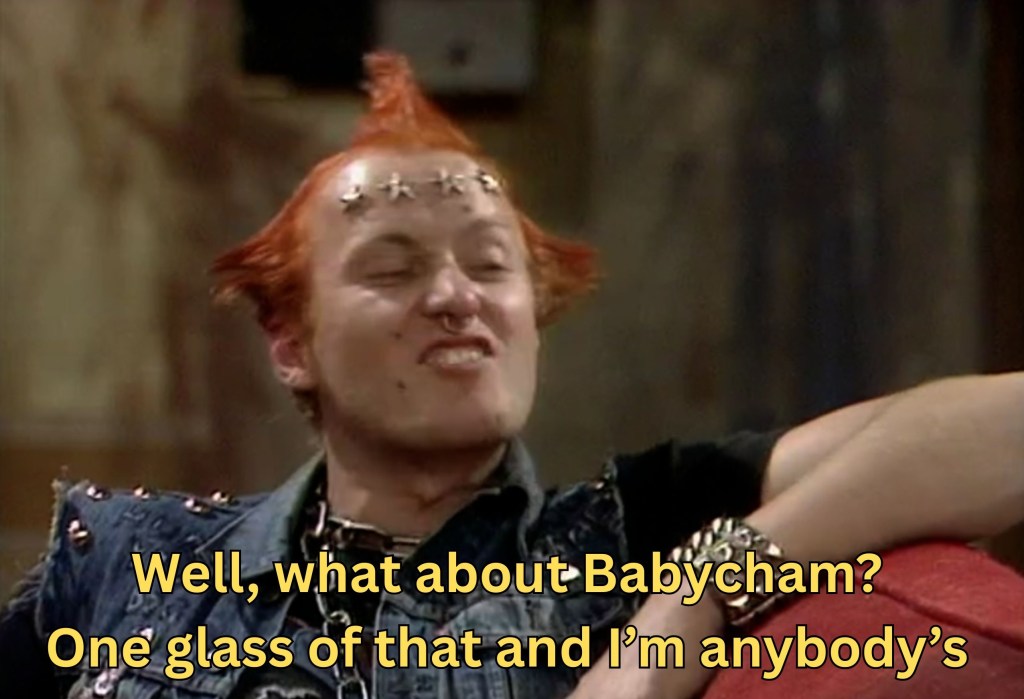
It was also the favourite tipple of Vyvyan out and off of The Young Ones. He once declared that “one glass of that and I’m anyone’s”.
Vyvyan from The Young Ones was partial to the occasional Babycham, as well as Hawk lager (100% alcohol).
The advert that comes to mind first when I think of Babycham is one from 1986, set in a low bar playing loud, industrial music1. Two posh couples come in and one of the woman – to the consternation of the barman – says she’d love a Babycham. A deep-voice dude2 clicks his fingers3 and says “Hey! I’d love a Babycham!” And then everyone in the bar wants a Babycham.
What’s memorable is the guy at the end of the bar. In this two-bit sleazy dive is a very polite young man who looks around at everyone else ordering Babycham, puts his finger up and says “Yeah, I’ll have one!”
So I did a remix of the advert
Literally, hammering on pipes. Not Killing Joke or Nine Inch Nails. ↩︎
Charles Augins, who was also Queeg 500 in the Red Dwarf episode ‘Queeg’. ↩︎
Which you should never, ever do to any bar staff – unless you’re being played by Charles Augins – if you still want to be able to count to ten. ↩︎
I frequently struggle with cryptic crosswords. I don’t always (or often) finish them, but I don’t struggle enough to completely abandon all hope. The private Eye crossword is supposed to be one of the easier cryptics. The Times is the standard in difficult crosswords – they even have a Latin crossword sometimes.
The recent edition had this clue as 9 down, which was one of the rare ones I got almost immediately. The black-out is where I wrote the answer. I usually do this before I fill in a clue so that I can check that other solutions match letters.
How to solve this logically? As with all cryptics, there are two parts to the clue. One is a straight clue, the other is a riddle to get to that straight clue. Part of the fun (yes, fun) is working out which bit is the straight clue. This is usually either the first or last part of the clue, but you don’t know which and you also don’t know where the straight clue finishes and the cryptic starts.
In this case, the straight clue could be ‘Foreign’, ‘foreign minister’ or perhaps ‘is on right’. But ‘is on right’ politically, driving on the right or on the right hand?
Knowing how cryptics work after many years, the last part flags that there will be some word-building needed. The phrase ‘that is’ signals that the letters ‘ie’ will be used. ‘On the right’ means, for a down clue, that the other letters will be on top of ‘r’. So the word ends ‘ier’, and the ‘foreign minister’ is the straight clue.
The ‘scurrilous comic’ is the first part of the cryptic. Comic can mean a couple of things, it could be the name of a comedian or a paper comic. From the title of this post, you might have guessed that the word ‘viz’ is in the answer.
I first read Viz back in 1988 when I was at 6th form. Even then, it wasn’t as funny as it used to be. After a few years I stopped getting it very frequently, though my parents bought me a Viz annual in the 90’s. They had no idea what was inside until my dad and my uncle (who were both about 60 at the time) read the annual and were both shocked and very amused by Buster Gonad1.
From Viz 48 (July 1991). I did my first degree at Loughborough and I thought this was hilarious.
So the assembled cryptic is ‘viz..ie..r’, or ‘vizier’, the name for a dignitary from Persia and the surrounding region. I’m pretty sure the first time I heard of a vizier was in a pantomime – probably Aladdin – where the baddie was the vizier. Indeed, Jafar was the vizier in the 1992 Disney film of Aladdin.
After two weeks I haven’t finished this one, and will need to wait for the next edition to find the answer to 15 down: You might claim booze is from Iceland – I’m dubious (9). I think it’s an anagram of ‘Iceland Im’ (the word ‘dubious’ indicates an anagram), but other than that, I don’t know.
An experiment with bourbon may explain the high reputation of Japan’s whiskies
During my research for an earlier chemistry of whisky article, I came across an account of an experiment on how transporting barrels impacts the flavour of bourbon. Bourbon barrels are commonly used to age whisky not only in Scotland, but in England, Ireland, Japan and India.
Whisky in Glencairn glasses. These glasses were developed in the early 2000s, inspired by the shape of the whisky blender’s glass.
I’d been looking at how the flavours of charred oak affect the character of bourbon. This article in Wine Enthusiast drew my interest. It described a fascinating experiment by Trey Zoeller, the founder of Jefferson’s bourbon distillery in Kentucky, USA. I originally put it in a footnote, but the whole thing became a bit extended and so I decided to convert it into an article.
Barrel aging bourbon
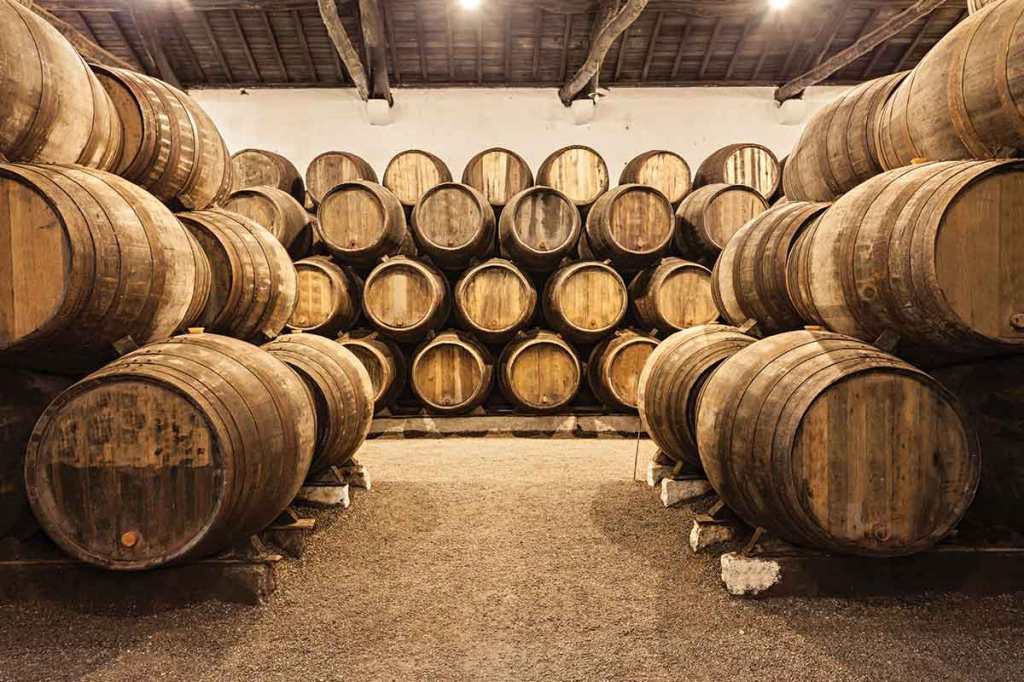
The usual practice when aging whisky/ whiskey1 is to have the barrels stacked in a warehouse holding maybe 60,000 barrels with 200 litres in each and let nature take its course.
Since 2012 Jefferson’s, based in Kentucky, has offered a limited ‘Ocean Cask’ expression. They send the barrels on six-month voyages at sea, where they are heated, chilled and shaken about before coming back to Kentucky to be bottled. Exact numbers of barrels aren’t available, but multiple shipping containers with 200 barrels each are now sent on these voyages. The 200-300 bottles that are filled from each barrel retail at $83 (about £60)2 for a 750 ml bottle, more than double their standard bourbon ($31).
Without good roads, the best option was for distillers to send barrels down the Mississippi with the spring flood, then by ship from New Orleans to New York for bottling. In 2022, Jefferson’s sent two barrels of bourbon on a replica journey down the Mississippi and then to New York to see if this process was the source of Kentucky bourbon’s high reputation.
A barge on the Mississippi.
The agitation of the spirit in the barrel during transit did change the flavour, both chemical analysis and blind tasting showed a distinct variation. This could explain the good reputation that Kentucky bourbon enjoyed in New York.
Relevance to whisky
Bourbon is similar to whisky, in that you take a grain-derived spirit and age it in wooden barrels until it has absorbed flavours from the barrels and the environment. The difference is the type of grain you use. Malt whisky is made using barley. By law, bourbon must contain over 51% corn grain spirit. Anything else is grain whisky3.
As my previous blog discussed, a lot of whisky is aged in used bourbon barrels. The environment in which the whisky aging takes place influences the flavours extracted from the wood. Bourbon is produced in the generally temperate continental climate of Kentucky, so the mix of grains (the ‘mash bill’), the type of still used and the cut of the spirit are more important in determining the particular flavour4 of the bourbon.
The flavours extracted from used bourbon barrels by the maturing whisky will be representative of the original spirit. The mix of flavour molecules extracted will also vary depending on several factors including the ethanol content of the whisky, temperature, humidity, and time.
Scotland is a cool, damp country and produces characteristic whisky. By law whisky must be aged for at least three years to be sold as Scottish whisky. Age adds to the flavour, smoothness and cost of a whisky. The oldest whisky I’ve ever has is a 20 year old Highland Park – a slightly peaty but incredibly smooth drink that cost about £25 for a double5.
Japan and the getting back to the point
All this is fine, but what does the Jefferson bourbon experiment have to do with whisky? After all, shipping or moving thousands of heavy barrels isn’t a commercially viable option unless you’re going to add a premium to an already expensive product.
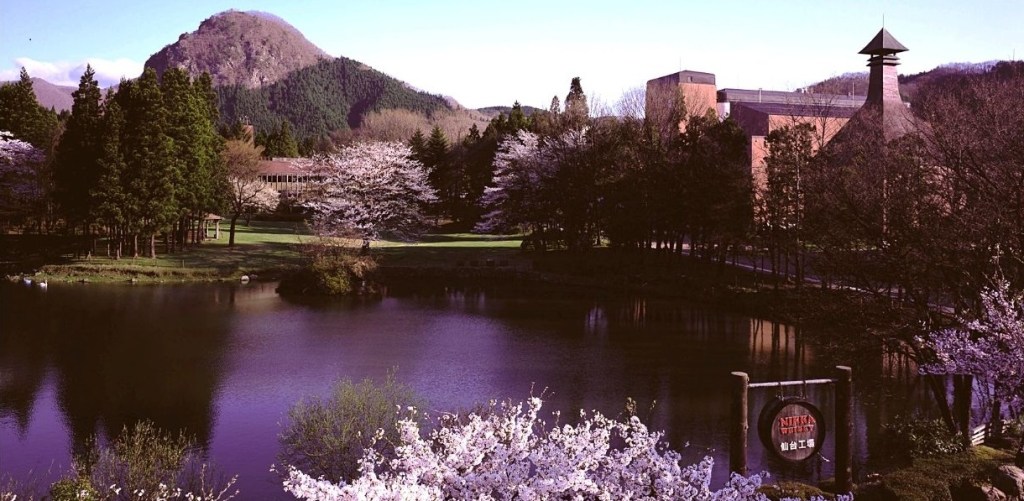
Japan has a well-established whisky manufacturing culture, with the first whisky distillery – Suntory – opening near Kyoto in 1923. Following a disagreement between the founders, a second distillery, Nikka, was opened near Sapporo on the north island of Hokkaido. This site was chosen because the climate was more like Scotland than the sub-tropical Kyoto.
The Nikka distillery near Sapporo. A new place I want to visit, it looks lovely.
Japan’s whisky industry was established after thoroughly researching the Scottish methods and equipment, even buying old stills from distilleries and, in places, a climate that mimics that of Scottish. From those beginning decades ago, Japanese distilleries have developed the craft to produce a distinct drink that has its own place in the world of whisky.
What is perhaps unique in Japan is that is a whisky-producing country that also sits on a tectonically active region, at the junction of at least three active geological faults. Low intensity tremors are frequent throughout the islands with major quakes occurring annually.
So, while shipping thousands of barrels by sea to enhance the extraction of flavours isn’t economically feasible, it could be that the character of Japanese whisky is changed through frequent shaking by earthquakes. It could be that, in their quest to create a Scottish whisky with a Japanese feel, the geology of their country has gifted the Japanese whisky industry an added influence that the distillers of other countries will find it difficult to emulate.
Traditionally, whisky is from Scotland, whiskey isn’t. Though some Japanese distilleries use ‘whisky’. ↩︎
I had to enter an address in the USA to get this price. I picked 1060 West Addison St, Chicago. ↩︎
Quinoa can be used to make whisky, even though it’s not technically a grain. ↩︎
Today would have been a red letter day at home when I was growing up. My dad loved horse racing. Our Saturdays had a steady routine; shopping in the morning when dad would visit the bookies, home for lunch, then flicking between BBC and ITV for the races he’d put a few pence on.
It was the lot in life of me or my younger sister (whoever was closest) to do the switching of channels so the 2:20 from Towcester could be watched without a break after the 2:10 from Leopardstown had run and, yet again, Daddy’s Donkey didn’t win.
He never gambled much. In the 70s, I think it was a matter of 5 p on each horse, maybe 6 or 7 races. It was never more than £10 total on a racing day, until he stopped going when he fell ill.
So gambling was only ever a small indulgence for my dad. Over the years I picked up on a lot of information about horseracing. Dad would patiently answer my questions about what betting odds were, what the numbers in the Form line meant, the handicap system, and why some jockeys were better than others.
Rabbit holes and Gatwick Airport
I was down a rabbit hole earlier in the week. It was sparked by an article on BBC News about the history of the Grand National and the little known fact that the Grand National had been run at Gatwick during the First World War.
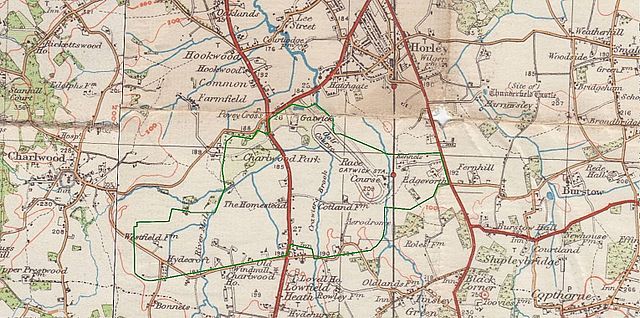
I knew there had been a race course at Gatwick. There’s an excellent resource held by the National Library of Scotland (https://maps.nls.uk) where you can overlap old maps with modern OS maps. Bored one afternoon, I had a look at how the landscape had changed in my local area over the last 100 years. And there was Gatwick Racecourse on the 1925 map.
Area around Gatwick Racecourse from the 1925 OS map. The current bounds of Gatwick Airport are shown in green. The train line is still in place, but the M23 now runs through Shipley Bridge and Fernhill. (From Wikipedia)
That the Grand National had been run there was news to me, though. I was surprised that sport continued during the war, though Mrs S pointed out that football carried on throughout, despite many of the players being called up.
The Grand National in 1918 was won by Ernest Piggott, the grandfather of Lester Piggott. Along with Willie Carson, he was one of the top jockeys I remember from the 80s.
Female jockeys
One strand of the rabbit hole (do rabbit holes have strands?) was sparked by the memory that the first female jockey to win the GN was only in 20211. Rachael Blackmore won on Minella Times at the handy SP of 11/1. Second horse in had odds of 100/1, which would have been a pleasing result for an each way bet.
I can’t remember dad ever being disparaging towards female jockeys, largely because there were so few when I lived at home. Checking Wikipedia, there were no professional female jockeys until the mid 70s2. It does seem strange that this area of horse riding is still a male preserve (in the UK – in New Zealand 40% of the professional jockeys are female), whereas in other equestrian events (show jumping in particular) women and men compete equally.
It was certainly a struggle to get the various jockey clubs to allow female riders. Did the established jockeys fear the rise of women in their sport? Probably not. Champion jockey Bill Hartack, in a guest editorial in Life Magazine in 1968, wrote:
“They’ll find out how tough it is and they’ll give it up. The tracks won’t have to worry about being flooded with women because a female cannot compete against a male doing anything….They might weigh the same as male jockeys, but they aren’t as strong. And as a group, I don’t think their brains are as capable of making fast decisions. Women are also more likely to panic. It’s their nature.”
I’m pretty sure he’s wrong about the strength thing. My understanding from climbing is that women tend to be stronger weight-for-weight and often outperform men. Getting used to the culture, or changing the culture, is another matter entirely.
I’d need to look more into whether flat and national hunt racing have been better than other sports at allowing men and women to compete on an equal footing. Long distance running is the only other sport I can think of where mixed races are won by women in a ratio that reflects the competitor mix.
Discounting, of course, Elizabeth Taylor’s win in the film ‘National Velvet’. Apparently, because it was a film, it doesn’t count. ↩︎
Officially, anyway. There were women disguised as men in the 19th century, who went so far as to wear bowler hats and smoke cigars to convince everyone they were men. Simpler times. ↩︎




 Grim up North Heath