Category: Comedy

  • I’ll cut his heart out – with a spoon!

    I’ll cut his heart out – with a spoon!

    Have you ever liked a villain more than the hero? Who and why?

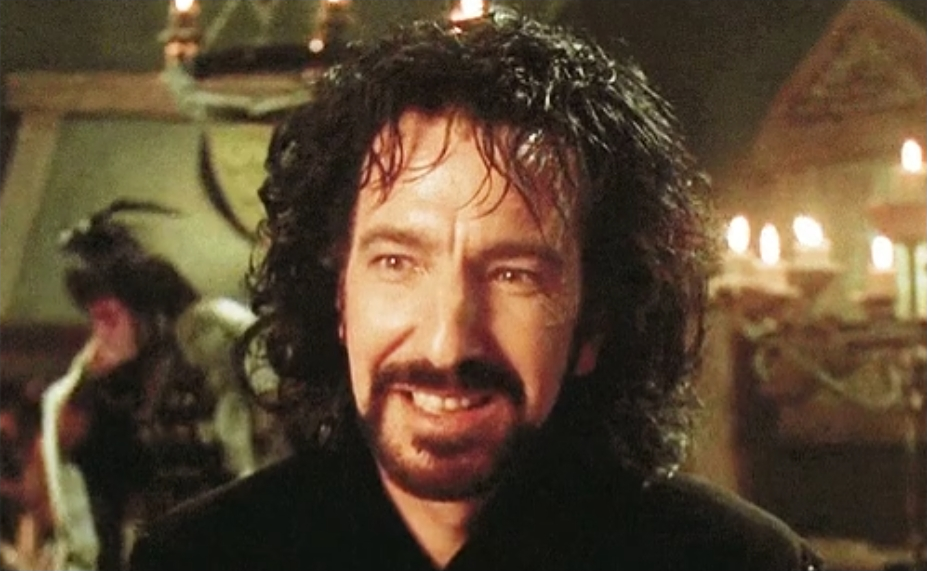
    Rumour has it that Alan Rickman gave such a commanding performance as the Sheriff of Nottingham in Robin Hood, Prince of Thieves (1991), that Kevin Costner cut many of his scenes to avoid being completely upstaged. This role was early in Rickman’s film career. His screen debut was as the villain Hans Gruber in Die Hard (1988)1 a scene-chewing villain but up against Bruce Willis in one his first action roles as the reluctant hero John McClane. So here, villain and hero are equal. But in Robin Hood, the sheriff is such a colourful pantomime villain that Kostner’s anaemic goody is wise to limit shared screen time.

    Alan Rickman as the Sheriff of Nottingham in Robin Hood, Prince of Thieves. A vivid performance that did his career no end of good.

    Rickman gets all the best lines. He threatens to cancel Christmas; to cut Robin Hood’s heart out with a spoon (because it’ll hurt more); and tells a wench to ‘bring a friend’ when she comes to his room. Kostner is there, which is just as well, or the film title wouldn’t work.

    Other villains and anti-heroes

    A good anti-hero is one thing (Deadpool, for example) but a good villain is always worth watching. Ricardo Montalban is commanding as Khan in Star Trek II: The Wrath of Khan. The combination of David Prowse and James Earl Jones as Darth Vader in the first three Star Wars films gave the character iconic baddie status. Cruella de Ville (101 Dalmations) is probably as evil as any character in children’s literature, though in her case I blame the parents for calling her ‘Cruella’. And the baddie doesn’t even need to be a person: Skynet is the villain in the Terminator series; the various Terminator cyborgs are just machines, not an artificial intelligence.

    Awful characters

    The BBC sitcom Ghosts doesn’t really have a villain, but the once-a-season appearance of their awful neighbour Barclay Beg-Chetwynd (played with more relish than an entire Branstons factory by Geoffrey McGivern) was always a highlight. He gets introduced thus:

    Barclay: Barclay Beg-Chetwynd. From next door.

    Mike: We have a next door?

    Barclay: It’s about a mile that way. I own the… you know the village?

    Alison & Mike: Yeah.

    Barclay. Yes, I own that.

    He’s not really a villain, just rich, uncaring and pretty awful. The only true villain in Ghosts is ‘Lucy’, played by Jessica Knappett, who tries to con Alison and Mike out of thousands of pounds.

    Barclay is a type of awful character that I love to see on screen, but would hate to deal with in real life. Father Jack in Father Ted is hilarious onscreen, but could you imagine living with him? I mean, the smell alone! And yet, they outdid Jack with the menacing, softly spoken sociopath Father Fintan Stack, who was malicious in his awfulness – getting Dougal drunk, drilling the walls at 2 am and driving Father Ted’s car ‘into a big wall’.

    I’m not sure why the size of the wall is important.

    Literature

    Going Postal (2004) gives us Reacher Gilt. He is one of Terry Pratchett’s few proper villains (though not a patch on Carcer from Night Watch), a flamboyant character up against an antihero in Moist von Lipwig. Both men are confidence tricksters; Gilt dresses as a pirate, complete with eyepatch and parrot2. Moist relies on being unremarkable for his cons to work, his golden uniform as Postmaster is a distraction from the man in the suit. However, Moist is in awe when they meet. They immediately recognise each other for what they are, Moist realises that Gilt is a master fraud to whom he would give everything to be apprenticed to. Gilt, for his part, is shocked that Moist is also a fraud.
    1. One of the best Christmas films ever made. ↩︎
    2. Who only ever says “Twelve and a half percent!” ↩︎

  • The challenge of the limerick

    The challenge of the limerick

    The subreddit /rlimericks runs a weekly challenge to rhyme a difficult word in a limerick. I’ve had a couple of goes, which has reawakened my interest in this verse form.

    What’s a limerick?

    Named after the county in Ireland – or possibly the song ‘Won’t You Come to Limerick’ – the limerick is a five-line verse form with a set meter and rhyme scheme. The first, second and fifth lines have eight syllables and rhyme with each other, while the third and fourth have five syllables and rhyme. There’s no rule against all five lines rhyming (see below). They’re usually comic verse, as in this example:

    There was a young fellow called Tate

    Who booked dinner for two at 8 – 8

    But I will not relate

    What it was that young Tate

    And his tête-à-tête ate at eight eight

    Popularising the form

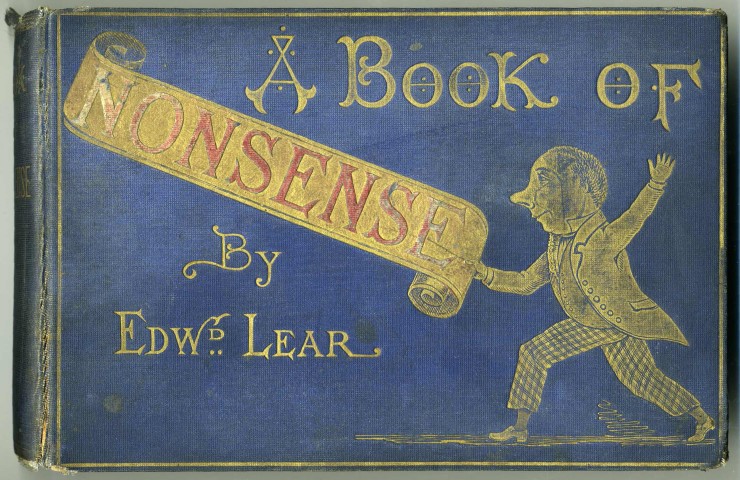
    Edward Lear (1812 -1888) popularised an established form, producing 212 published examples for the amusement of the Victorian gentry. In hindsight, his output was quite poor, mostly relying on using the same word at the end of lines one and five. This was the traditional form, but restricts the writer somewhat.

    A Lear limerick.
    One of Lear’s limericks. There are other poems of his that I like, and he was also a fantastic illustrator of birds. But these verse leave me cold.

    Using the same word to end the first and fifth lines saved him trying to find a rhyme for Thermopylae, I suppose.

    Being comic verse, the format can be played with. WS Gilbert, out and off of Gilbert & Sullivan, is credited with one such:

    There was an old man from St Bees1

    Who was stung on the nose by a wasp

    When asked if it hurt

    He said “no it didn’t,

    I’m so glad it wasn’t a hornet”

    My own writ

    I’ve written a few limericks, but only came back to them again when I stumbled upon the subreddit. A favourite of Mrs S’s is one I wrote in the late 80s called ‘Yuk!’

    With scarcely concealed delight

    Christopher switched off the light

    Bit a chunk from the cat

    Spat it out on the mat

    And rolled around, laughing, all night

    Judge for yourself the mental state of the seventeen year old who wrote that. Though this isn’t the most disgusting Limerick I’ve written2.

    An earlier one, which I wrote during my ‘O’ levels, summarises MacBeth, which I was studying at the time. The inspiration is Stanley J Sharpless’ summary of Hamlet (link).

    King Duncan was mortally bedded

    And MacBeth’s killing hand was well redded

    His Mrs went gaga

    And to finishes the saga

    In vengeance MacBeth was beheaded

    I’ve done a few other of Shakespeare’s play. I’ll blog them at some point.

    Limerick accent challenge

    In the time between my ‘O’ levels and this year, my output dried to a trickle. One I wrote maybe ten years ago is an accent challenge. Younger daughter hates this one, because it makes her talk like me. In other words, correctly.

    A Mathematician reflects

    “G&Ts help with my maths”

    He leans back and casually laughs

    “A reduction in mass

    Of the gin in my glass

    Helps me travel binomial paths”

    If you think that doesn’t rhyme, you’re wrong.

    Saturday Reddit challenge

    Yesterday’s3 challenge was to rhyme the word ‘philodox’. I had to look up the word – it means someone who loves their own opinions and thoughts.

    It’s a interesting challenge, since the word doesn’t fit into the standard meter requirements of a limerick. This means breaking the standard rhythm a bit. But that’s fine, as long as it’s done consistently.

    I started with a search for words and phrases that would match the word ‘philodox’. Orthodox and heterodox are related terms4, also Goldilocks, pair of crocs, Robert Knox5, letterbox and cotton socks.

    I went with the last one, since there’s a British expression ‘bless your cotton socks’, equivalent to ‘bless your heart’. Though a crossover involving Goldilocks and the surgeon involved in the Burke & Hare murders would be a challenge in itself. The idea of blessing and words involved with philosophy and theology seemed to fit. First draft had ‘sinnin’’ rhyming with ‘opinion’, but that didn’t work. So the idea of socks in general and things that are worn on the feet also arrived. There’s a lot of them.

    How to make a short story of it all? My experience of the type of person who would be a philodox is a person set in their ways, who would suffer any consequences if it meant they could say they were right. So how about he insists on wearing uncomfortable hosiery, despite the norm is to wear comfy socks? From there the story came about in a few minutes:

    An ancient and crabby old philodox

    Denouncing establishment orthodox

    Declared “Tights of nettle,

    Or hose made of metal,

    Are a fine substitution for cotton socks.”

    Quite a lot of declaring goes on in these poems.

    1. Or Dundee in some versions ↩︎
    2. That’s about a curate named Muggeridge. ↩︎
    3. 1st of August. Pinch, punch… ↩︎
    4. Meaning ‘correct opinion’ and ‘different opinion’, respectively ↩︎
    5. The surgeon involved in the Burke & Hare murders in Edinburgh in in the 1820s. ↩︎
  • Bill Bailey for the fifth time

    Bill Bailey for the fifth time

    What was the last live performance you saw?

    We’ve not been to many live performances recently. Having kids put a cramp on going out at all, and we’d lost the habit of going out by the time they were old enough to leave alone in the evening. When we do go out together, it’s a comedy night. We are both fans of comedy, though mainly on telly1.

    Last January Mrs S got us tickets to see Bill Bailey in London in January ‘25. This was just after I’d been made redundant, so the mood lift was needed. This is the fifth time we’ve seen him and he didn’t disappoint.

    First time was in 1992, when he was part of a double act called The Rubber Bishops with Martin Stubbs. They performed at Loughborough Uni at one of the regular Saturday night shows. During my time at Loughborough, I also saw Eddie Izzard and Lee Evans during their early years, and Rory Bremner who was quite a big star to get at a little uni in the Midlands.

    We saw Bill a few more times in Brighton on various occasions, whenever we could get a babysitter.

    This was the first time we’d seen him since his ‘dramatic’ haircut, but that didn’t affect his act. Highlight was the account of getting a cappuccino in Amsterdam. Yes, really.

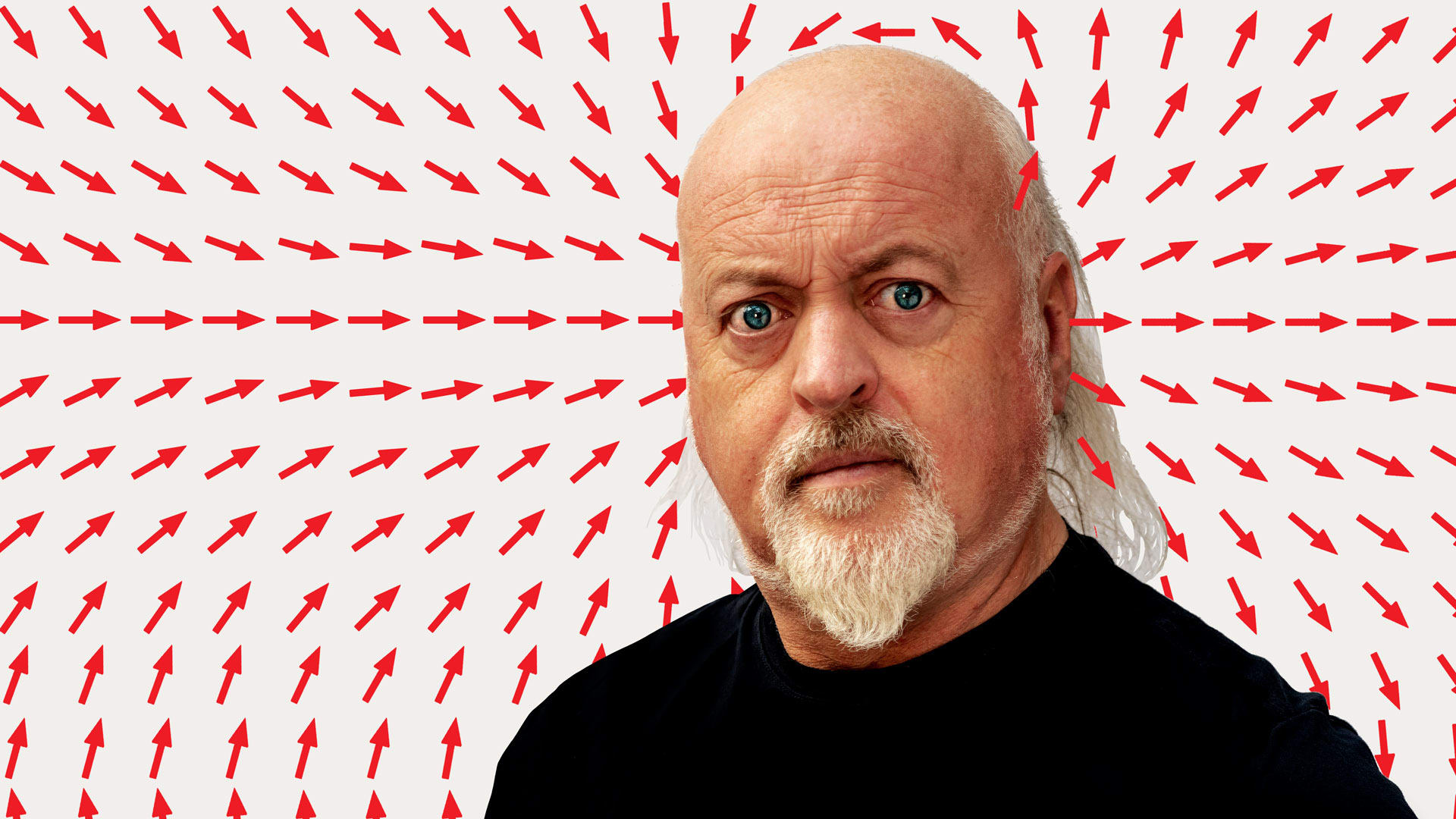
    Bill Bailey before and after his ‘dramatic’ haircut.

    Prior to Bill, we saw Ed Byrne at our local theatre in September ’24 and The Mousetrap at St Martins Theatre for its 29,692nd performance in July ‘24.

    I’ve seen Bill more than any live performer. Second place would have to be New Model Army (four times), probably the only other multiple-watched performers.

    I should get out more.

    1. We mostly agree on comedy. Except for Stewart Lee. Mrs S can’t understand what’s funny about his stuff. ↩︎
  • The huge importance of scoring in Taskmaster

    The huge importance of scoring in Taskmaster

    How important is it, really?

    Taskmaster scoreboard from Season 13, Episode 1.
    Taskmaster scoreboard from Season 13, Episode 1. Chris Ramsey – the person who enjoyed the experience the most of any contestant – set an early lead.

    A recent publication by David Silver1 discusses the scoring in Taskmaster and how this impacts on the enjoyment of the series. It also looks at other metrics, such as the use of Large Language Model (LLM, a sort-of primitive AI) to analyse the script and detect sarcasm, among other things2.

    The Abstract was enough for me to be sceptical about the study. Of all the metrics that were applied, the one that Little Alex Horne thinks is the most important was missed (from the abstract). It is the mix of people that’s the crucial element. I’ll come onto Silver’s treatment of that later.

    What struck me was that if you want to know why we enjoy the show, a survey would do the trick. From what I’ve seen on the Taskmaster subreddit, most people see the scores as one of the many parts of the show. If anyone wants to win too much, it can be bad – John Robins strayed close to the ‘too needy’ zone. If they don’t care and do well (Jo Brand, Sarah Millican3, Sam Campbell4) that’s even better.

    Or we get the joy of a contestant such as Julian Clarey, who clearly didn’t care until towards the end. There was more sitting forward in his seat as scores were given out in the later episodes. He lost by a few points, sacrificing the win for a gloriously calm meltdown in the road-sweeper task.

    The main attraction for winning is likely to be the chance to do it all again in Champion of Champions.

    Dara O Briain, delighted to win the third Taskmaster Champion of Champions.
    Dara O Briain, the winner of the third Champion of Champions with the Little Alex Horne puppet and his very convincing wig.

    Whose win is it anyway?

    Contestants are comedians (or comedy-adjacent) and they have different ideas about what winning is. Getting a laugh is the win and it’s this instant, honest feedback that many of them crave. That, and getting paid on time.

    Desiree Burch epitomises this attitude. There was a balloon-popping task in Series 12. She knew that the ‘correct’ way to do the task was to get the scissors, cut the string and release the portcullis. But she also knew the funny thing was to throw pebbles, rubber ducks, a bucket-load of forks and eventually the bucket itself at the balloon until finally taking the scissors.

    Desiree Burch explaining why winning isn't everything.
    Desiree Burch cementing herself as a contestant who understood the brief.

    Who? Who?

    So we come back to the most important of the many factors in Taskmaster – the cast and the cast mix.

    I’ve usually known a couple of the contestants, but then I’m a fan of comedy5. These will be well-established figures from stand-up (Dara Ó Briain, Mel Giedroyc, Sue Perkins) or related areas (Charlotte Ritchie, Steve Pemberton, Lisa Tarbuck). Add in some that I am not familiar with (Fern Brady6, Rose Matafeo), or I have seen a couple of times on other things (Rosie Jones, John Kearns, Katie Wix) plus unknowns and we have a cast.

    Eventually I get to know them all and their interaction is a major factor in the enjoyment. How the different minds complete the set-up that LAH wrote is the principal draw, that is the meat of the sandwich.

    Silver assigns five ‘types’ to the contestants based on how well they do points-wise, and then fits each contestant in each season into these types. He tries to force his five types into every cast, like Cinderella’s sisters trying to force their feet into the glass slipper.

    Assigning character types may be a better approach, but it gets very complex and I’m not a fan of assigning personality types7. There may be ten (or a different number) character traits that are needed in a cast, where each panellist has two or more components. Jack Dee is surly and competent. Julian Clary is sarcastic and insouciant. Kerry Godliman and Lisa Tarbuck were both straightforward ‘Bosh!’ merchants, but Godliman was competitive and Turbuck was laid back.

    A moment of unalloyed joy for Kerry and Greg.

    It’s a parody, innit?

    The main reason for the points is that the show is a parody of competition. In his book ‘Be Funny or Die’, Joel Morris points out that a good parody has to look and feel like the thing it’s parodying. Spinal Tap only works because the music is professional quality and it looks like a documentary8. Airplane! works so well because there is a real aeroplane disaster plot thrumming away in the background and the cast play this straight. We follow the events of Galaxy Quest because the Thermians face extinction at the hands of the genocidal Sarris and their only hope is a bunch of shop-soiled actors.

    There are points scored, so the show behaves like a panel show, the rhythms and beats are there to hang the chaos on. How the panellist behave is another matter and this is where the joy truly lies.

    1. https://doi.org/10.48550/arXiv.2505.02886
      ↩︎
    2. Artificial intelligence is really good at detecting sarcasm. ↩︎
    3. Who would have walked away with the win in any other series (except maybe John Robins’), all the while not really caring. ↩︎
    4. Sam won the most heart-warming series, with the two Sues forming an eternal friendship over a packet of NikNaks. ↩︎
    5. That term suggests that there are people who don’t like comedy. I think the phrase in this case means people who go out of their way to find out about comedy and comedians, and go so far as to occasionally blog about comedy. ↩︎
    6. Me Fern Brady! Me Fern Brady! I’m the rightful queen! ↩︎
    7. Maybe there are people who are fans and I should be designing Myers-Briggs t-shirts for my shop. ↩︎
    8. The, if you will, ‘rockumentary’. ↩︎
Verified by MonsterInsights