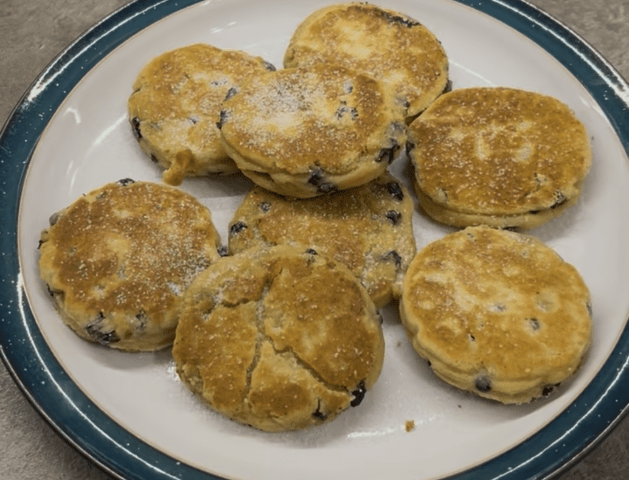
Pice ar y maen
The first of March is St David’s day! Triple celebrations for us, since Mrs S is 3/4 Welsh, my first name is David and it is our oldest’s birthday.
This recipe follows the hand-written recipe Mrs S got from her gran (Mrs K) in 2007.
Mrs S did the camerawork, thanks to her for helping!
Ingredients
200 g self-raising flour
100 g margarine (“baking spread” or similar)
75 g caster sugar
75 g currants
1 or 2 tbsp milk
one egg, beaten
1/2 tsp mixed spice
Video link
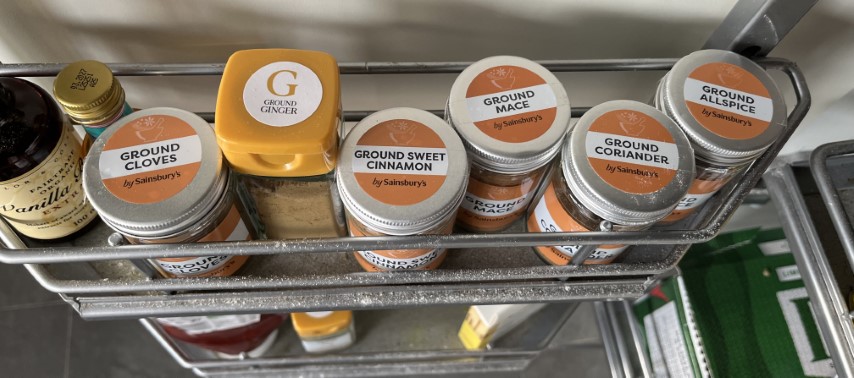
Mixed spice
For the mixed spice I combined one teaspoon each of ground mace, cinnamon and allspice with half a teaspoon each of ground cloves, ginger and coriander (I couldn’t find ready-made spice mix in the shop). Nutmeg can also be added to the mix, but we only had whole nutmeg and I couldn’t be bothered to grind any. There are recipes Welsh cakes that say to use only mace, I may try that some time.
Method
Combine the flour and margarine in a bowl and rub together to make crumbs. This is the same procedure for making crumble for puddings, so it’s a proper life skill.
Then add the flour, caster sugar, currants and spice. Mrs K’s recipe calls for half a teaspoon, though she said it could be left out.
Mix well, then add the beaten egg and milk. Combine all these until you have a smooth dough. If the mix is too wet (as mine was), add flour until you get a good dough. Add milk if the mix is too dry.
We left the dough to settle for an hour, so the flour could absorb all the wet ingredients.
On a floured surface, roll out some of the dough mix to be about 5 mm (¼ inch) thick. Use a gauged rolling pin if you have one (I don’t). Cut out circles (a cutter is best for this), then the cakes are ready for frying.
Frying the cakes
Traditionally a griddle would be used for frying. You can get flat griddles for induction hobs, but you may as well use a frying pan, as we did. Unless of course your oven has a built-in griddle, in which case I’m very jealous.
Like with any pan-fried cakes (eg pancakes) the pan needs some fat in it to help cook the food and also to provide extra non-stick. We used a 1:1 mix of vegetable oil and butter. If you want to be traditional about it, use lard. Don’t use a lot otherwise you could end up with a very fatty tasting cake.
In a hot pan (or on a hot griddle) fry the cakes for about a minute on each side. You will need to use judgment here, you want the cakes to be a dark brown but not burned. The cakes will swell as they cook, so make sure they cook long enough on each side for this to happen.
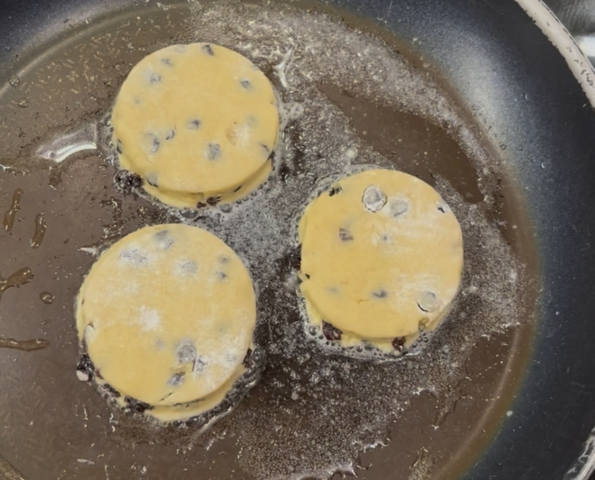
This swelling – due to the self-raising flour – combined with frying a thick piece of dough gives the cakes their double texture. The outside will be crisp and there is a lovely soft and chewy interior. A bit like an armadillo.
When they are cooked put them on a plate with a piece of kitchen towel on to absorb excess fat. Cook the whole batch; we got 12 cakes from this mix, the size of your cutter will determine how many you get.
Serving
Sprinkle with granulated sugar as a finishing touch. They are good enough to eat warm or cold. Just eat them as they are, but if you like you can put jam, honey or Nutella on them, spread some butter or thick cream on them. As a savoury alternative, pop a chunk of cheese (Caerphilly might be appropriate) on it, if you’re one of those people who likes cheese with fruit cake.
Changes
Having eaten my share and discussed with Mrs S and the rest of the family, I think we will add a full teaspoon of spice to the next batch. Mrs K wasn’t one for spicy food, so her taste buds were likely more sensitive than ours.
It may well be possible to air-fry these. We don’t have an air-fryer, but if you do let me know if it’s doable.






 Grim up North Heath